
Wholesale Dehydrated Dog Treats for Retailers: Sourcing, Private Label & Product Selection Guide
For pet retailers, distributors, importers and private label brands, wholesale dehydrated dog treats can be a practical category to add to a growing dog snack range.
They are easy for consumers to understand, available in many meat-based formats and suitable for multiple everyday occasions—from training and walking rewards to premium snacks and longer chewing sessions.
However, successful wholesale sourcing involves much more than choosing chicken or duck and comparing prices.
B2B buyers need to consider ingredient composition, treat size, texture, packaging, shelf stability, product consistency and how each SKU fits into their overall retail assortment.

This guide explains how to choose dehydrated dog treats for wholesale, resale and private label projects—and how to build a product range that is easier for customers to understand and reorder.
What Are Dehydrated Dog Treats?
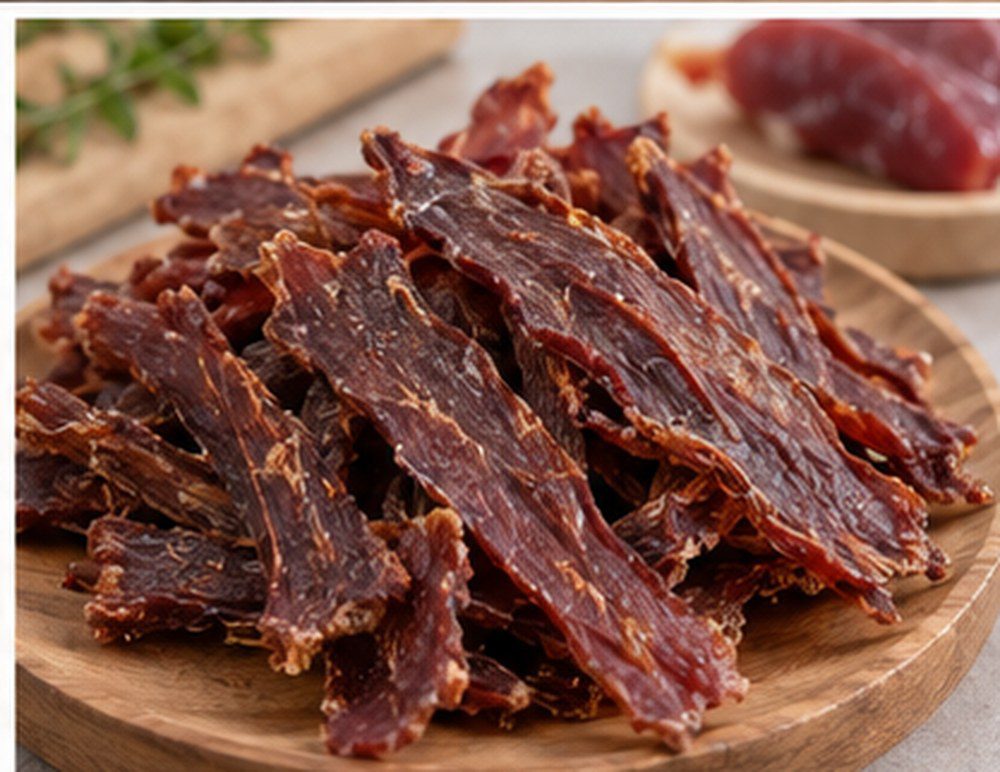
Dehydrated dog treats are produced by removing moisture from meat or other ingredients through controlled drying.
The finished treats normally have a firmer, drier texture than fresh or soft dog treats while retaining the recognizable appearance of the original ingredients.
Popular dehydrated formats include:
- Chicken breast strips
- Duck breast strips
- Beef jerky
- Meat cubes
- Small training bites
- Chicken-wrapped products
- Duck and sweet potato treats
- Mixed meat snacks
- Longer chewing treats
For retailers, this creates opportunities to develop products for different dog sizes, feeding occasions and price points.
Businesses looking for a broader assortment can explore Pack’n Pride’s wholesale pet treats range.
Why Dehydrated Dog Treats Work Well for Wholesale
There is no single reason businesses source dehydrated dog treats.
The category works because it can cover several different retail needs at the same time.
1. Consumers Can Easily Understand the Product
Simple meat strips and pieces do not require complicated explanations.
A customer can quickly understand products such as:
- Chicken breast treats
- Duck strips
- Beef bites
- Duck and sweet potato
- Meat-wrapped chews
This simplicity can make product pages, retail displays and sales training easier.
For online sellers in particular, recognizable ingredients can also make product photography more straightforward.
2. Different Formats Create Different Selling Opportunities
A dehydrated chicken strip and a small chicken training bite may use a similar protein but solve very different customer needs.
For example:
Small bites: training and frequent rewards
Thin strips: everyday treating
Large jerky pieces: premium snacks
Wrapped products: longer chewing
Mixed protein or vegetable recipes: variety and premium positioning
Instead of selling several products that all compete for the same use, wholesalers can build a range around different feeding occasions.
3. They Fit Multiple Sales Channels
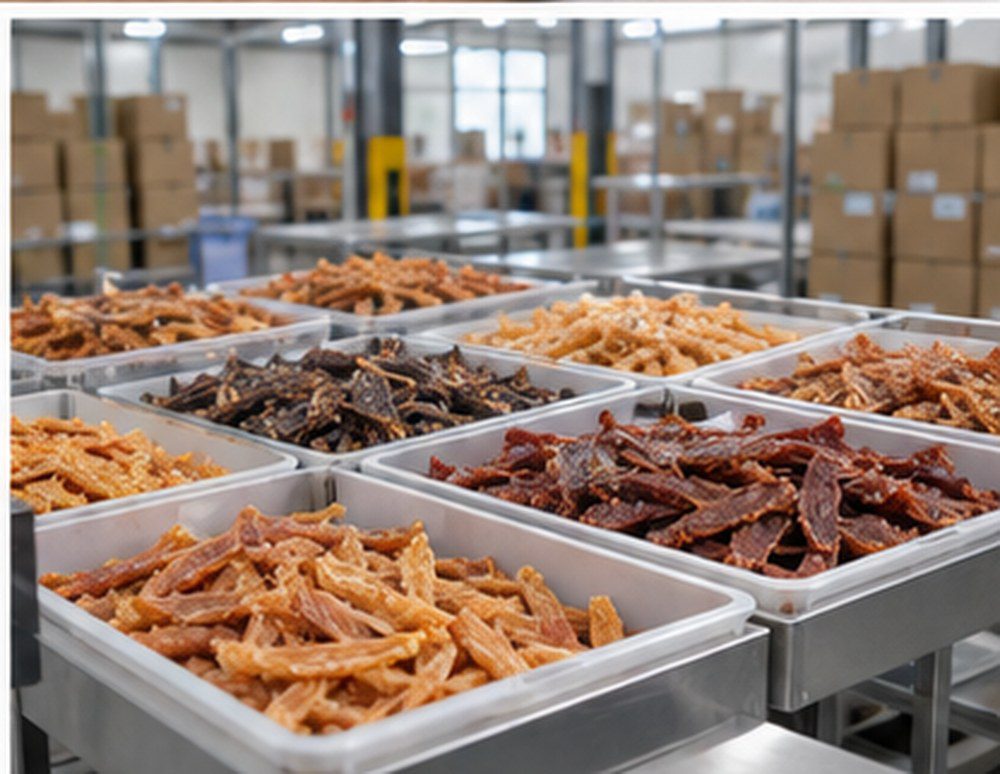
Wholesale dehydrated dog treats can be suitable for:
- Independent pet stores
- Pet store chains
- Amazon sellers
- Online pet brands
- Supermarkets
- Distributors
- Subscription boxes
- Pet supply wholesalers
- Private label businesses
However, the ideal product and packaging may differ significantly between channels.
An Amazon seller may prioritize lightweight resealable packaging and strong product photography.
A distributor supplying independent stores may prefer a broader product assortment.
A supermarket buyer may focus more heavily on price points, pack sizes and shelf presentation.
Understanding the intended sales channel before ordering is therefore important.
Popular Wholesale Dehydrated Dog Treats
Choosing the right product range should begin with customer needs rather than simply selecting as many flavours as possible.
Here are several common formats worth considering.
Dehydrated Chicken Dog Treats
Chicken remains one of the easiest proteins for customers to recognize.
Possible formats include:
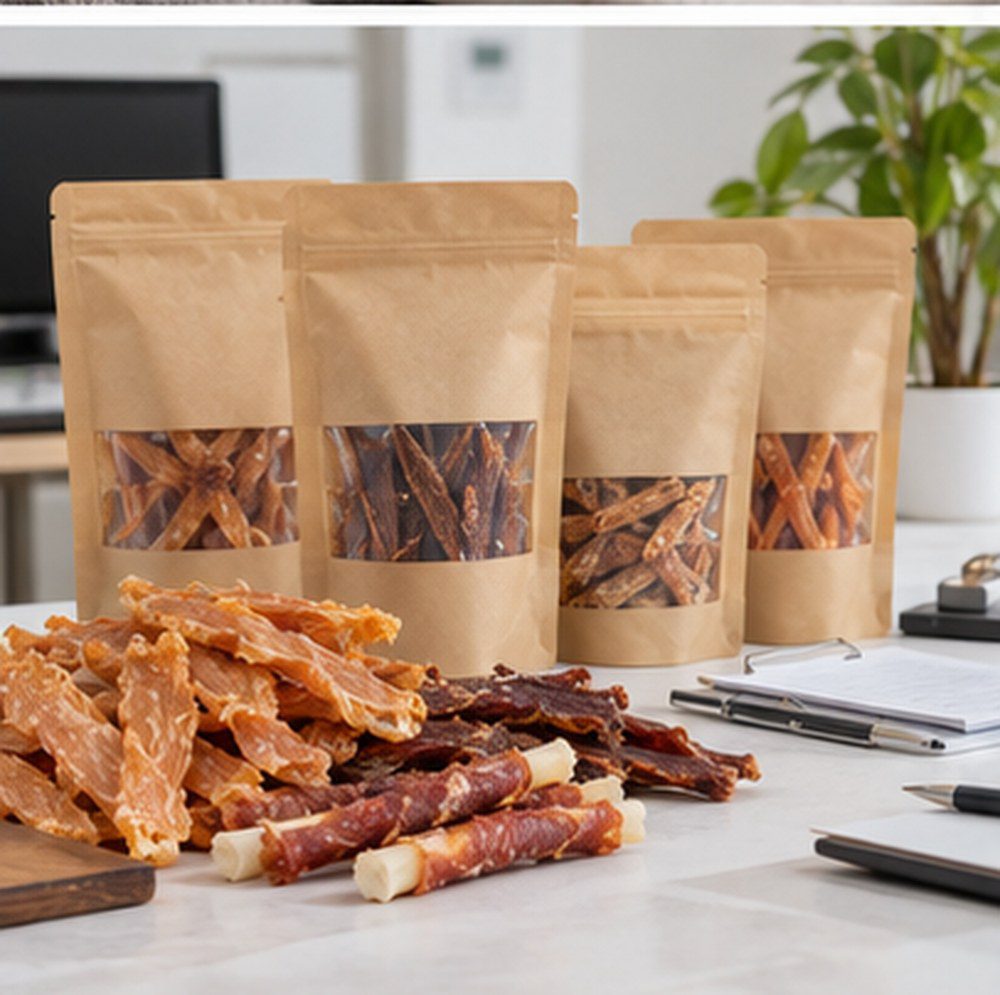
- Chicken breast strips
- Chicken jerky
- Chicken cubes
- Chicken rolls
- Chicken-wrapped chews
- Small chicken reward pieces
Chicken products can work well as an everyday SKU within a broader dog treat range.
For buyers building a complete dog assortment, Pack’n Pride’s For Dogs collection provides additional product-format ideas.
Dehydrated Duck Dog Treats
Duck gives retailers another recognizable protein option.
Popular concepts can include:
- Duck strips
- Duck jerky
- Duck bites
- Duck rolls
- Duck with sweet potato
- Duck-wrapped chews
Retailers do not necessarily need several similar duck SKUs.
One clearly positioned alternative-protein option can be easier for customers to understand than five nearly identical products.
Duck and Sweet Potato Treats
Meat-and-vegetable combinations offer a different appearance from standard jerky.
Duck and sweet potato, for example, can provide:
- A visually distinctive product
- A recognizable ingredient combination
- Another texture option
- A different retail story from standard meat strips
When evaluating samples, wholesalers should check how consistent the proportion of meat and sweet potato is between pieces.
Small Training Treats
Large strips are not always convenient during training.
Training-focused products should generally be easy to handle and portion.
Important factors include:
- Small piece size
- Consistent dimensions
- Easy handling
- Limited crumbling
- Convenient packaging
- Aroma that remains appealing after opening
Retailers developing this category can also review Pack’n Pride’s Training Rewards range.
How to Choose Wholesale Dehydrated Dog Treats
When comparing suppliers, do not evaluate products using price alone.
The lowest-cost SKU can become expensive if it leads to excessive broken pieces, inconsistent appearance or customer complaints.
Here are the main factors to compare.
1. Ingredient Composition
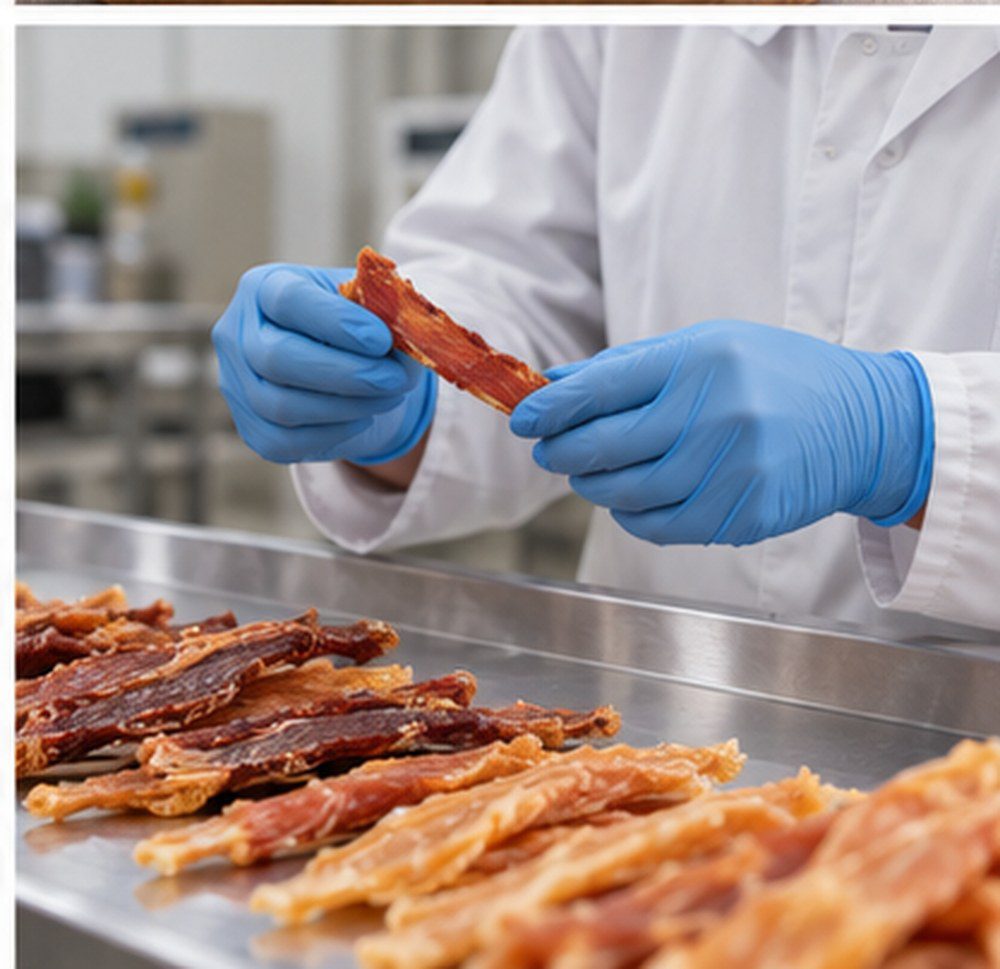
Ask for a complete product specification.
Check:
- Main protein
- Meat percentage
- Vegetable ingredients
- Added starches
- Humectants
- Preservatives
- Flavourings
- Colourings
- Other functional ingredients
A product name does not always tell you the complete formulation.
For example, two products both marketed as “chicken treats” may contain very different percentages of chicken.
This can affect both positioning and final retail pricing.
2. Texture
Texture determines how customers will use the treat.
Ask yourself:
Is it easy to break?
This matters for training and smaller dogs.
Is it very hard?
That may make it more appropriate as a slower snack.
Does it crumble excessively?
Excessive crumbs can affect customer perception and packaging appearance.
Does it leave a greasy residue?
This may affect handling during walks or training.
Sample testing should therefore be part of the sourcing process.
3. Piece Size
Piece size matters more than many new buyers expect.
Consumers notice inconsistency quickly.
If one pack contains long strips and another contains mostly small fragments, customers may believe product quality has changed even if the total net weight remains the same.
Discuss specifications such as:
- Length
- Width
- Thickness
- Weight per piece
- Broken-piece tolerance
- Size variation
These details are especially important for products sold online because customers may compare the delivered product directly with listing images.
Match the Treat Size to the Dog
One product does not suit every customer equally well.

Small Dogs
Retailers may prefer:
- Smaller bites
- Thin strips
- Easy-to-break pieces
- Small pack sizes
Medium Dogs
Popular options may include:
- Standard meat strips
- Jerky pieces
- Training bites
- Meat and vegetable combinations
Large Dogs
Buyers may consider:
- Larger strips
- Thick jerky
- Wrapped products
- Longer-lasting chews
Offering several clearly differentiated sizes can make the category easier to shop.
Dehydrated Dog Treats vs Freeze-Dried Dog Treats
Wholesale buyers frequently compare dehydrated and freeze-dried products.
Both can be useful, but they do not need to compete directly.
Dehydrated Dog Treats
They are commonly associated with:
- Firmer texture
- Jerky-style appearance
- Strips and slices
- Longer chewing than very light treats
- Familiar everyday snack formats
Freeze-Dried Dog Treats
They are commonly:
- Lighter
- More porous
- Easy to crumble
- Suitable for cubes and bite-size pieces
- Positioned toward premium treat ranges
A retailer may stock both categories and position them differently.
For example:
Dehydrated chicken strip: everyday snack
Freeze-dried chicken cube: premium training or reward product
Retailers interested in comparing the categories can also read Pack’n Pride’s Freeze Dried Dog Treats Wholesale Guide.
Bulk Dehydrated Dog Treats vs Retail-Ready Packaging
One of the most important wholesale decisions is whether to purchase bulk product or finished retail packs.
Bulk Supply
Bulk dehydrated dog treats may be suitable for:
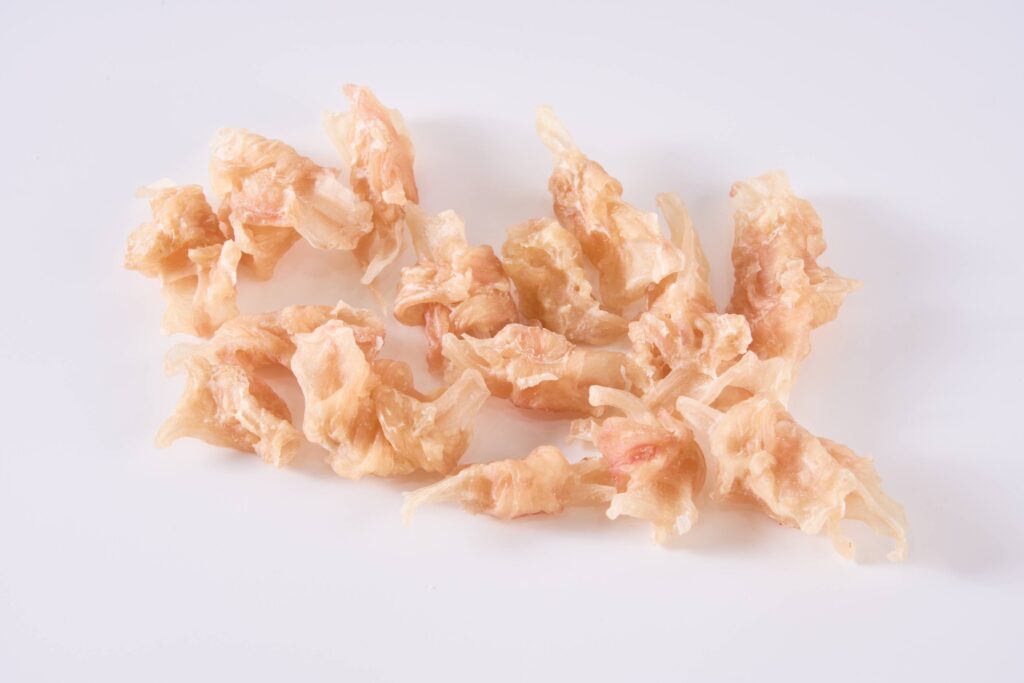
- Distributors
- Repackers
- Pet treat wholesalers
- Retailers with local packaging facilities
- Businesses creating mixed treat boxes
Advantages may include greater packaging flexibility.
However, buyers must also consider local repacking, labeling, inventory control and compliance responsibilities.
Retail-Ready Packs
Retail-ready supply is often more practical for:
- Amazon sellers
- Online pet brands
- Independent private labels
- Pet-store chains
- Importers without local packing facilities
The supplier manufactures and packs the product according to an agreed specification so the goods can move more directly into the sales channel.
Private Label Dehydrated Dog Treats
Private label can allow retailers and distributors to build a product range under their own brand instead of reselling a generic item.
Depending on the project and product, areas for customization may include:
- Protein
- Recipe
- Treat dimensions
- Shape
- Pack size
- Packaging material
- Brand design
- Label language
- Carton configuration
The best approach is to begin with the sales channel.
Do not start by asking:
“What packaging looks best?”
Start with:
“Who will buy this product, where will they buy it and how will they use it?”
That decision should influence the rest of the product specification.
How to Build a Better-Selling Dehydrated Treat Range
A common wholesale mistake is launching too many similar products.
Instead, give every SKU a clear role.
For example:
| Product | Positioning | Typical Use |
|---|---|---|
| Chicken strips | Core everyday product | Daily reward |
| Small duck bites | Training product | Frequent rewards |
| Duck & sweet potato | Alternative recipe | Premium snack |
| Beef jerky | Alternative protein | Variety |
| Meat-wrapped chew | Longer snack | Chewing |
This is easier for customers to understand than offering six chicken treats with only minor differences.

Start With 3–5 Core SKUs
For a new private label project, a focused launch may be more manageable.
A possible starting structure could be:
SKU 1 — Main Seller
A familiar protein such as chicken.
SKU 2 — Alternative Protein
Duck or beef.
SKU 3 — Training Product
Small reward-sized bites.
SKU 4 — Combination Product
For example, meat with sweet potato.
SKU 5 — Longer Snack
A chew or wrapped format.
Once sales data becomes available, the range can be expanded based on actual demand rather than assumptions.
Choosing the Right Retail Pack Size
Pack size affects:
- Retail price
- Shipping cost
- Shelf space
- Purchase frequency
- Perceived value
There is no universal best pack size.
Smaller Packs
Can work well for:
- First-time purchases
- Premium treats
- Trial packs
- Smaller dogs
- E-commerce bundles
Medium Packs
Can suit:
- Everyday treats
- Independent pet stores
- Regular household purchases
Larger Packs
May appeal to:
- Multi-dog households
- Frequent users
- Warehouse retail
- Value-focused customers
Before selecting a pack weight, compare competitor retail prices within the destination market.

Packaging Considerations for Dehydrated Dog Treats
Packaging is not only about branding.
It also protects the product through storage and distribution.
Buyers should discuss:
- Moisture barrier
- Oxygen barrier
- Sealing method
- Resealable zipper
- Pouch thickness
- Transparency window
- Retail display format
- Carton strength
For e-commerce, packaging also needs to survive parcel shipping.
A pouch that looks excellent on a retail shelf may not perform equally well after individual courier delivery.
Why Samples Matter Before a Bulk Order
Product photographs are not enough for wholesale evaluation.
Always request samples where practical.
When the samples arrive, evaluate them like a customer would.
Check:
Appearance
Does the product look consistent?
Aroma
Does the smell remain appealing after the pack is opened?
Texture
Is the product flexible, hard, brittle or chewy?
Breakability
Can it be divided easily if customers want smaller portions?
Piece consistency
Are most pieces reasonably similar?
Crumbs
Is excessive material accumulating at the bottom of the package?
Packaging
Is the pouch easy to open, reseal and store?
Record these observations before confirming production.
Quality Consistency Matters More Than a Perfect First Sample
A strong first sample is useful.
However, wholesale success depends on producing similar quality again and again.
Ask potential manufacturers how they control:
- Incoming ingredients
- Piece size
- Drying
- Moisture
- Finished appearance
- Packaging
- Batch records
- Final inspection
For distributors and private label businesses, consistency is essential because customers expect the second purchase to resemble the first.
What Documents Should Wholesale Buyers Ask For?

Required documentation varies according to destination market and product.
Before ordering, tell the supplier exactly where the goods will be sold.
You may need to discuss:
- Product specification sheets
- Ingredient information
- Nutritional analysis
- Shelf-life information
- Manufacturing documentation
- Packaging specifications
- Certificates relevant to your market
- Testing requirements
- Export documentation
Do not assume that documents required for one country will automatically satisfy another.
Confirm requirements before production begins.
How to Compare Wholesale Dehydrated Dog Treat Suppliers
When comparing quotations, create a simple supplier comparison sheet.
Include:
| Item | Supplier A | Supplier B | Supplier C |
|---|---|---|---|
| Product specification | |||
| Protein | |||
| Meat percentage | |||
| Piece size | |||
| MOQ | |||
| Packaging | |||
| Private label available | |||
| Sample quality | |||
| Lead time | |||
| Documents | |||
| Price |
This prevents price from becoming the only comparison point.
Sometimes the slightly more expensive option can make more commercial sense when it offers better consistency, packaging or customization.
Common Wholesale Buying Mistakes
Mistake 1: Choosing Only by Price
Cheap purchasing does not always result in strong retail margins.
Poor consistency, breakage and weak packaging can increase hidden costs.
Mistake 2: Launching Too Many Similar Products
A large range can look impressive but also divide sales across too many SKUs.
Start focused.
Expand after receiving real customer data.
Mistake 3: Ignoring the Sales Channel
Amazon, supermarkets, pet shops and distributors do not always need the same product.
Choose the product according to where it will be sold.
Mistake 4: Skipping Sample Testing
Never assume all jerky treats perform the same.
Test appearance, texture and packaging.
Mistake 5: Printing Packaging Too Early
Finalize:
- Recipe
- Product dimensions
- Pack weight
- Ingredients
- Legal labeling
- Barcode
- Destination market
before approving a large packaging print run.
How Amazon Sellers Can Position Dehydrated Dog Treats
Amazon sellers need particularly clear differentiation.
A listing should quickly answer:
- What protein is it?
- What type of treat is it?
- What size dog is it suitable for?
- When should the customer use it?
- How large is the pack?
For example:
Chicken Breast Strips for Everyday Rewards
is clearer than simply:
Premium Dog Treats
Use product photography to show:

- Individual pieces
- Piece dimensions
- Package size
- Texture
- Feeding scenario
Clear expectations can help reduce the gap between what customers see online and what they receive.
How Pet Retailers Can Merchandise Dehydrated Treats
Pet stores can organize products by either protein or use case.
By Protein
- Chicken
- Duck
- Beef
- Fish
By Use
- Training
- Everyday rewards
- Chewing
- Premium meat treats
For many stores, organizing by use case may make purchasing decisions easier for new dog owners.
Instead of asking customers to understand every recipe, staff can ask:
“Are you looking for training rewards or something for longer chewing?”
This gives the conversation a clearer direction.
Why Private Label Buyers Should Plan for Reorders
The first order is only the beginning.
Before launching, discuss future production planning with the supplier.
Questions to consider include:
- How long does repeat production take?
- Will the same recipe remain available?
- Can the same packaging be reordered?
- What happens if sales increase quickly?
- Is the MOQ different for repeat orders?
- How early should the next order be placed?
A successful SKU should be easy to reorder without rebuilding the project from the beginning.
Questions to Ask Before Requesting a Quote
To receive a more useful quotation, provide as much information as possible.
Include:
- Destination country
- Sales channel
- Preferred protein
- Product style
- Target piece size
- Pack weight
- Bulk or retail-ready requirement
- Private label requirement
- Estimated initial quantity
- Expected reorder quantity
- Target launch date
This makes it easier for suppliers to recommend relevant products rather than simply sending a large catalogue.
What Should You Include in a Wholesale Inquiry?
Instead of sending:
“Please send price.”
Try providing a clearer request such as:
We are looking for wholesale dehydrated dog treats for our retail business. We are interested in chicken and duck products in 100–200 g retail packs. Please send available products, specifications, MOQ, private label options, sample information and quotation for delivery to our market.
A detailed inquiry usually produces a more useful response.

Why Work With Pack’n Pride?
Pack’n Pride supplies a broad range of dog treats for wholesale, retail and private label projects.
Buyers can review different dog treat formats through the Wholesale Pet Treats collection and For Dogs product range.
Options across the wider range include training treats, meat-based snacks, chews, wrapped products and freeze-dried treats.
This allows buyers to create a broader assortment rather than relying on one treat category alone.
If you are currently comparing wholesale dehydrated dog treats, developing a private label range or planning your next dog treat collection, Pack’n Pride can discuss your target market, product format and packaging requirements.
Contact Pack’n Pride to request product information, samples and a quotation.
Wholesale Dehydrated Dog Treats FAQ
What are dehydrated dog treats?
Dehydrated dog treats are snacks made by removing moisture from meat or other ingredients through controlled drying. Common formats include strips, jerky, slices, bites and meat-and-vegetable combinations.
What are popular proteins for wholesale dehydrated dog treats?
Chicken, duck and beef are common options. The best choice depends on your target customer, retail price and desired product positioning.
Can dehydrated dog treats be private labeled?
Private label options may include custom packaging, pack sizes, branding and, depending on the project, product specifications. Buyers should discuss requirements with the manufacturer before ordering.
What is the difference between dehydrated and freeze-dried dog treats?
Dehydrated treats usually have a firmer or chewier texture. Freeze-dried treats are generally lighter and more porous due to the different moisture-removal process.
Can dehydrated dog treats be used for training?
Yes. Smaller pieces and easy-to-break treats can be convenient for repeated rewards during dog training.
Should I buy bulk or retail-ready dog treats?
Bulk supply may suit distributors and businesses with their own packing capabilities. Retail-ready packaging may be more convenient for online sellers, private labels and retailers that want finished products.
How should I evaluate samples?
Check appearance, aroma, texture, piece size, breakability, crumb levels and packaging. Compare several samples using the same criteria.
How many SKUs should a new retailer start with?
There is no fixed number, but a focused assortment of clearly differentiated products can be easier to manage than many similar SKUs. Buyers can expand based on sales and reorder data.
What information should I provide when requesting a wholesale quote?
Provide your destination country, sales channel, preferred proteins, treat format, pack size, estimated quantity, packaging requirement and whether you need private label service.
Where can I source wholesale dehydrated dog treats?
Retailers, importers and distributors can contact Pack’n Pride to discuss dog treat formats, wholesale requirements, samples and private label options.
Ready to Source Wholesale Dehydrated Dog Treats?
A strong dehydrated dog treat range is not simply about having more flavours.
The best assortment gives customers a clear reason to choose each product.
Start by deciding:
- Who your target customer is
- Which sales channel you will use
- Which proteins fit your market
- What each SKU is designed for
- Which pack sizes match your retail price points
- Whether you need bulk or private label packaging
Then compare samples and suppliers based on product quality, consistency, packaging and long-term supply—not price alone.
If you are looking for wholesale dehydrated dog treats, dog training rewards, meat treats or other wholesale pet snacks, explore Pack’n Pride’s wholesale pet treats range or contact us to discuss your project.
Tell us your destination market, preferred product and expected order quantity to get started.