
Dog Jerky Manufacturers: How to Choose the Right Supplier for Your Pet Treat Business
Finding reliable dog jerky manufacturers is an important step for pet retailers, distributors, wholesalers and e-commerce sellers looking to expand their dog treat range.
Dog jerky remains an attractive category because it is easy for pet owners to understand. Chicken strips, duck fillets, meat bites and wrapped meat treats communicate their value quickly on a retail shelf or product listing.
For B2B buyers, however, choosing a jerky supplier involves much more than finding an appealing product photo or the lowest price per kilogram.
Product consistency, ingredient quality, texture, packaging, manufacturing standards and long-term supply reliability can all affect whether a dog jerky line becomes a repeat seller.
This guide explains what professional buyers should look for when comparing dog jerky manufacturers and how to build a stronger wholesale dog treat assortment.
Why Dog Jerky Is an Important Category for Pet Retailers
Dog treats cover many different feeding occasions, from training and walking rewards to longer-lasting chews.
Jerky sits in a useful position between these categories.
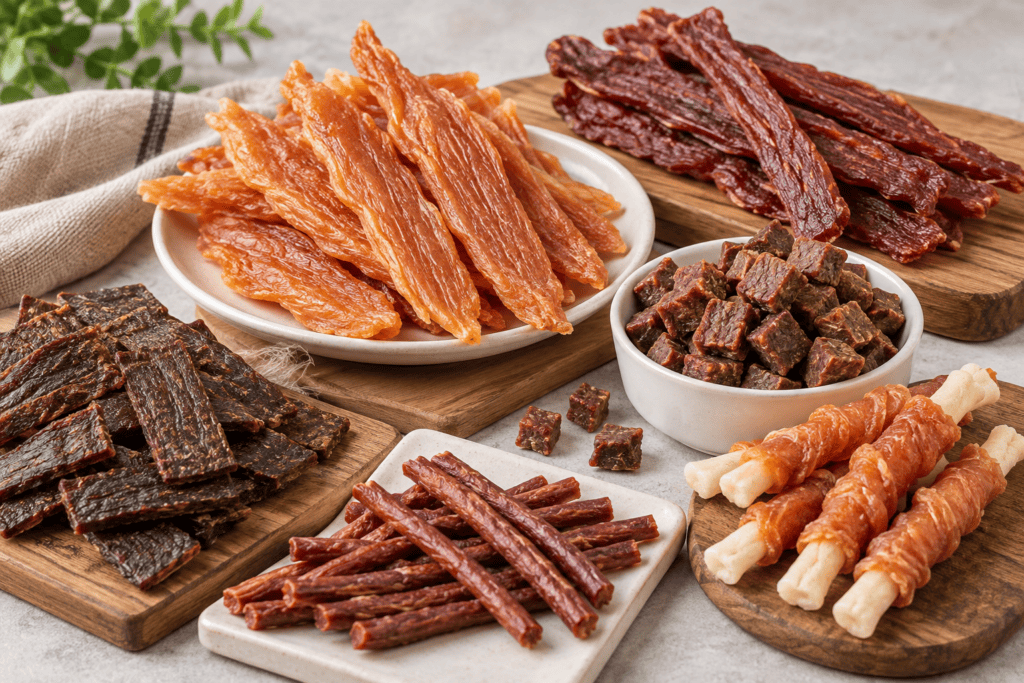
It can be produced as:
- Thin meat strips
- Full-size meat fillets
- Small training pieces
- Meat sticks
- Meat bites
- Wrapped meat snacks
- Mixed-protein treats
This versatility gives retailers opportunities to create products at different price points and for different customer needs.
A small chicken jerky bite, for example, can be positioned as an everyday training reward. A larger duck fillet may work better as a premium treat.
The important point for wholesale buyers is that every SKU should have a clear purpose.
Retailers and distributors interested in straightforward meat-based products can explore Pack’n Pride’s Real Meat Treats range, which includes chicken and duck fillet and nugget-style products.
What Should You Expect From Professional Dog Jerky Manufacturers?
A reliable manufacturer should provide more than finished dog treats.
For B2B buyers, manufacturing capability affects almost every part of the final product.
Important areas include:
- Raw material selection
- Ingredient control
- Cutting consistency
- Drying control
- Moisture management
- Texture consistency
- Product inspection
- Packaging
- Batch traceability
- Export documentation
- Production capacity
A sample can look excellent while a large commercial order performs differently.
For this reason, buyers should evaluate whether a supplier can repeat the same specification across multiple production runs.
Long-term consistency is one of the biggest differences between simply buying dog treats and building a dependable wholesale supply chain.
1. Start With the Right Protein
Protein selection is one of the first decisions when sourcing from dog jerky manufacturers.
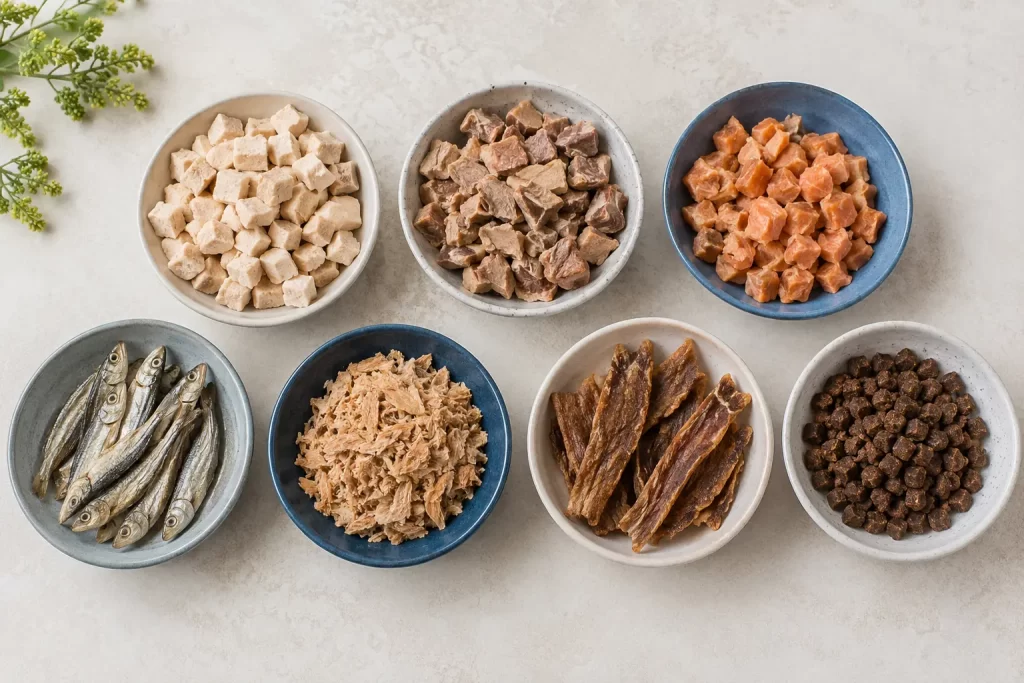
Chicken Jerky
Chicken is one of the most familiar proteins in the pet treat market.
It works well for:
- Chicken fillets
- Chicken strips
- Training bites
- Chicken-wrapped chews
- Chicken sticks
Because consumers immediately recognise chicken, it can work well for mainstream pet stores, supermarkets and online retailers.
Duck Jerky
Duck offers buyers another popular poultry option and can help create a slightly different product position from standard chicken treats.
Common formats include:
- Duck fillets
- Duck strips
- Duck bites
- Duck-wrapped snacks
- Duck and sweet potato combinations
Beef Jerky
Beef can create a stronger meat-focused appearance and diversify a range that already contains poultry products.
Depending on the target market, beef jerky can work as strips, bites or stick-style treats.
Fish-Based Treats
Fish products provide another way for retailers to differentiate their assortment and appeal to customers looking beyond conventional poultry treats.
Instead of selecting proteins simply because they are available, consider what role each protein should play within your overall dog treat range.
2. Compare Jerky Formats, Not Just Flavours
When wholesalers compare products, it is easy to focus heavily on protein or flavour.
Format can be equally important.
Different formats create different feeding occasions.
| Product Format | Typical Use | Retail Position |
|---|---|---|
| Jerky fillets | Larger reward | Premium meat treat |
| Thin jerky strips | Daily treating | Everyday snack |
| Jerky bites | Training | Frequent reward |
| Meat sticks | Convenient reward | Everyday treat |
| Wrapped meat treats | Chewing and rewarding | Higher-value snack |
| Meat and vegetable combinations | Variety | Range differentiation |
For example, a pet owner training a puppy may prefer small pieces that can be given repeatedly.
Someone buying a more substantial reward may prefer a full meat fillet.
By sourcing different formats instead of several almost identical products, distributors and retailers can cover more customer needs with fewer SKUs.
Buyers interested in products such as duck with sweet potato, chicken and carrot sticks or other meat-wrapped formats can also browse Pack’n Pride’s Wrapped Meat range.
3. Check the Ingredient Specification Carefully
Product names alone do not tell a professional buyer enough.
Two products both described as chicken jerky may have very different formulations.
Ask the supplier for an ingredient specification before confirming a commercial order.
Useful questions include:
- What percentage of the recipe is meat?
- Which additional ingredients are used?
- Are fillers included?
- Are colours added?
- Are flavouring ingredients used?
- What ingredients help control texture or shelf stability?
- Is the formula suitable for the destination market?
Many pet owners pay close attention to ingredient lists, particularly when shopping in premium or natural pet food categories.
Clear ingredient information therefore benefits both procurement teams and retail customers.
For retailers, a straightforward ingredient story is also easier to communicate through product listings, packaging and in-store merchandising.
4. Evaluate Texture Before Ordering in Bulk
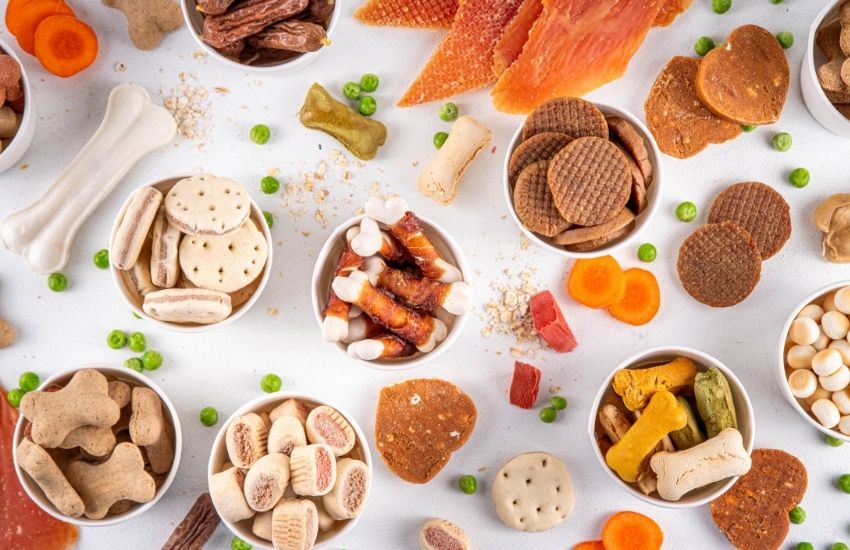
Texture is one of the most important characteristics of dog jerky.
It also cannot be evaluated properly from a catalogue image.
Whenever possible, request samples before confirming a larger order.
When evaluating jerky, check whether it is:
- Too brittle
- Excessively hard
- Too soft
- Sticky
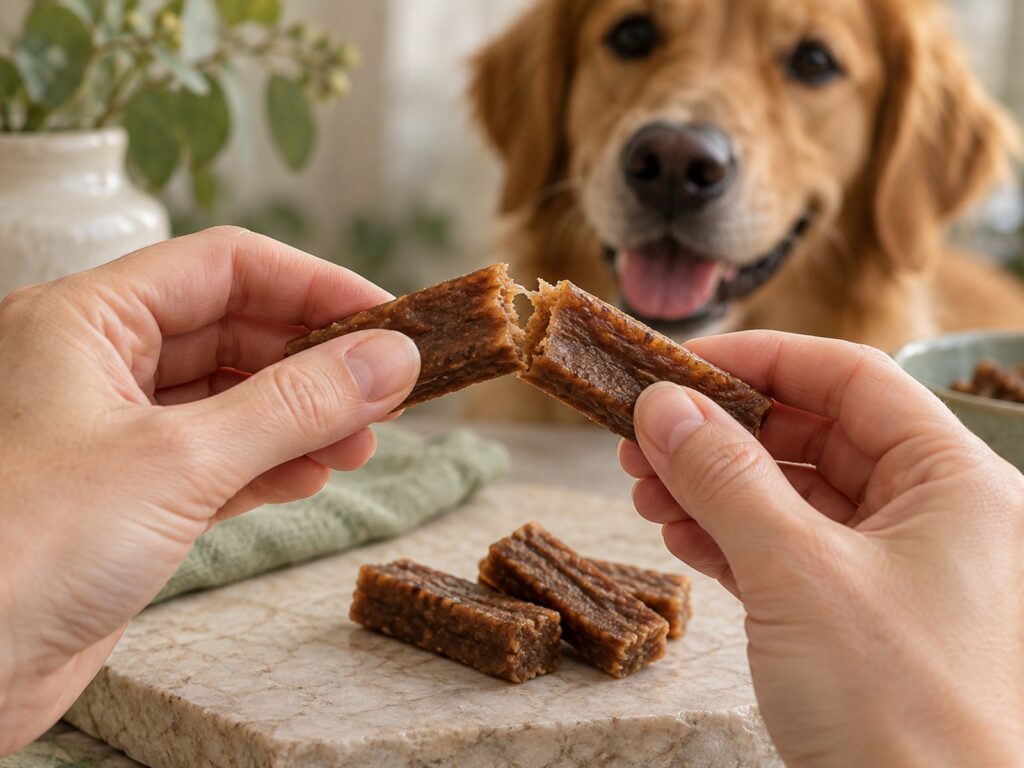
- Difficult to tear
- Uneven between pieces
- Easily broken during transportation
There is no single correct texture for every jerky product.
A small training strip may need to tear easily.
A larger fillet can be firmer.
A wrapped meat product may provide a longer chewing experience.
The right question is therefore not simply:
“Is this jerky soft or hard?”
A better question is:
“Does this texture match the way my customers are expected to use the product?”
5. Look at Piece Size and Product Consistency
Natural meat products will always have some variation.
However, large differences in thickness, length or shape can create problems for retail buyers.
Imagine a customer buying the same jerky product twice.
The first pouch contains long, attractive strips.
The second contains noticeably shorter pieces and more broken fragments.
Even if both bags contain exactly the same net weight, the second may appear lower in value.
Consistent dimensions help improve:
- Shelf presentation
- Product photography
- Online listing accuracy
- Packaging efficiency
- Customer expectations
- Repeat purchasing
Ask prospective dog jerky manufacturers about acceptable product size ranges and natural variation before placing larger orders.
6. Understand the Jerky Drying Process
Drying is a key stage in dog jerky manufacturing.
The process contributes to final texture, appearance and product stability.
If pieces vary considerably in thickness or processing conditions are inconsistent, the finished product may also vary between batches.
Some pieces may become too dry and brittle, while others may retain a noticeably different texture.
Professional buyers do not need to understand every technical detail of industrial drying equipment.
However, it is reasonable to discuss whether important parameters are monitored during production.
Relevant areas include:
- Product thickness
- Drying temperature
- Processing time
- Finished moisture
- Cooling
- Storage before packaging
Consistent processing supports more consistent finished products.
7. Ask About Quality Control
Quality management becomes particularly important when dog treats are distributed across multiple stores, shipped internationally or sold through major e-commerce channels.
A professional dog treat supplier should have established procedures for checking raw materials, production and finished goods.
Depending on your project, buyers may want to discuss:
- Incoming material inspection
- Production monitoring
- Finished product checks
- Piece size inspection
- Packaging inspection
- Batch identification
- Storage controls
- Food safety certifications
- Export documentation
For buyers evaluating a potential supplier, the Pack’n Pride About Us page provides additional information about the brand, product categories and international market experience.
Certifications and company background should not replace product evaluation, but they can form part of a more complete supplier qualification process.
8. Choose Packaging Based on Your Sales Channel
The right jerky product can still underperform if the packaging does not match the intended retail channel.
Consider where the product will actually be sold.
Independent Pet Stores
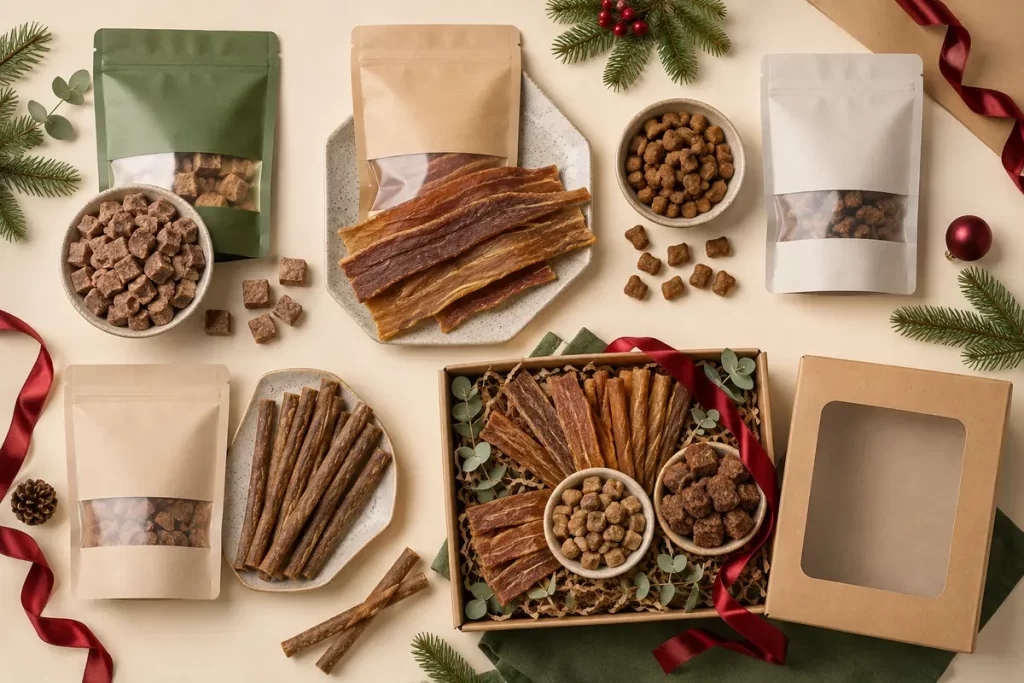
Resealable pouches and clearly visible products can work well because customers frequently examine products physically before purchasing.
Supermarkets
Retail buyers may place greater emphasis on:
- Shelf dimensions
- Barcode placement
- Carton quantities
- Display efficiency
- Consistent pack appearance
Online Stores
E-commerce sellers should consider how well packaging protects the product during fulfilment and last-mile delivery.
Broken jerky strips or damaged packaging can quickly turn into negative customer reviews.
Distributors
Distributors may focus more heavily on:
- Master carton dimensions
- Units per carton
- Storage efficiency
- Shelf life
- Shipping stability
Packaging and product should therefore be evaluated together rather than as two separate sourcing decisions.
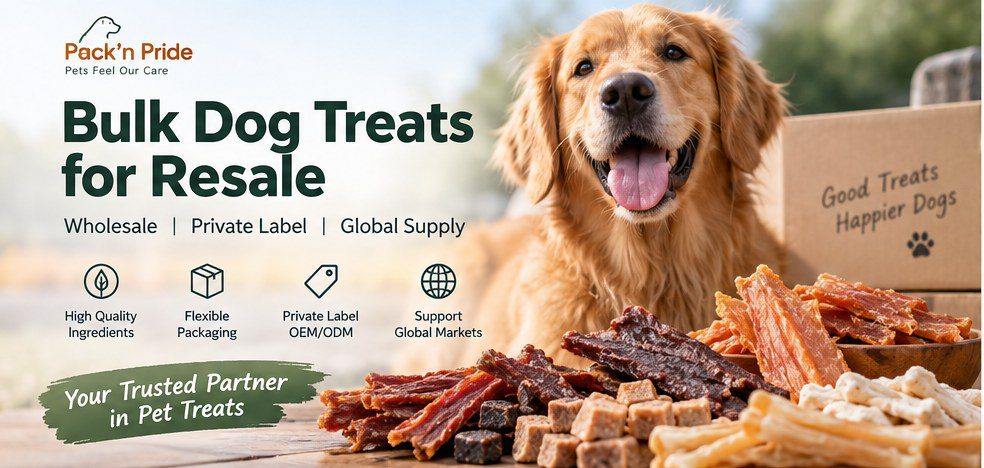
For buyers sourcing across several categories, Pack’n Pride’s Wholesale Pet Treats page provides an overview of products and wholesale supply capabilities.
9. Do Not Choose a Dog Jerky Supplier Based Only on Price
Price matters.
But the lowest quotation does not always create the highest margin.
A cheaper product can become expensive if it causes:
- Excessive breakage
- Inconsistent appearance
- Customer complaints
- Poor reviews
- High return rates
- Slow repeat sales
- Supply interruptions
Instead of comparing quotations based solely on cost per kilogram, compare equivalent products and specifications.
Consider:
Product cost + packaging + shipping + quality consistency + retail performance + supply reliability.
A slightly higher product cost can still make commercial sense if the product generates fewer complaints and stronger repeat orders.
This is especially important for distributors and retailers planning to develop a category over several years rather than importing a single shipment.
10. Request Samples Before a Commercial Order
Samples allow buyers to determine whether supplier specifications match the actual product.
Create a simple evaluation system so different products can be compared objectively.
Appearance
Does the jerky look appealing and reasonably consistent?
Aroma
Does it have the expected meat aroma?
Texture
Does the texture fit the intended feeding occasion?
Size
Are individual pieces reasonably consistent?
Breakage
How much damage occurs during handling and shipping?
Packaging Fit
Does the product sit appropriately inside the intended pouch?
Positioning
Can a consumer understand the product quickly?
Range Compatibility
Does the jerky add something useful to your existing assortment?
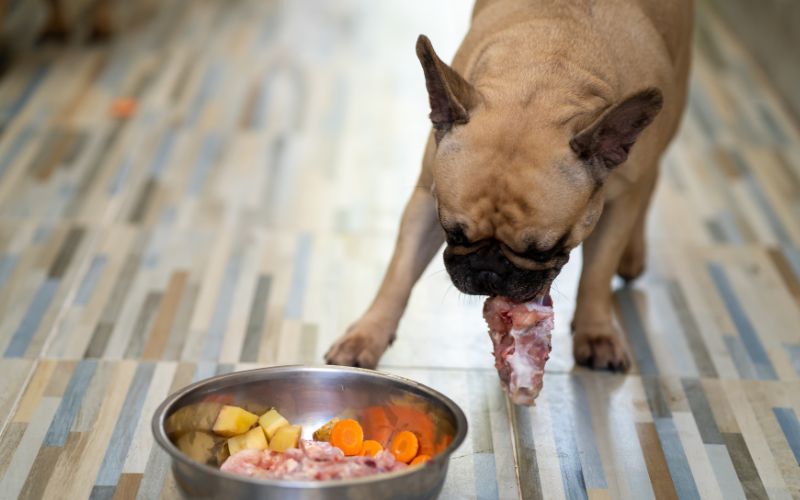
Taking notes during sample evaluation makes supplier comparisons more structured and reduces the risk of selecting products based only on first impressions.
11. Build Your Wholesale Dog Jerky Range Around Use Cases
A strong assortment does not necessarily need dozens of products.
Instead, start with several clearly differentiated items.
Everyday Treat
Chicken or duck jerky strips can provide an easy-to-understand daily reward.
Training Treat
Small jerky pieces or meat bites are suitable for repeated rewarding during training.
Premium Meat Treat
Larger fillets can provide stronger visual appeal and support a premium product position.
Chewing Treat
Wrapped meat products can combine meat appeal with a more engaging chewing experience.
Alternative Protein
Beef, fish or other protein sources can provide additional variety.
This structure gives retailers more opportunities to address different customer occasions instead of relying only on flavour differences.
Buyers planning a wider assortment can browse Pack’n Pride’s For Dogs collection for jerky, training rewards, chews and complementary dog snack products.
12. Consider Production Capacity and Lead Time
One issue wholesale buyers sometimes overlook is whether their supplier can grow with their business.
A manufacturer may be able to handle an initial test shipment without difficulty.
The real challenge appears when demand increases.
Discuss capacity early in the sourcing process.
Useful questions include:
- What is the standard production lead time?
- Does lead time change during peak seasons?
- Can production volume increase as sales grow?
- How early should repeat orders be placed?
- How are raw materials planned for larger orders?
- What happens when demand increases unexpectedly?
A strong sourcing relationship should support both the first order and future replenishment.
13. Review International Supply Experience
International dog treat sourcing involves more than manufacturing.
Importers and distributors may also require:
- Product specifications
- Commercial invoices
- Packing lists
- Certificates
- Labelling information
- Shipping documents
- Destination-market documentation
Requirements vary according to market and product category.
For this reason, buyers should confirm required documents before production rather than waiting until goods are ready for shipment.
Clear communication between buyer, manufacturer and logistics provider can reduce avoidable delays.
14. What Makes a Reliable Dog Jerky Manufacturer?
A strong supplier should provide a combination of product quality and commercial reliability.
When shortlisting dog jerky manufacturers, consider whether they can provide:
- Multiple protein options
- Stable product quality
- Clear ingredient specifications
- Controlled manufacturing processes
- Suitable packaging
- Reliable communication
- Quality documentation
- Product samples
- Repeat production capability
- International supply experience
No single factor determines whether a supplier is right for your business.
The objective is to reduce uncertainty throughout the entire sourcing process.
Dog Jerky Manufacturer Sourcing Checklist
Before placing an order, confirm the following information.
Product
- Protein type
- Ingredient list
- Treat format
- Piece size
- Texture
- Finished appearance
Manufacturing
- Production process
- Drying control
- Quality inspection
- Batch consistency
- Food safety standards
Packaging
- Pack size
- Pouch type
- Units per carton
- Master carton dimensions
- Labelling requirements
Commercial Terms
- MOQ
- Product price
- Sample availability
- Lead time
- Payment terms
Logistics
- Export documentation
- Destination requirements
- Shipping options
- Shelf life
- Storage conditions
This checklist makes it easier to compare suppliers using equivalent criteria rather than relying solely on price quotations.
Frequently Asked Questions About Dog Jerky Manufacturers
What types of dog jerky can manufacturers supply?
Common options include chicken jerky, duck jerky, beef jerky, fish treats, meat strips, fillets, bites, sticks and meat-wrapped treats.
Available products depend on the supplier and destination market.
What should wholesale buyers check before ordering dog jerky?
Check the ingredient specification, protein source, product dimensions, texture, packaging, shelf life, quality documentation, MOQ and production lead time.
Samples should also be evaluated before a larger commercial purchase whenever possible.
Is chicken or duck jerky better for wholesale?
Neither protein is automatically better.
Chicken is a familiar mainstream option, while duck can help expand product variety.
Many retailers carry both so customers can choose between multiple protein options.
What is the difference between dog jerky and dehydrated dog treats?
Dog jerky normally refers to meat-based treats prepared in strip, fillet, stick or bite formats.
Dehydrated dog treats represent a broader category that can include meat, organs, fish, vegetables and other ingredients processed through moisture reduction.
How should I compare dog jerky suppliers?
Compare suppliers using similar specifications.
Consider ingredient composition, texture, piece consistency, packaging, quality management, commercial terms, lead time and supply reliability rather than comparing only price.
Should wholesalers request samples?
Yes. Sample evaluation allows buyers to examine texture, aroma, dimensions, appearance and breakage before committing to larger volumes.
Why Work With Pack’n Pride?
For distributors, wholesalers and pet retailers, the objective is not simply to find another dog treat.
The objective is to source products that fit your market and can be supplied consistently.
Pack’n Pride offers meat-based dog treats alongside training rewards, wrapped meat products, chews and other pet snack categories.
When discussing a new sourcing requirement, it is useful to provide:
- Destination country
- Preferred protein
- Target product format
- Expected order quantity
- Preferred pack size
- Sales channel
- Expected purchasing timeline
Providing these details helps narrow the available options and makes sample and quotation discussions more efficient.
Looking for Dog Jerky Manufacturers?
If you are currently comparing dog jerky manufacturers, look beyond the first quotation.
A successful wholesale jerky range depends on the combination of:
Product quality + consistency + packaging + manufacturing control + reliable supply.
Start with a focused assortment, test samples carefully and choose products that serve clearly different customer needs.
Whether you are a pet treat distributor, wholesaler, supermarket buyer, online retailer or pet shop operator, Pack’n Pride can help you explore suitable meat-based dog treats and complementary pet snack categories.
Ready to discuss your requirements? Contact Pack’n Pride with your destination market, products of interest and expected order quantity.