Natural Cat Treats in Bulk: A Practical Buying Guide for Retailers and Distributors
Natural cat treats have moved well beyond the occasional impulse purchase. For pet shops, distributors, supermarket buyers and online sellers, they can be a compact, repeat-purchase category with clear opportunities for premium positioning and private-label growth.
However, buying natural cat treats in bulk involves more than comparing a price per kilogram. The product must appeal to selective cats, communicate its value clearly to owners, survive storage and transport, and meet the rules of the destination market. Packaging, breakage, aroma, shelf life and portion size can all affect the final margin.
This guide explains how professional buyers can build a focused bulk cat treat range and choose a manufacturing partner with fewer surprises.
What Does “Natural” Mean for Cat Treats?
Shoppers often associate natural cat treats with recognisable animal ingredients, short recipes and the absence of unnecessary artificial colours or flavours. In practical product development, however, “natural” should be treated as a claim that needs evidence—not as a vague design style.
A strong product brief might specify:
- a named meat or fish as the main ingredient;
- a single-ingredient or limited-ingredient recipe;
- no artificial colours;
- no added sugar;
- grain-free formulation where this is relevant to the target customer;
- a clearly defined drying or freeze-drying process; and
- a transparent ingredient declaration.
Claims must match the formulation and local labelling rules. The FEDIAF Code of Good Labelling Practice provides practical guidance for pet food communication in Europe, while the UK Food Standards Agency explains that pet food and treats fall within animal-feed legislation. Buyers selling into several markets should therefore confirm the wording of every front-of-pack and online claim before printing packaging.
Why Buy Natural Cat Treats in Bulk?
Bulk sourcing can improve commercial flexibility when it is planned around a clear sales channel.
Better control of unit cost
Larger production runs can reduce manufacturing and packing cost per unit. The saving may be used to protect margin, support promotions or offer a better retail price. The real comparison should still be based on landed cost rather than the factory quotation alone.
A more distinctive assortment
Bulk and private-label programmes allow buyers to select proteins, treat formats, piece sizes, pack weights and visual positioning for a specific audience. This makes it easier to separate an own-brand range from generic products already available in the same marketplace.
More packaging choices
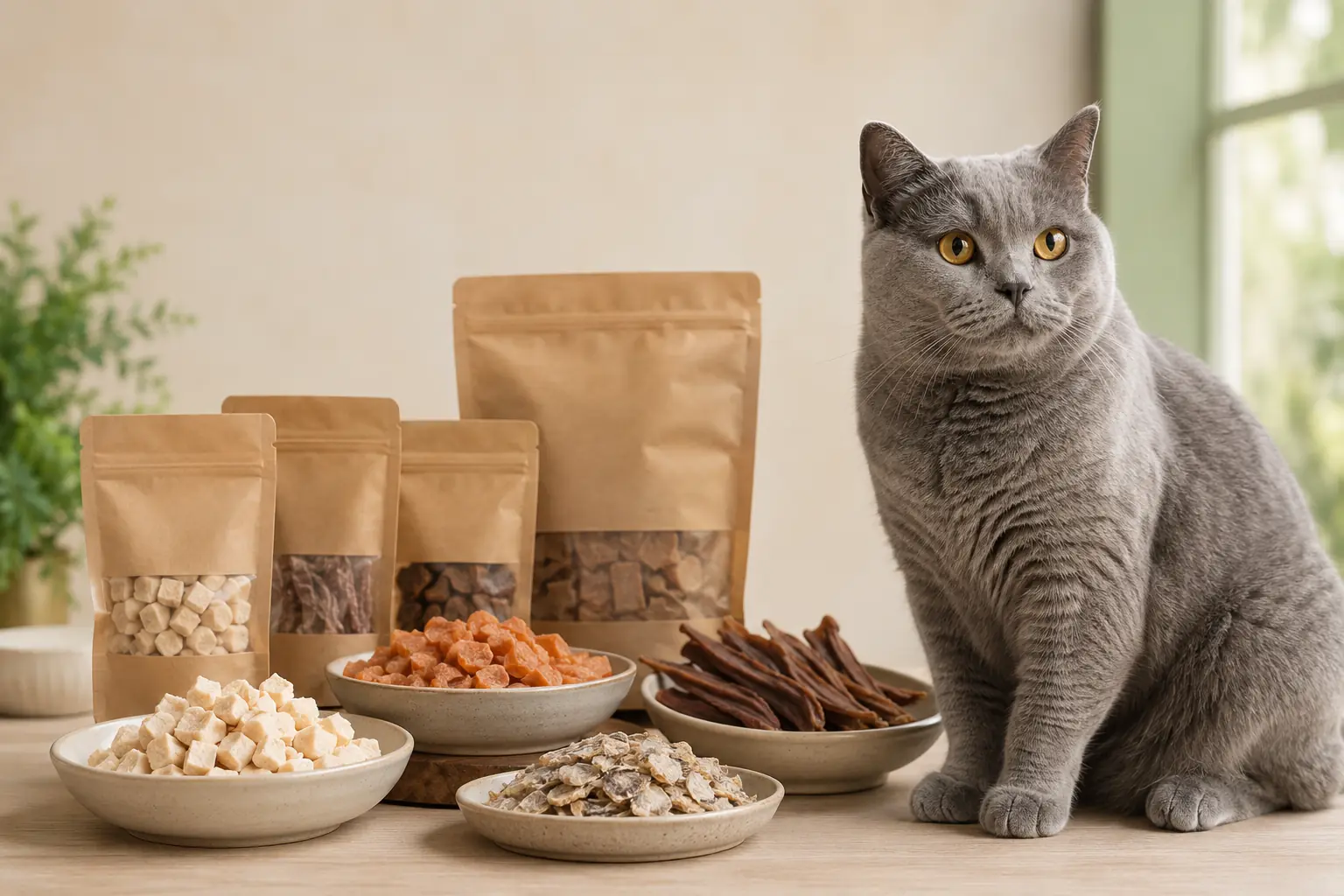
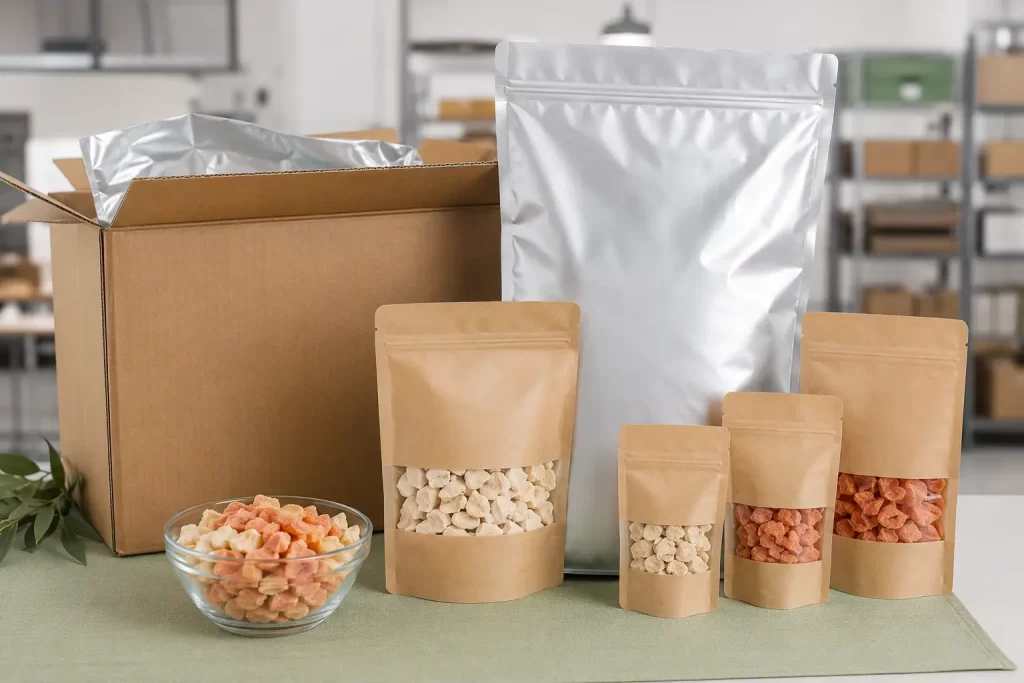
A distributor may prefer large food-grade bags for local repacking, while an Amazon seller may need retail-ready resealable pouches and marketplace-compliant cartons. A suitable manufacturer should be able to discuss both approaches.
Scalable repeat supply
Once a product proves its sell-through, an established bulk specification makes reordering more predictable. Product dimensions, moisture, colour tolerance, breakage limits, packing configuration and date coding should be recorded rather than agreed informally.
Natural Cat Treat Formats Worth Considering
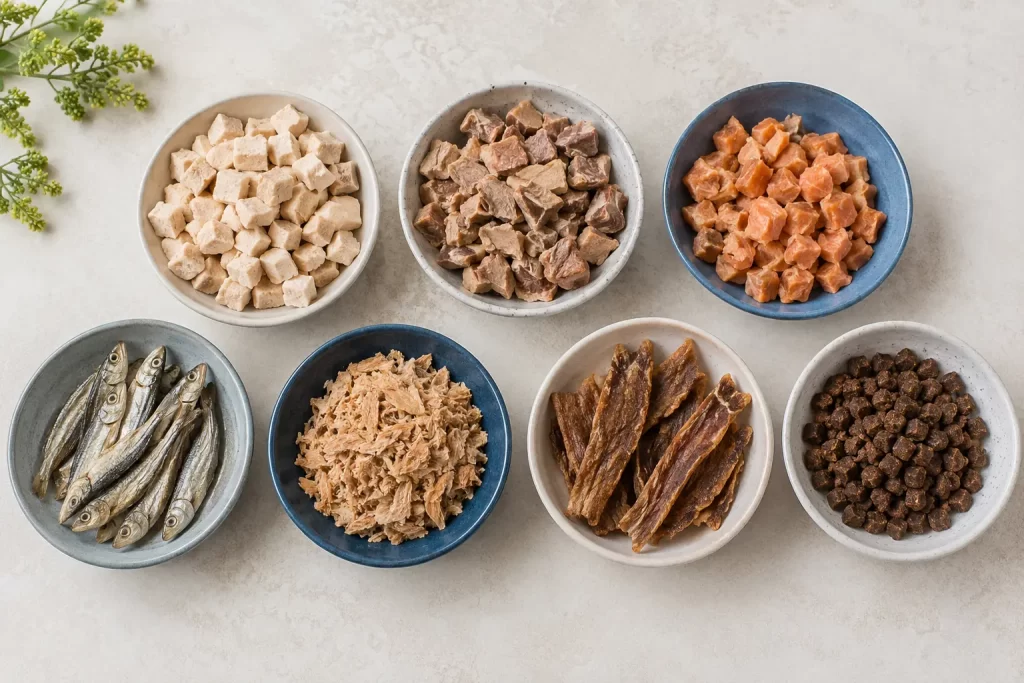
There is no single best format. The right assortment gives each SKU a clear role.
| Product format | Consumer appeal | Commercial role | Buyer checks |
|---|---|---|---|
| Freeze-dried meat cubes | Recognisable protein, light texture and premium appearance | Premium treat, topper or trial-size product | Crumbs, breakage, moisture barrier and cube size |
| Freeze-dried fish or small whole fish | Strong aroma and a clear ingredient story | High-interest fish SKU | Oil oxidation, odour control and species declaration |
| Air-dried or dehydrated strips | Chewy texture and visible meat fibres | Everyday premium treat | Strip thickness, hardness, size variation and moisture |
| Small soft bites | Easy portioning and frequent rewarding | Repeat-purchase daily treat | Piece count, texture over shelf life and calorie guidance |
| Cat biscuits | Familiar, accessible format | Entry-price or impulse SKU | Palatability, crumb level and pack integrity |
| Functional treats | Benefit-led positioning | Targeted premium range | Active level, supporting evidence and permitted claims |
Pack’n Pride’s existing cat range includes freeze-dried cat treats, alongside other cat food and snack formats. For a new launch, it is usually better to begin with a small number of clearly differentiated products than with several nearly identical flavours.
Build the Product Around Cat Feeding Behaviour
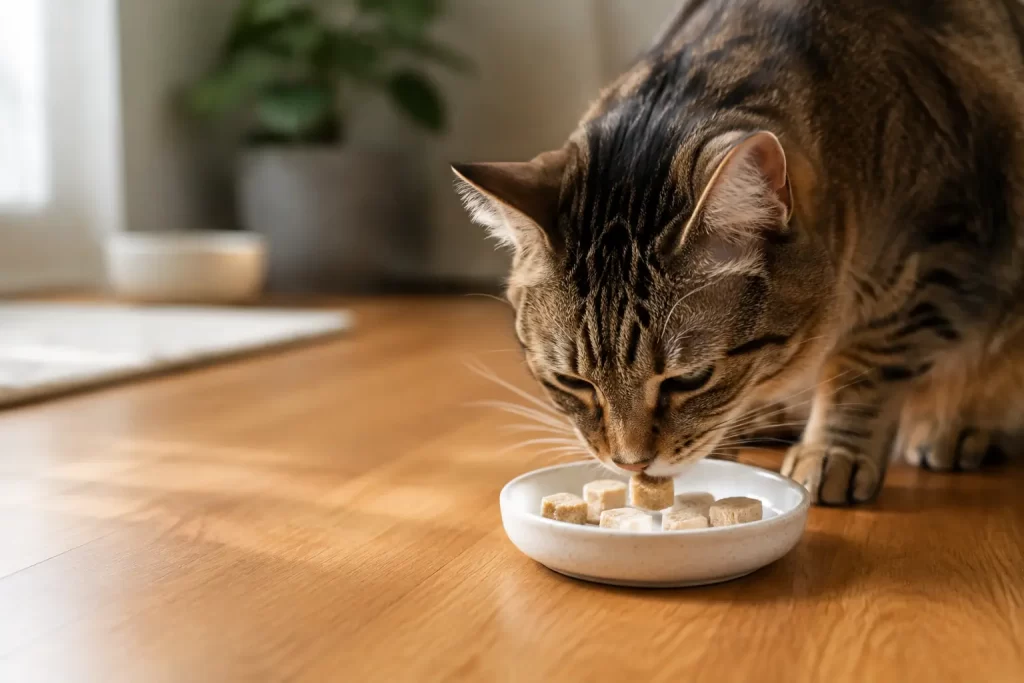
Cats should not receive a dog product in a smaller pouch. Aroma, texture and piece size matter greatly to the eating experience.
Prioritise palatability
Request representative production samples, not only hand-selected display pieces. Test aroma immediately after opening and again after the pouch has been opened and resealed several times. Observe acceptance across more than one cat where possible; individual preferences can vary.
Match the piece size to the occasion
A larger freeze-dried cube may look premium but could need to be broken before feeding. Tiny bites are convenient for frequent rewarding but can create more crumbs. Define a target size range and an acceptable percentage of small pieces or powder.
Keep the feeding message realistic
Most cat treats are complementary pet foods, not complete diets. The packaging should provide a clear feeding guide and remind owners to adjust the main meal where appropriate. Avoid presenting a snack as a substitute for balanced daily nutrition.
Protect freshness after opening
Resealable packaging is especially valuable for aromatic meat and fish products. The pouch must maintain its seal through repeated use, and its moisture and oxygen barrier should suit the product and intended shelf life.
Bulk Bags or Retail-Ready Pouches?
The word “bulk” can describe two different purchasing models. Clarify which one you need before requesting a quotation.
| Supply model | Best suited to | Advantages | Responsibilities for the buyer |
|---|---|---|---|
| Large bulk bags or lined cartons | Repackers, distributors and retailers with approved packing operations | Lower packaging cost and flexible local pack sizes | Repacking controls, labels, traceability, shelf-life management and legal compliance |
| Finished private-label pouches | Brand owners, supermarket suppliers and ecommerce sellers | Retail-ready presentation and simpler fulfilment | Artwork approval, label accuracy, printed-pack MOQ and inventory planning |
| Stock pouches with applied labels | Market tests and smaller initial launches | Faster route to market and lower artwork commitment | Label application quality and a less customised shelf appearance |
| Variety or multipacks | Gifting, discovery and online bundles | Higher perceived value and easier flavour trial | Added packing cost, more components and more complex stock control |
If you plan to sell loose treats or repack a large case into smaller units, check the local requirements before purchase. In the UK, even pet food sold loose or repacked by a retailer remains subject to labelling and traceability obligations.
Quality Checks Before You Place a Bulk Order
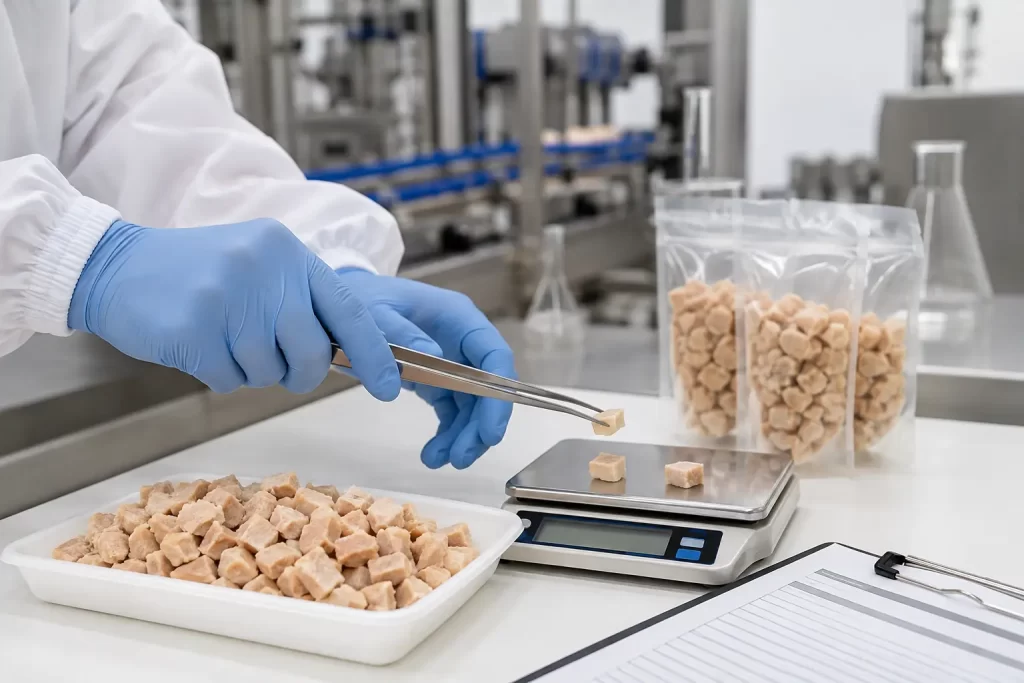
A visually attractive sample is only the beginning. Ask for documentation that describes how the product will remain consistent from order to order.
1. Ingredient and product specification
Confirm the ingredient list, country or region of origin where relevant, analytical constituents, additives, target moisture, piece dimensions, colour tolerance and sensory profile. If the recipe is described as single-ingredient, check whether processing aids or antioxidants are used.
2. Food-safety controls
Review the manufacturing site’s current certificates and their scope. Ask about hazard controls, microbiological specifications, foreign-body prevention, allergen management, traceability and recall procedures. Certificates should apply to the actual site and product category—not simply to a related company.
3. Shelf-life evidence
Request the proposed shelf life, storage conditions and supporting test approach. For fish treats, oxidation control can be as important as moisture. For freeze-dried products, packaging barrier and seal integrity influence texture and stability.
4. Production tolerances
Natural ingredients vary, but acceptable variation can still be defined. Agree limits for weight, dimensions, colour, broken pieces, powder and underweight packs. This is particularly important for ecommerce, where inconsistent pack fill or excessive dust may lead to poor reviews.
5. Destination-market documents
Provide the supplier with the intended country from the start. Ingredient declarations, permitted claims, importer details, feeding instructions, language and supporting export documents may differ by market.
How to Compare Prices Properly
The cheapest quote per kilogram is not always the most profitable offer. Build a landed-cost model that includes:
- product cost;
- retail pouch, label and carton;
- printed packaging setup or plate cost;
- freight, duty and customs clearance;
- warehousing and fulfilment;
- expected breakage or repacking loss;
- marketplace commission and advertising;
- discounts, returns and damaged stock; and
- currency movement and payment terms.
For lightweight freeze-dried treats, the shipping carton may contain a large volume relative to its net weight. Ask for finished carton dimensions and gross weight, then calculate cost per sellable pouch. A lower-density pouch can also appear underfilled even when the declared net weight is correct, so pack dimensions and visual fill should be tested together.
Private-Label Planning: Start With a Focused Range
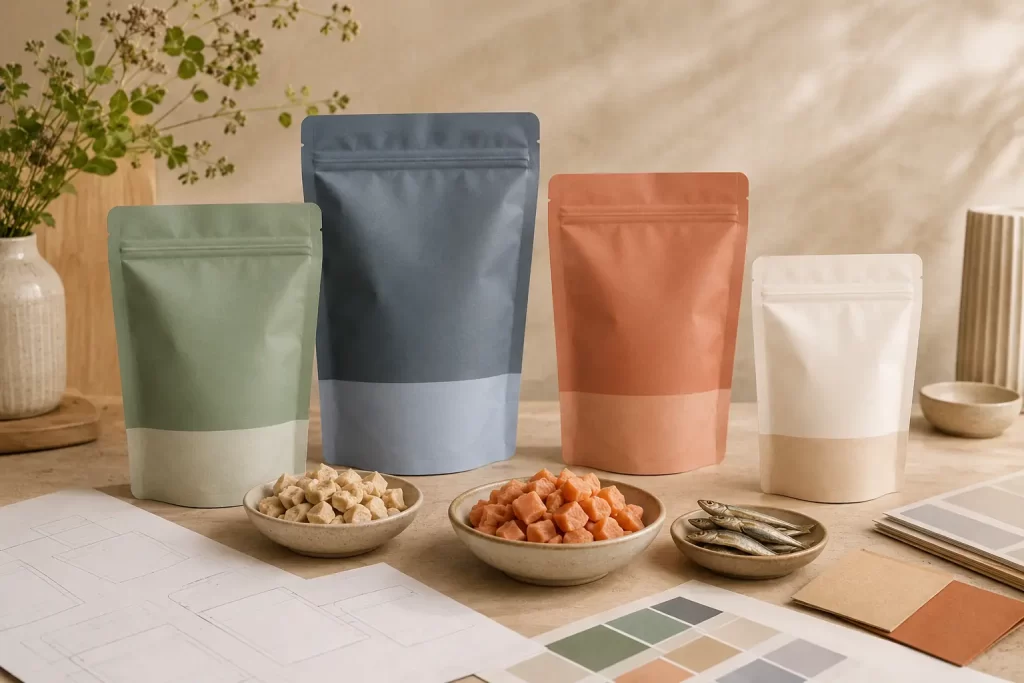
A practical first collection might contain four products with different jobs:
- Core seller: freeze-dried chicken bites in an accessible pack size.
- Premium alternative: salmon or duck for customers seeking another protein.
- Texture choice: an air-dried strip or small soft reward.
- Discovery product: a trial pack or mixed-protein bundle.
Before confirming printed packaging, test the products through selected shops, distributor accounts or ecommerce listings. Track weekly sell-through, gross margin, repeat purchase, complaints, breakage and preference by protein. Use the results to decide which SKU deserves the deepest reorder.
Private-label buyers should also plan the next order before the first launch. Printed-pouch minimums, production lead time, shipping time and safety stock all affect continuity. A successful listing can lose momentum quickly if the second shipment is ordered too late.
Questions to Ask a Natural Cat Treat Manufacturer
Send a structured brief and request written answers to these questions:
- Which proteins and processing methods are available?
- Can you supply both bulk and finished retail packs?
- What is the MOQ for the product and for custom-printed packaging?
- Which certifications cover the production site and these products?
- What specifications are used for moisture, microbiology and breakage?
- Can the recipe, piece size or pack weight be customised?
- What is the sample lead time and standard production lead time?
- Which export markets do you currently support?
- What label and technical documents can you provide?
- How are complaints, non-conformities and corrective actions handled?
A precise enquiry will produce a more useful quote. Include your destination market, preferred protein, desired claims, pack size, estimated order volume, target price, sales channel and planned launch date.
Why Source with Pack’n Pride?
Pack’n Pride supports wholesale and private-label buyers across freeze-dried, meat-based and other cat treat formats. The company works with retailers, distributors, importers and online brands that need product development, packaging and export support in one supply programme.
Depending on the product and packaging specification, buyers can discuss:
- OEM and ODM recipes;
- bulk or retail-ready supply;
- custom pack weights and packaging;
- a starting MOQ from 500 kg;
- samples in as little as seven days; and
- typical production lead times of approximately 15–20 days after confirmation.
MOQ and lead time can vary by recipe, raw material and printed packaging, so they should be confirmed for each project. Pack’n Pride also operates recognised food-safety systems, including BRCGS, IFS and FSSC 22000; buyers should request the current certificates and relevant scope during supplier approval.
Final Thoughts
Buying natural cat treats in bulk can create a strong premium and repeat-purchase category, but the best commercial result comes from disciplined product selection. Choose a clear protein story, test palatability and packaging, define quality tolerances, calculate landed cost and verify every claim for the target market.
For a lower-risk launch, start with a focused range, measure real sell-through and expand only when the data supports it.
Ready to develop a bulk or private-label cat treat range? Contact Pack’n Pride to request samples and discuss your project. Include your destination country, preferred product type, pack size and estimated volume for a more accurate recommendation.
Frequently Asked Questions
What are the best natural cat treats to buy in bulk?
Freeze-dried chicken, duck or fish products are strong premium options because they offer recognisable ingredients and versatile use as treats or toppers. Air-dried meat, small soft bites and cat biscuits can add different textures and price points. The best choice depends on your customer, channel and target margin.
Can natural cat treats be supplied under a private label?
Yes. A suitable OEM or private-label manufacturer may customise the protein, recipe, piece size, pack weight, pouch and label. MOQ will usually differ between stock packaging and fully custom-printed packaging.
What should I check before ordering bulk cat treats?
Review the ingredient and product specification, manufacturing certificates, microbiological limits, shelf-life evidence, packaging barrier, breakage tolerance, label compliance, carton dimensions, MOQ and production lead time. Test representative samples before confirming a full order.
Are freeze-dried cat treats easy to ship?
They are light and shelf-stable, but their low density can increase dimensional freight cost. They can also break if the pouch and carton do not provide enough protection. Compare the cost per sellable pouch after freight and expected breakage.
How should retailers store natural cat treats?
Follow the product specification and label. In general, sealed treats should be kept in a cool, dry place away from direct sunlight, heat and strong odours. Once opened, the pack should be resealed properly and used within the stated period.
Are natural cat treats complete cat food?
Usually not. Most treats are labelled as complementary pet food and should be fed alongside a complete diet. Buyers should verify the legal product designation and ensure that the feeding guide does not imply that the treat replaces balanced daily nutrition.