Cat Treats Bulk Wholesale
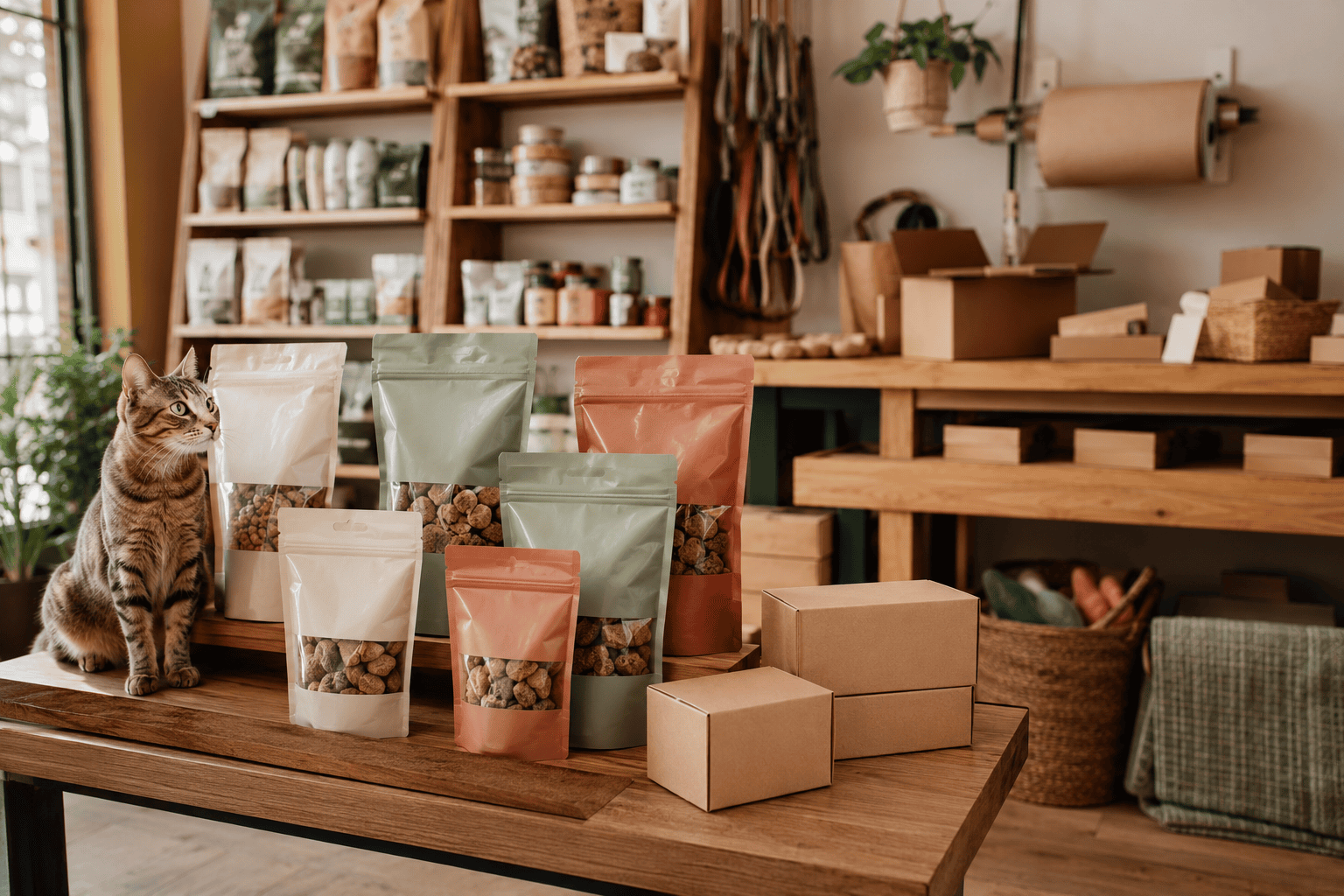
For buyers searching cat treats bulk wholesale, the hard part is rarely finding a long product list. The real challenge is choosing an assortment that cats will accept, customers can understand and your business can reorder profitably.
A strong wholesale range needs more than an attractive price per kilogram. Product format, protein choice, piece size, breakage, shelf life, packaging and market-specific labelling all affect the final result. A treat that looks profitable on a quotation may become far less attractive after repacking labour, freight, marketplace fees and damaged units are included.
This guide explains how retailers, Amazon sellers, pet shop chains, distributors and private-label brands can evaluate wholesale cat treats with greater confidence—and turn a supplier quotation into a commercially workable range.
What Does “Cat Treats in Bulk” Actually Mean?
Bulk buying can describe several different supply models. Clarifying the model at the beginning prevents misunderstandings later.
- Bulk loose product: treats are supplied in food-grade inner bags or cartons for an approved business to pack locally.
- Wholesale finished packs: retail-ready products are supplied in master cartons for resale.
- White label: an existing formula is packed under the buyer’s brand, usually with fewer development steps.
- Private label or OEM: formula, size, flavour, packaging or specifications may be customised for a market or retail channel.
The right route depends on your operation. A distributor may prefer finished packs that can move directly into shops. An established brand may need custom packaging and specifications. A smaller ecommerce seller may be better served by a proven stock formula with a manageable first order instead of launching too many bespoke SKUs at once.
Why Cat Treat Sourcing Needs a Cat-Specific Strategy
Cat treats should not be treated as smaller versions of dog snacks. Cats often respond strongly to aroma, texture and protein type, while owners expect pieces that are easy to portion and serve. This makes consistency particularly important.
Wholesale buyers should pay attention to:
- piece size and suitability for a cat’s mouth;
- aroma after opening and during the intended shelf life;
- hardness, softness or crispness between batches;
- dust and broken-piece levels after transport;
- ease of portion control;
- pack reseal performance after repeated use;
- how clearly the product benefit can be explained online or on shelf.
Before ordering at scale, request representative samples and test them in the intended packaging—not only in a factory sample bag. Packaging can affect aroma retention, texture and the customer’s experience after opening.
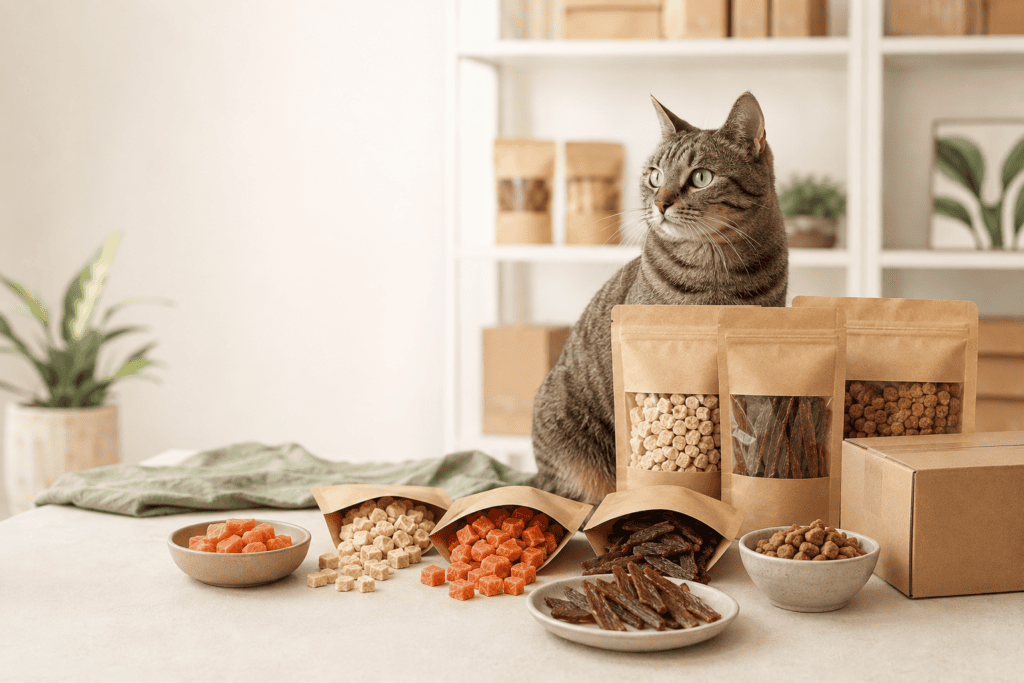
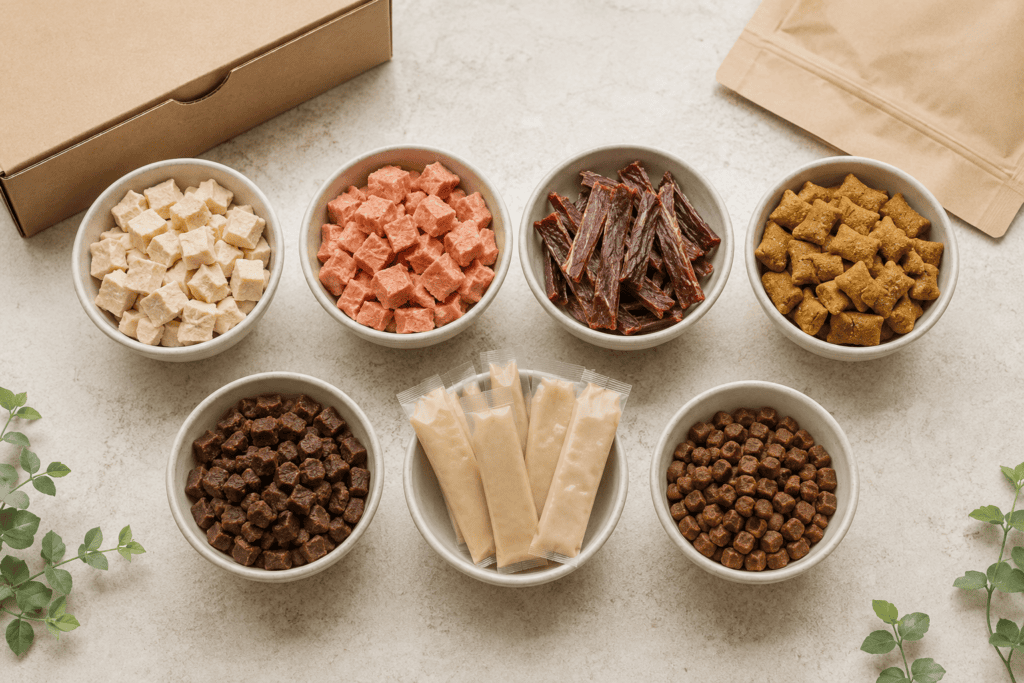
Popular Wholesale Cat Treat Formats
1. Freeze-Dried Meat Treats
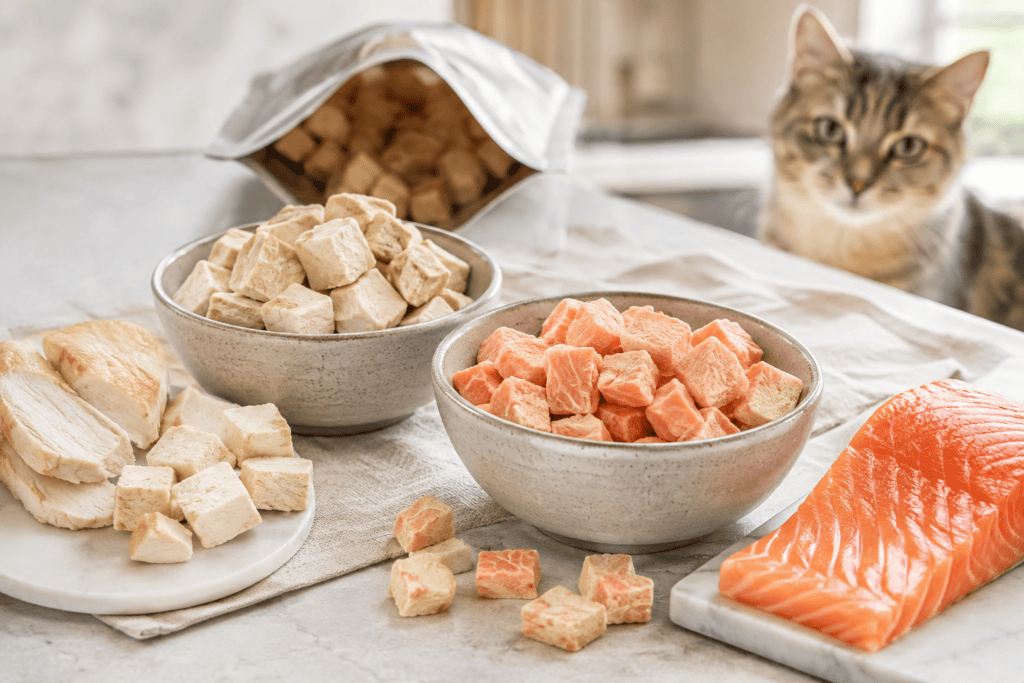
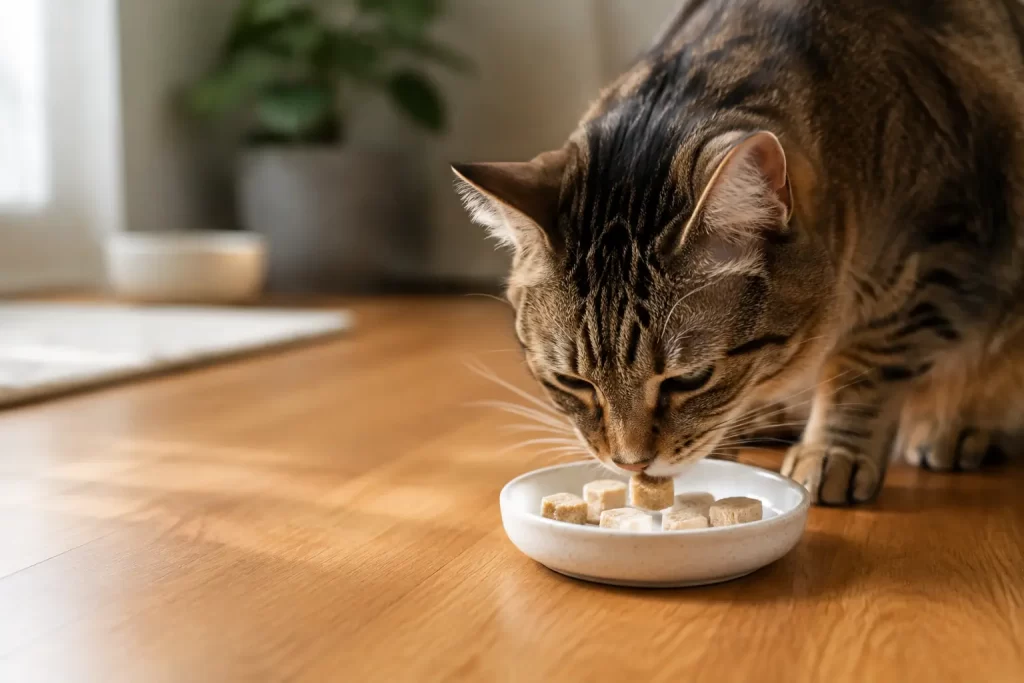
Freeze-dried chicken, duck, salmon and other protein-led treats suit premium, limited-ingredient and high-meat positioning. Their light weight can support ecommerce, but buyers must evaluate fragility, moisture control and the amount of dust created in transit.
Useful questions include: Is the specification single ingredient or a formulated recipe? What is the target piece-size range? How are broken pieces measured? What barrier properties are recommended for the pouch? For more category context, see Pack’n Pride’s guide to freeze-dried cat treats for retailers.
2. Soft and Chewy Bites
Soft bites can work well as everyday rewards because they are easy to portion. Their commercial success depends on stable texture, clean handling and packaging that prevents drying. Ask how softness is controlled throughout shelf life and whether pieces are likely to stick together in warm conditions.
3. Crunchy Treats and Biscuits
Crunchy treats can support an accessible price point and familiar snacking experience. Shape, colour and crunch should remain consistent, while cartons and inner packs must protect the product from crushing. Do not assume a lower-cost format will be more profitable if breakage produces a high return rate.
4. Jerky, Strips and Meat-Based Pieces
Small jerky-style strips can communicate visible meat texture and premium value. Buyers should confirm strip dimensions, tearing behaviour, moisture specification, storage conditions and the extent of natural colour variation between batches.
5. Creamy and Lickable Treats
Single-serve creamy treats suit bonding, hand-feeding and convenience-led positioning. Because the primary pack is central to the product experience, check seal integrity, fill-weight tolerance, outer-carton strength and performance at the temperatures expected during distribution.
6. Functional Cat Treats
Functional positioning may include hairball, digestive, skin and coat, dental or calming concepts. These products require particularly careful formulation, documentation and claims review. Buyers should agree the intended market and proposed wording before artwork is approved; ingredient inclusion alone does not automatically support every marketing claim.
How to Build a Commercially Sensible Opening Range
A large catalogue can be tempting, but a focused launch is usually easier to explain, forecast and replenish. One practical structure is:
- Core volume SKU: an approachable chicken or fish product at an everyday price.
- Premium SKU: a single-protein or freeze-dried treat with a clear ingredient story.
- Convenience SKU: a soft bite, small reward or creamy single-serve format.
- Differentiation SKU: a novel protein, functional concept or channel-exclusive pack.
This “good, better, different” structure gives customers a clear reason to trade up without forcing the buyer to hold excessive stock. Review your sales channel as well. Amazon listings need strong photography, review-friendly consistency and shipping-efficient packs. Independent pet shops may benefit from trial sizes and staff recommendations. Supermarkets often prioritise clear shelf architecture, dependable supply and exact carton specifications.
Compare Landed Cost, Not Just the Wholesale Price
The cheapest quotation is not always the lowest-cost product. Build a landed-cost model that includes:
- product and primary packaging;
- printing plates, cylinders or artwork charges where applicable;
- inner cartons and master cartons;
- freight, duty, customs and local delivery;
- quality testing and document costs;
- warehouse handling and fulfilment fees;
- marketplace commissions and advertising;
- expected breakage, dust, leakage or returns;
- promotional discounts and unsold stock risk.
Then compare the expected gross profit per pouch, not only per kilogram. A smaller premium pack may produce better cash efficiency than a large value pack, while a value SKU may deliver faster repeat sales. The right answer depends on positioning, channel and reorder speed.
Sample Evaluation: What Buyers Should Record
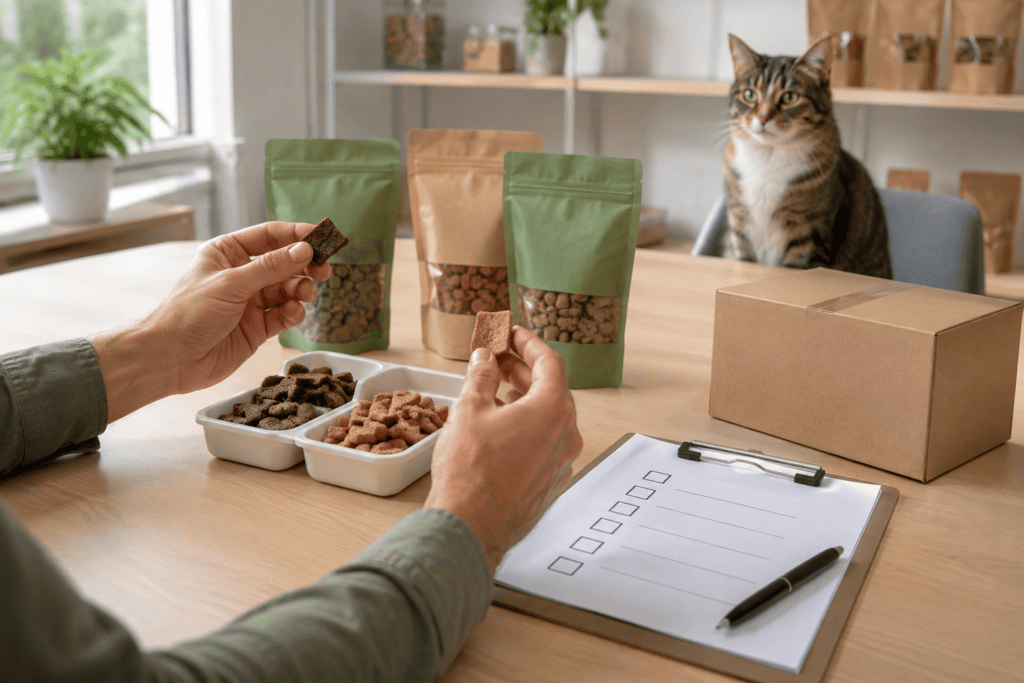
A casual tasting session is not enough for a bulk purchase. Create a scorecard and record the same information for every sample:
- Appearance: size range, colour consistency, surface texture and visible defects.
- Aroma: intensity when opened and after the pack has been resealed.
- Handling: dust, crumbs, oiliness, stickiness and ease of portioning.
- Pack performance: seal, zipper, opening experience and product protection.
- Cat acceptance: conduct a structured, welfare-conscious acceptance check rather than relying on one pet.
- Commercial fit: target retail price, competitor set, pack size and message clarity.
Keep an approved “golden sample” and written specification after selection. These provide a clearer reference for production approval than photographs alone.
Quality and Supplier Due Diligence
A professional supplier assessment should look beyond a catalogue and factory photos. Request information relevant to your product and destination market, such as:
- facility registration or approval relevant to the product;
- food-safety certifications and current audit scope;
- raw-material traceability and approved-supplier controls;
- batch coding and recall procedures;
- microbiological, chemical or physical testing plans;
- finished-product specification and tolerances;
- shelf-life basis and storage requirements;
- change-control process for ingredients, packaging or production;
- complaint handling and corrective-action procedures;
- export documentation experience for the destination market.
The depth of review should match the risk, format and sales channel. A national retailer, for example, may require a different approval package from a small independent shop.
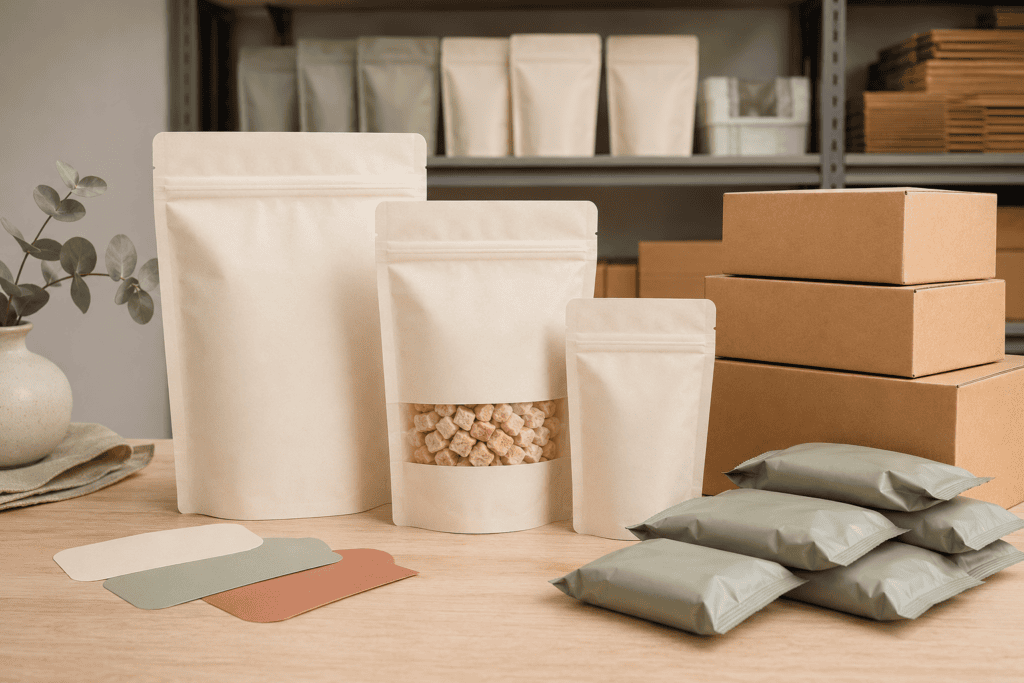
Private-Label Cat Treat Packaging
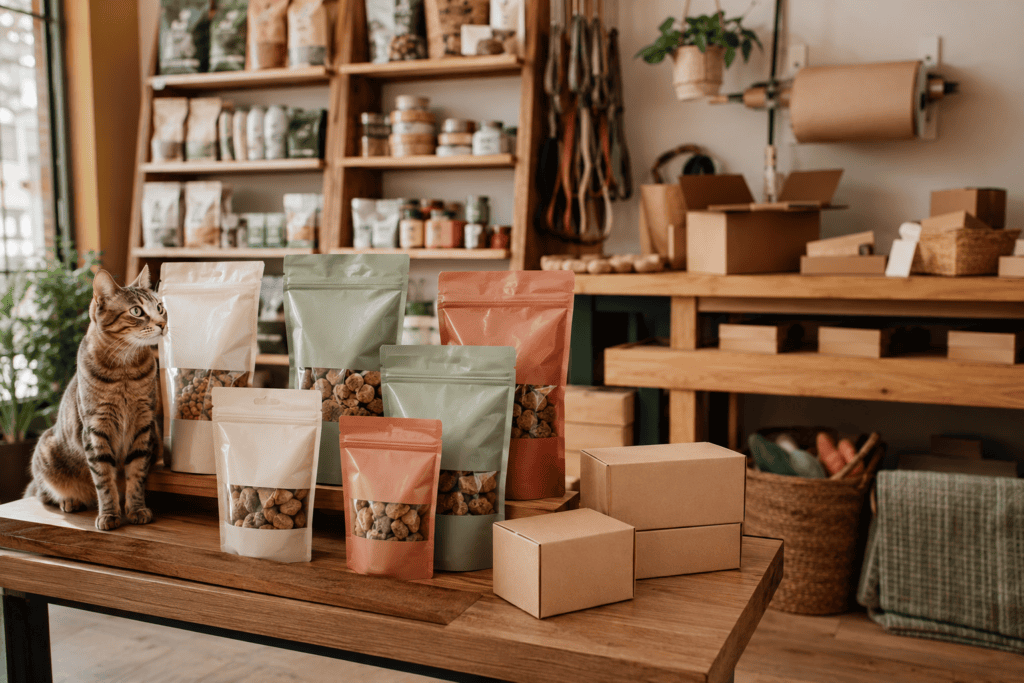
Packaging is not a decoration added at the end. It is part of product protection, compliance and the economics of your private-label programme.
Before requesting a quotation, specify:
- target net weight and number of servings;
- pouch, tub, sachet or other pack format;
- required moisture and oxygen barrier;
- resealable zipper, tear notch or single-serve opening;
- matte, gloss, window or recyclable-material preference;
- label-applied, digitally printed or gravure-printed artwork;
- case count, carton dimensions and pallet requirements;
- barcode location and ecommerce photography needs;
- languages and destination-market declarations.
For a first launch, a stock pouch with a professionally applied label may reduce complexity. Printed film can create a stronger shelf presence at scale, but it may require higher packaging quantities and longer preparation time. Ask for separate minimums for product, packaging and each artwork version.
UK Labelling Considerations for Cat Treat Buyers
In the UK, pet treats fall within the animal-feed framework. Labels must be truthful and not misleading, and required information can include whether the product is complete or complementary, the intended species, feeding directions, composition and analytical constituents. The exact obligations depend on the product and route to market, so artwork should be reviewed for the destination country before printing.
Buyers can consult the Food Standards Agency’s pet food guidance and UK Pet Food labelling guidance. Businesses selling elsewhere should confirm local registration, import and labelling requirements with a competent regulatory adviser. This article is a commercial sourcing guide, not legal advice.
MOQ, Lead Time and Reorder Planning
“What is your MOQ?” is only the first question. Ask what drives it. Product run size, printed packaging, carton quantities, protein sourcing and the number of SKUs can each create a different minimum.
Confirm the full timeline for:
- sample selection and specification approval;
- artwork and regulatory review;
- packaging production;
- finished-goods manufacturing and testing;
- export documents and dispatch;
- freight, customs clearance and local delivery.
For reorders, establish a trigger based on weekly sales, lead time and safety stock. Seasonal promotions and marketplace campaigns can create sudden demand, so share forecasts with the supplier instead of waiting until stock is nearly exhausted.
Wholesale Cat Treats for Online and Offline Retail
An omnichannel range should remain easy to identify whether it appears as a marketplace thumbnail, on a pet-shop shelf or inside a distributor catalogue. Use a clear hierarchy based on protein, format and benefit. Keep pack sizes understandable and make variant colours distinct without allowing design to obscure mandatory information.
Also test the physical journey. A pouch that looks excellent in a studio may crease, leak or crush during parcel delivery. Trial the complete shipping configuration, including master carton, void fill and courier handling, before a major launch.
A 12-Question Wholesale Enquiry Checklist
Send suppliers a structured brief to receive quotations that are easier to compare:
- Which country or region will the product be sold in?
- Which sales channels will you use?
- Which cat treat formats and proteins are required?
- Do you need a stock product, white label or custom formula?
- What is the target retail price and target landed cost?
- What pack size and packaging format do you prefer?
- What is your estimated first order and annual volume?
- How many SKUs and artwork versions are planned?
- Which specifications, certifications or tests are required?
- What shelf life and storage conditions are needed?
- When must the product arrive—not merely leave the factory?
- Which documents are required for import and retailer approval?
A precise brief helps the manufacturer recommend a realistic route instead of returning a generic price list.
Work with Pack’n Pride on Your Wholesale Cat Treat Range
Pack’n Pride supplies wholesale and private-label pet treats for retailers, distributors and brand owners. Buyers can explore the cat product range, review current wholesale pet treat trends or discuss a focused assortment for a specific market.
To receive a more useful recommendation, send your target country, preferred treat formats, proteins, pack sizes, first-order estimate, annual forecast, target price range and private-label requirements.
Ready to source cat treats in bulk? Contact Pack’n Pride or email [email protected] to discuss wholesale and OEM/private-label options.
Frequently Asked Questions
What are the best cat treats to buy in bulk?
The best format depends on channel, price point and customer. Many ranges begin with an accessible chicken or fish SKU, a premium freeze-dried option and a convenient soft or creamy treat. The strongest assortment is the one that can be explained clearly and reordered reliably.
Can wholesale cat treats be sold under my own brand?
Yes. Depending on the supplier and order size, options may include labelled stock packaging, white label, custom printed packaging or full OEM development. Confirm separate minimum quantities for the product and packaging.
How should I compare wholesale cat treat quotations?
Compare specifications, net weight, packaging, carton configuration, testing, shelf life, MOQ, lead time and landed cost. A price per kilogram without these details is not a complete commercial comparison.
What should I check in cat treat samples?
Check appearance, aroma, texture, piece-size consistency, dust or breakage, pack performance and fit with your target retail price. Record the results and retain an approved reference sample.
What information should I send for a private-label quotation?
Provide the destination market, sales channels, product type, protein, pack size, packaging preference, first-order quantity, annual forecast, target timing and any required certifications or tests.