
Pack’n Pride SEO Publishing Package
Wholesale Pet Treat Trends 2026: What Retailers and Distributors Should Stock
Wholesale pet treat buying in 2026 is no longer about choosing the longest product list. The better strategy is to build an assortment in which every SKU has a clear job: attract a new customer, drive repeat purchase, lift basket value or differentiate the store.
Demand remains resilient. The American Pet Products Association projects the overall U.S. pet industry will reach $165 billion in 2026. In Europe, 140 million households—49% of the total—own at least one pet, according to FEDIAF. Yet pet owners are also becoming more value-conscious, which means distributors and retailers must balance premium features with accessible price points.
This guide translates the leading 2026 pet food trends into practical decisions for buyers sourcing wholesale dog treats, cat treats, freeze-dried products and chews for resale.

The Market Is Growing, but Shoppers Are More Selective
Pet ownership remains deeply embedded in household life. Spending is not disappearing; it is becoming more intentional. Consumers want recognizable ingredients, specific benefits and a convincing reason to pay more.
Private label is benefiting from this change. PLMA reports that Pet Care led U.S. store-brand departments in 2025 unit growth at 5.4%. For wholesalers and retailers, this shows that customers are open to alternatives when quality, value and positioning are clear.
The implication is simple: a successful 2026 assortment needs both trust and choice, but not unnecessary duplication.
Trend 1: Natural and Recognizable Ingredients Remain the Entry Ticket
Fi Europe’s 2026 trend review highlights growing demand for natural pet food without artificial additives, preservatives and fillers. Treats are well suited to this expectation because shoppers can often see the product and understand the ingredient story quickly.
Strong wholesale options include:

- single-ingredient meat or fish treats;
- short-formula jerky with a high proportion of animal protein;
- visible meat-wrapped chews;
- freeze-dried liver, breast meat or fish;
- limited-ingredient training bites.
“Natural” should not be treated as a decorative claim. Buyers should ask how the supplier defines it, which preservatives or processing aids are used, and whether the product and label comply in the destination market.
For shelf communication, concrete statements such as “single ingredient,” “made with chicken breast” or “no artificial colors” are usually easier for shoppers to evaluate than broad lifestyle language.
Trend 2: Freeze-Dried Treats Continue to Build the Premium Tier
Freeze-dried formats match several 2026 purchase drivers: minimally processed appearance, high-protein positioning, visible ingredients and convenience. They can work as treats, training rewards or meal toppers, which expands their use occasions.
Wholesale freeze-dried dog treats can also be attractive online because of their low physical weight. However, they need careful pack design. Buyers should compare:

- product density and dimensional shipping cost;
- breakage and powder percentage after transport;
- moisture and oxygen barrier performance;
- reseal quality after opening;
- actual serving count, not only net weight;
- margin after marketplace fees and fulfillment.
A small trial pouch can introduce the category, while a larger value pouch serves established users. Variety packs can raise perceived value, but they also add sourcing, packing and inventory complexity.
Trend 3: Functional Treats Need a Clear Consumer Job
Preventative and proactive nutrition is one of Fi Europe’s leading 2026 themes. ADM also reports that 77% of global pet parents would pay more for products with functional ingredients.
For a wholesale buyer, the opportunity is not to stock every possible supplement claim. It is to select a small set of benefits that match the customer base.
| Customer need | Relevant product direction | Buyer check |
|---|---|---|
| Daily digestion | Fiber, prebiotic or postbiotic treat | Serving level and claim support |
| Skin and coat | Omega-containing soft chew or treat | Oxidation control and shelf life |
| Dental routine | Textured chew or dental stick | Size range and chewing suitability |
| Mobility | Joint-support soft chew | Active level and regulatory review |
| Calm moments | Calming treat | Ingredient evidence and warning language |
| Healthy aging | Multi-benefit senior treat | Simplicity of consumer message |
Functional products need stronger documentation than ordinary reward treats. Review the active ingredient, dosage per serving, recommended feeding amount, analytical testing and permitted claims before committing to volume.
Trend 4: Cat Treats Deserve More Assortment Space
APPA reports that cat ownership grew to 39% of U.S. households in 2025, supported by Gen Z and Millennials. Retailers whose treat mix is still overwhelmingly canine may be under-serving an expanding customer group.
Wholesale cat treats can cover several distinct occasions:
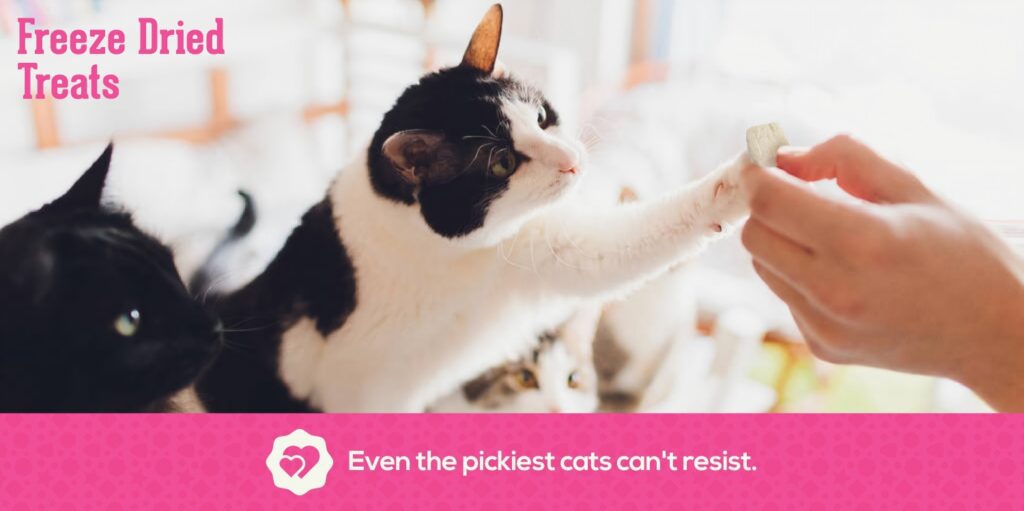
- freeze-dried meat or fish for ingredient-focused shoppers;
- lickable tubes for interactive feeding;
- broth or soup pouches for a moisture-rich snack;
- small soft bites for daily rewards;
- toppers for appetite appeal and meal variety.
Cat products should not simply be miniature dog treats. Aroma, texture, piece size, packaging and feeding behavior should be designed for cats. A focused cat bay or online collection can also make discovery easier than scattering a few cat SKUs across a dog-led range.
Trend 5: Chews Combine Function, Engagement and Basket Value
Dog chews remain commercially useful because they address a recognizable behavior and often sell at a higher unit value than small training treats. Rawhide alternatives, collagen chews, meat-wrapped sticks and dental formats can fill different positions in the range.
When buying bulk dog chews, do not evaluate only length and unit price. Check:
- weight and diameter tolerance;
- chew density and expected consumption time;
- protein source and processing method;
- natural color variation;
- odor and oil migration;
- microbiological specification;
- size guidance and safety labeling;
- breakage during carton transport.
Offer size options that match small, medium and large dogs. Too many nearly identical lengths create inventory complexity, while one universal size may limit customer relevance.
Trend 6: Occasion-Based Packs Can Increase Conversion

Innova Market Insights identifies feeding occasions, resealable packaging and on-the-go formats as emerging innovation areas. Buyers can use occasions to make a familiar treat more relevant.
Examples include training-size bites in a pocket pouch, individually wrapped chews for travel, a multi-protein discovery box, seasonal gifting packs and topper-size sachets for meal enhancement.
Occasion-based products are particularly helpful in ecommerce because the listing can answer a direct search need. “Small dog training treats” communicates more immediately than a flavor-only title.
Do not let packaging cost overwhelm the product. Estimate contribution margin after the extra pouch, carton, insert or variety-packing labor is included.
Trend 7: Value Is Being Measured per Use, Not Only per Pack
Price-sensitive consumers do not always choose the lowest shelf price. They may compare servings, duration, protein content, convenience and waste.
A retailer can make value easier to understand by showing:
- number of treats or approximate servings;
- recommended daily quantity;
- cost per chew or serving;
- reseal and shelf-life advantages;
- multi-use positioning as a reward and topper;
- size suitability to reduce unused product.
This is especially important online, where net weight alone may not communicate the amount of product inside a lightweight freeze-dried pouch.
Build a Balanced Wholesale Pet Treat Assortment

The exact mix depends on the customer and channel, but the following framework gives each product a role.
| Assortment role | Suggested category | Main commercial purpose |
| Traffic builder | Everyday chicken or duck jerky | Familiarity and accessible price |
| Repeat-purchase core | Small training treats | Frequent use and replenishment |
| Premium trade-up | Freeze-dried single protein | Higher perceived quality and margin |
| Functional solution | Dental, digestion or skin-and-coat treat | Benefit-led search and loyalty |
| Basket builder | Long-lasting chew | Higher unit value |
| Cat growth range | Lickable, soup or freeze-dried cat treat | Reach a growing segment |
| Discovery product | Variety or trial pack | Lower trial barrier and flavor testing |
Start with depth in core sellers and narrower quantities in new formats. Trend products should earn additional inventory through measured sell-through, not enthusiasm alone.
How to Evaluate a Wholesale Pet Treat Supplier
Price matters, but a low quotation cannot compensate for inconsistent specifications or delayed replenishment. Evaluate suppliers across six areas.
1. Product consistency
Ask for tolerances on weight, size, color, moisture and breakage. Natural products will vary, but acceptable variation should still be defined.
2. Food-safety systems
Review factory certifications, hazard controls, microbiological limits, traceability and recall procedures. Confirm that certificates apply to the manufacturing site and product scope.
3. Documentation and market access
Check ingredient specifications, certificates of analysis, shelf-life data, export records and destination-market documentation.

4. Packaging capability
Confirm stock and custom pouch options, minimum print quantity, barrier requirements, case packing, labels and date coding.
5. Commercial fit
Compare MOQ, production lead time, payment terms, carton dimensions and landed cost. A product should meet the margin target after freight, duty, storage, marketplace fees and expected discounting.
6. Communication and corrective action
A reliable supplier should respond with specific records and solutions when a batch, shipment or packaging issue occurs.
For a more detailed sourcing overview, read Pack’n Pride’s guide to wholesale dog treats in bulk.
Inventory Planning for New Treat Categories
Use a controlled test before placing a broad order. Select a small number of stores, ecommerce listings or distributor accounts and track:
- weekly unit sell-through;
- gross margin after discounts and fees;
- repeat purchase within the expected consumption cycle;
- return and complaint rate;
- breakage or packaging defects;
- sales by protein, size and benefit;
- attachment rate to food or other pet products.
Reorder based on lead time and sales velocity, with additional protection for products that have long production or ocean-freight cycles. Avoid comparing a premium freeze-dried SKU with an everyday jerky only by unit volume; margin, repeat rate and strategic role also matter.
What Wholesale Buyers Should Prioritize in 2026
The most attractive wholesale pet treats in 2026 sit at the intersection of clear ingredients, a specific use occasion, defensible quality and visible value. Natural jerky and training treats can anchor the everyday range. Freeze-dried proteins create a premium step. Functional treats and chews solve defined customer needs. Cat snacks add exposure to a growing segment.
The winning assortment will not be the one with the most SKUs. It will be the one customers can understand quickly and return to buy again.
Pack’n Pride supplies wholesale and private label pet treats across jerky, freeze-dried, chew and wet formats. Send your target market, preferred categories, pack sizes, forecast volume and price range to build a more focused wholesale selection.
Frequently Asked Questions
Which wholesale pet treats are trending in 2026?
Freeze-dried single proteins, functional treats, natural jerky, long-lasting chews, training-size rewards and cat-focused lickable or moisture-rich snacks are among the strongest categories.
What should buyers compare besides wholesale price?
Compare specifications, testing, certifications, packaging, breakage, shelf life, MOQ, lead time, carton dimensions, freight, duty, marketplace fees and expected sell-through.
Are freeze-dried dog treats profitable for resale?
They can support premium pricing and are lightweight, but profitability depends on raw-material cost, pack fill, breakage, dimensional shipping, marketplace fees and customer repeat purchase.

How many pet treat SKUs should a retailer launch?
There is no universal number. Start with a focused assortment covering different roles and price tiers, then expand based on sales velocity, margin and repeat purchase.
What information should I send a wholesale pet treat manufacturer?
Provide the destination market, product category, protein preference, claims, pack size, forecast volume, target price, certification requirements and desired launch date.
Research sources used