
Wholesale Dog Chews: A Complete Buying Guide for Retailers, Distributors & Amazon Sellers
Dog chews have become an important part of the modern dog treat category. Unlike many conventional snacks that are consumed within seconds, chews can provide dogs with a longer-lasting eating experience while giving retailers another high-value product category to offer.
For Amazon sellers, supermarket buyers, pet treat distributors, and independent pet retailers, wholesale dog chews can be an attractive addition to a broader dog treat portfolio.
But sourcing dog chews is different from simply buying ordinary dog treats. Buyers need to evaluate ingredient quality, chew texture, product consistency, packaging, shelf life, production capability, and supplier reliability before placing a bulk order.
This guide explains what B2B buyers should know when sourcing wholesale dog chews and how to choose a manufacturer that can support long-term growth.
What Are Wholesale Dog Chews?
Wholesale dog chews are chewable pet products purchased in bulk from manufacturers or suppliers and then sold through retail, e-commerce, distribution, or private-label channels.
Depending on the formulation and manufacturing process, dog chews can include:
- Natural meat chews
- Chicken or duck-based chews
- Beef chews
- Rawhide alternatives
- Collagen chews
- Dental-oriented chews
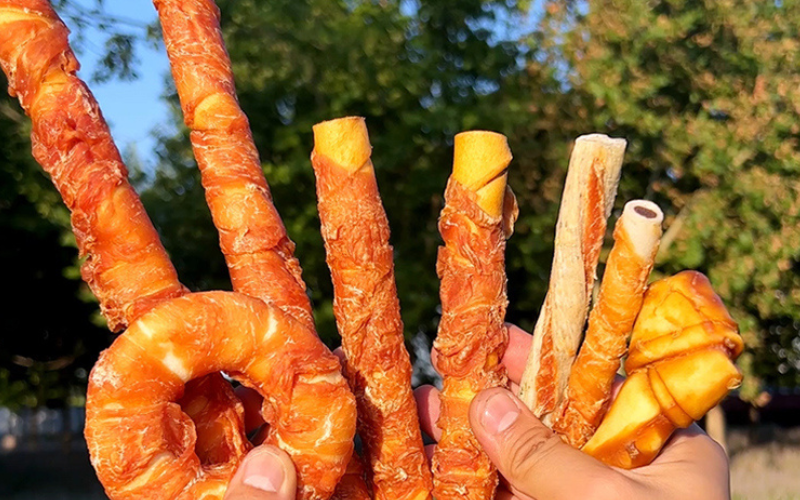
- Meat-wrapped chews
- Long-lasting chew products
- Functional dog chews
The key difference between a traditional dog treat and a chew is generally the eating experience and texture.
This makes dog chews particularly suitable for consumers looking for products that can provide dogs with a longer-lasting snack or enrichment experience.
For wholesalers, that creates an opportunity to build products around specific use cases rather than competing only on flavor or price.
Why Should Retailers Stock Wholesale Dog Chews?
Dog treats are increasingly used for training, rewarding, bonding, and everyday interaction. Pack’n Pride’s 2026 market analysis also identifies functional treats, high-protein products, and products with clear usage scenarios as important opportunities for B2B buyers.
Dog chews fit naturally into this trend because they can be positioned around several consumer needs.
1. Longer-Lasting Treat Experience
A small training treat may be consumed almost immediately.
A chew, by comparison, is designed around a longer chewing experience.
This gives retailers a different type of product to offer customers who are looking for:
- Longer-lasting snacks
- Chewing enrichment
- Reward products
- Between-meal treats
- High-protein snack options
2. Strong Product Differentiation
The dog treat market contains thousands of similar biscuits, jerky products, and training treats.
Chews offer more opportunities to differentiate through:
- Shape
- Size
- Texture
- Protein source
- Ingredients
- Functional positioning
- Packaging
- Private-label design
For an Amazon seller or supermarket buyer, this can make it easier to build a recognizable product line.
3. Multiple Price Points
A well-designed dog chew portfolio can include entry-level, mid-range, and premium products.
For example:
| Product Positioning | Typical Selling Proposition |
|---|---|
| Entry Level | Affordable everyday chew |
| Mid Range | Natural meat-based chew |
| Premium | Single-protein or premium ingredient chew |
| Functional | Dental, digestive, or other targeted positioning |
| Private Label | Customized formula and packaging |
This allows wholesalers to serve different customer segments without relying on one SKU.
Popular Types of Wholesale Dog Chews
There is no single best dog chew for every market. The right product mix depends on your sales channel, target consumers, price point, and local market preferences.
1. Natural Meat Dog Chews
Natural meat-based chews are attractive to buyers looking for simple and recognizable ingredients.

Common protein sources include:
- Chicken
- Duck
- Beef
- Pork
- Fish
These products can be positioned around protein content, natural ingredients, flavor appeal, and chewing enjoyment.
For premium retailers, ingredient transparency is particularly important.
2. Meat-Wrapped Dog Chews
Meat-wrapped chews combine a chewable base with an outer layer of meat or another palatable ingredient.
This format creates several commercial advantages:
- Strong visual appeal
- High palatability
- Multiple texture experiences
- Premium product positioning
- More opportunities for flavor combinations
For private-label brands, meat-wrapped products can also create distinctive SKUs that are easier to differentiate from generic dog treats.
3. Collagen Dog Chews
Collagen chews have become another important product concept within the premium dog chew category.
For buyers, collagen products can be positioned around:
- High-protein nutrition
- Longer chewing experience
- Premium ingredients
- Modern natural-pet positioning
However, retailers should avoid making unsupported health claims. Product descriptions and packaging should always match the applicable regulations in the target market.
4. Dental Dog Chews
Dental chews are designed around oral-care positioning and can provide retailers with a functional product category.
They are particularly useful for businesses that want to expand from conventional treats into functional pet products.
When sourcing dental chews, buyers should evaluate:
- Texture
- Shape
- Size
- Ingredient formulation
- Intended chewing duration
- Palatability
- Manufacturing consistency
Dental positioning should be supported by appropriate product documentation and compliant claims.
5. Long-Lasting Dog Chews
Long-lasting chews are especially suitable for consumers who want to give their dogs an engaging chewing activity.
From a retail perspective, the key selling points can include:
Longer chewing experience + attractive ingredients + consistent quality + convenient packaging.
This makes the category suitable for pet stores, specialty retailers, subscription boxes, and online marketplaces.
What Should Buyers Look for When Choosing Wholesale Dog Chews?
Buying dog chews in bulk requires more than comparing unit prices.
A low factory price does not necessarily mean a profitable product if the chew has inconsistent size, poor packaging, short shelf life, or unreliable supply.
Here are the most important factors to evaluate.
1. Ingredient Quality
Start with the ingredient list.
Ask the supplier:
- What are the main protein sources?
- Are artificial fillers used?
- Are by-products included?
- Are preservatives used?
- Where are the raw materials sourced?
- Can the supplier provide ingredient specifications?
Pack’n Pride focuses on natural pet snack solutions and states that its products are made without by-products or fillers.
For premium markets, a clean and easy-to-understand ingredient story can be a strong selling point.

2. Product Consistency
Consistency is critical for wholesale dog chews.
A retailer does not want the first shipment to look completely different from the second shipment.
Buyers should evaluate:
- Product dimensions
- Weight consistency
- Color
- Texture
- Aroma
- Moisture
- Packaging
- Batch-to-batch consistency
Consistent manufacturing helps reduce customer complaints and protects the retailer’s brand reputation.
3. Food Safety & Quality Management
Pet treats are food products, so manufacturing controls matter.
Before selecting a dog chew supplier, ask about:
- Food safety management systems
- Factory certifications
- Raw material controls
- Microbiological testing
- Production traceability
- Finished-product testing
- Foreign-material controls
- Batch records
For international B2B buyers, documentation can be just as important as the product itself.
4. MOQ and Production Capacity
Minimum order quantity is one of the most important commercial considerations for wholesalers.
A supplier may offer an attractive unit price but require an MOQ that is too large for a new brand.
Ask suppliers about:
- Standard MOQ
- Private-label MOQ
- Packaging MOQ
- Sample availability
- Monthly production capacity
- Lead time
- Reorder lead time
- Peak-season production capacity
A good supplier should be able to explain how production changes when your order volume increases.
5. Private Label Capability
Private label is increasingly important for Amazon sellers, distributors, and retailers.
Instead of selling a generic chew under the manufacturer’s name, buyers can develop their own:
- Brand
- Product name
- Packaging
- Product size
- Flavor combination
- SKU structure
- Market positioning
When evaluating a private label dog chew manufacturer, ask whether they can support both product development and packaging customization.
A strong OEM/ODM partner can help turn a standard chew into a differentiated retail product.

How to Build a Wholesale Dog Chew Product Portfolio
One common mistake is ordering too many similar products.
Instead, build a portfolio around different consumer needs.
A simple product structure could look like this:
Entry-Level SKU
Affordable everyday chew designed to attract price-sensitive customers.
Premium SKU
Higher-quality ingredients and stronger packaging designed for specialty retailers.
Functional SKU
Chew positioned around a specific consumer need, subject to compliant claims.
Protein-Differentiated SKU
Chicken, duck, beef, or another protein source designed to provide variety.
Long-Lasting SKU
Designed for consumers specifically looking for an extended chewing experience.
This approach gives distributors and retailers a more balanced product portfolio.
Wholesale Dog Chews for Amazon Sellers
Amazon sellers should evaluate dog chews differently from traditional brick-and-mortar retailers.
Online buyers need to understand the product quickly.
Therefore, successful listings should clearly communicate:
- What the chew is
- What ingredients it contains
- The protein source
- Size and quantity
- Intended dog size
- Texture
- Key product features
- Storage information
- Feeding guidance
Visual presentation is also extremely important.
Product photography should show the actual size and texture of the chew rather than relying only on lifestyle images.
For private-label sellers, packaging should communicate the product’s positioning within a few seconds.

Wholesale Dog Chews for Supermarkets
Supermarkets usually require a different approach.
Shelf space is limited, so products need:
Clear positioning + strong packaging + competitive retail price + reliable replenishment.
A supermarket buyer may prioritize:
- Retail price
- Packaging dimensions
- Shelf life
- Barcode requirements
- Case pack
- MOQ
- Supply reliability
- Product differentiation
- Compliance documentation
For this channel, suppliers that can provide consistent production and flexible packaging solutions can offer a significant advantage.
Wholesale Dog Chews for Distributors
Distributors need products that can work across multiple downstream customers.
Instead of focusing on one consumer profile, distributors often need a portfolio that can serve:
- Pet stores
- Online retailers
- Supermarkets
- Regional chains
- Independent stores
- Specialty pet shops
This makes product range and supply scalability particularly important.
A manufacturer capable of producing multiple chew formats can make portfolio management easier and reduce the need to coordinate with multiple factories.
Questions to Ask a Wholesale Dog Chew Supplier
Before placing a bulk order, buyers should ask the supplier:
- What types of dog chews do you manufacture?
- What are your main protein sources?
- What is the minimum order quantity?
- Can you provide samples?
- Do you offer OEM and ODM services?
- Can you customize product size and shape?
- Can you customize packaging?
- What certifications does your factory hold?
- What testing documents are available?
- What is the standard production lead time?
- What is the shelf life?
- Which countries do you currently export to?
- How do you control batch consistency?
- What is your monthly production capacity?
- Can you support long-term private-label orders?
The answers to these questions will usually reveal much more about a supplier than the initial quotation.

Why Choose Pack’n Pride for Wholesale Dog Chews?
For B2B buyers, the ideal dog chew supplier should be more than a factory that simply produces one product.
Pack’n Pride provides wholesale pet treat solutions designed for retailers, distributors, and private-label businesses.
Our product portfolio covers multiple pet snack formats, including chewy, meat-based, and freeze-dried treats, giving buyers the flexibility to build a broader product range.
Our focus is on:
- Consistent product quality
- Natural ingredient positioning
- Diverse product formats
- Competitive wholesale pricing
- OEM and private-label support
- Stable production
- International B2B supply
For buyers who are building a new dog treat brand, expanding an existing portfolio, or sourcing products for Amazon and retail distribution, a reliable manufacturing partner can significantly simplify product development and supply-chain management.
Final Thoughts: Is Wholesale Dog Chews a Good Opportunity?
Yes—but success depends on choosing the right products and the right manufacturing partner.
The strongest opportunities are not necessarily the cheapest dog chews. Instead, buyers should look for products that combine:
Good ingredients + strong palatability + appropriate chew texture + consistent quality + attractive packaging + competitive wholesale economics.

As pet owners increasingly look for treats that provide more than simple snacking, chews can become an important part of a diversified dog treat portfolio.
For Amazon sellers, supermarkets, distributors, and pet retailers, the next step is to evaluate which chew formats best match your target market and retail positioning.
Looking for a reliable wholesale dog chews supplier?
Explore Pack’n Pride’s wholesale pet treats and contact our team to discuss product selection, OEM/ODM, private-label packaging, MOQ, and wholesale requirements.
Frequently Asked Questions
1. What are wholesale dog chews?
Wholesale dog chews are chewable dog treats purchased directly from manufacturers or suppliers in bulk for resale through retail stores, Amazon, distributors, supermarkets, and other channels.
2. What types of dog chews can wholesalers buy?
Common options include natural meat chews, collagen chews, dental chews, meat-wrapped chews, long-lasting chews, and other specialized formats.
3. Can I customize wholesale dog chews?
Many manufacturers offer OEM and ODM services, allowing buyers to customize ingredients, product formats, sizes, flavors, and packaging depending on MOQ and production capabilities.
4. What should I check before choosing a dog chew manufacturer?
Evaluate ingredient quality, food-safety systems, certifications, product consistency, MOQ, production capacity, shelf life, testing documentation, lead time, and private-label capabilities.
5. Are wholesale dog chews suitable for Amazon?
Yes. Dog chews can be suitable for Amazon private-label businesses when the product, packaging, labeling, claims, documentation, and target-market requirements are properly managed.
6. How do I choose the right dog chew for my market?
Start with your target customer’s price point, preferred protein, dog size, desired chew duration, product positioning, and sales channel. A diversified portfolio can help reduce dependence on a single SKU.