
Christmas Dog Treats Wholesale: A Retail Range, Private Label and Ordering Guide
Christmas turns everyday dog treats into giftable products. For pet shops, distributors, supermarkets, Amazon sellers and private label brands, the opportunity is not simply to add red packaging to an existing range. The right Christmas dog treats wholesale programme should give shoppers an easy reason to buy, fit the retailer’s price ladder and minimise the risk of unsold seasonal stock in January.
This guide explains how to choose the right products, build profitable gift formats, plan orders and evaluate a wholesale supplier for the festive season.
Why Christmas Dog Treats Deserve a Seasonal Range
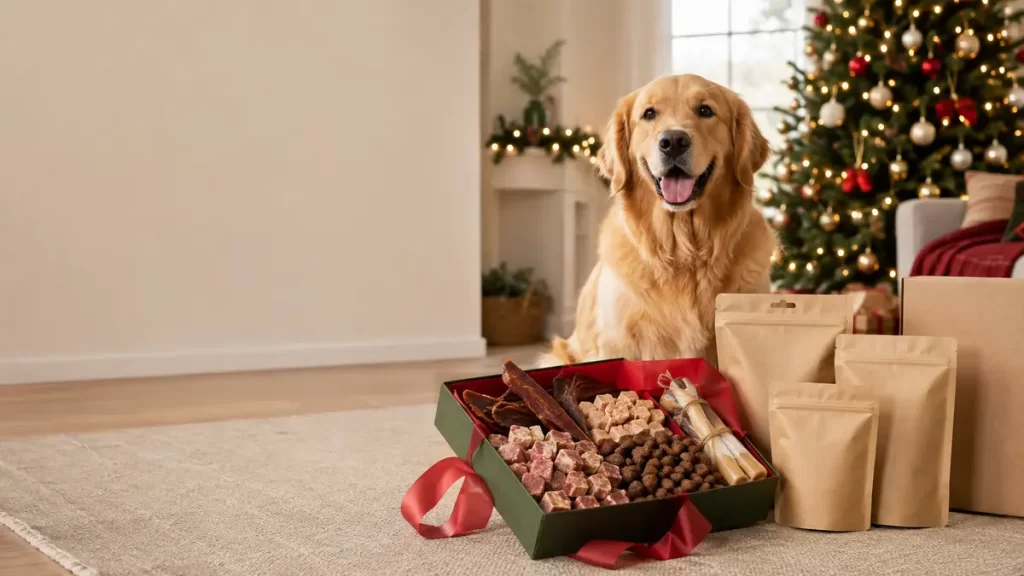
Pet owners increasingly treat dogs as members of the family, so Christmas shopping often includes a present for the dog or for a dog-loving friend. Treats work especially well because they are easy to understand, easy to bundle and available across several price points.
For retailers, a focused Christmas range can create four commercial benefits:
- Higher basket value: a gift box, premium pouch or chew can be added to a normal food or treat purchase.
- Impulse appeal: a well-presented seasonal display gives shoppers an immediate gift solution.
- Premium trade-up: festive packaging can make a familiar product feel more suitable for gifting.
- New-customer trial: mixed boxes and smaller pouches let customers try several formats without committing to a large pack.
Seasonality also creates urgency. However, too many Christmas-only SKUs can leave retailers with difficult markdowns after 25 December. The safest strategy is to build the range around products that already have year-round demand, then add seasonal packaging, bundles and merchandising.
What to Stock in a Wholesale Christmas Dog Treat Range
A strong festive assortment should cover different dog sizes, feeding occasions and shopper budgets. Five categories give most buyers enough variety without creating unnecessary inventory complexity.
1. Freeze-Dried Meat Treats for the Premium Tier
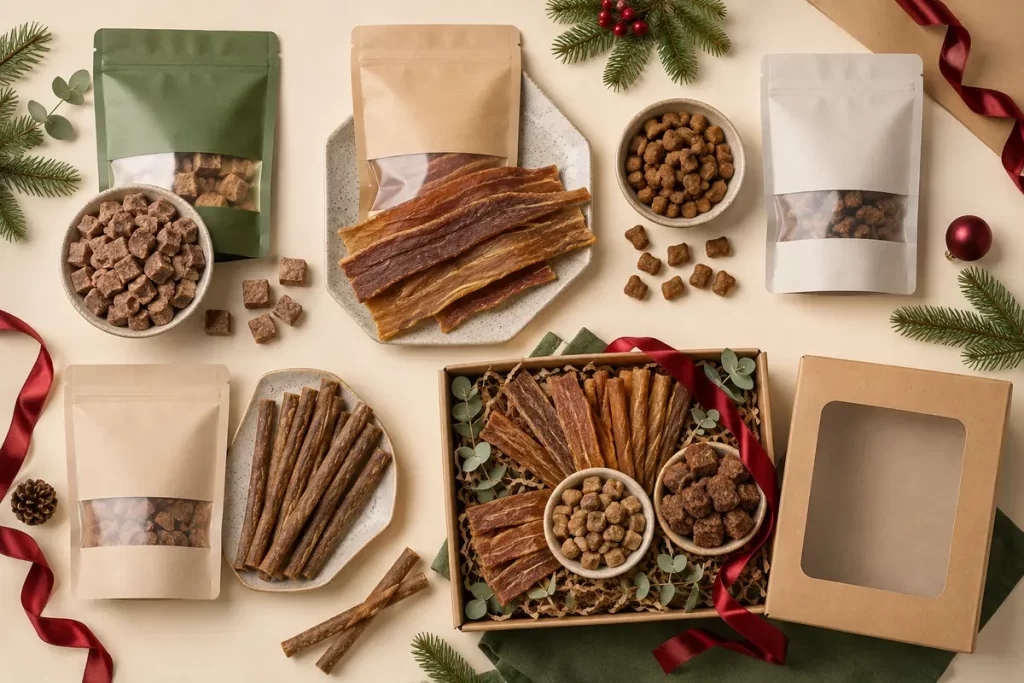
Freeze-dried dog treats have a clear ingredient story and a premium appearance. Chicken breast, beef liver and fish pieces can work as rewards, training treats or meal toppers, making them easy for shop staff and online listings to explain.
For Christmas, consider:
- single-protein pouches with a seasonal sleeve;
- two- or three-protein discovery boxes;
- small trial packs for stocking fillers;
- larger gift pouches for established customers.
Wholesale buyers should check piece size, powder percentage, breakage after transport, reseal quality and the moisture and oxygen barrier of the pack. A premium product can quickly lose appeal if the cubes arrive crushed or the pouch does not protect freshness after opening.
2. Natural Jerky and Real-Meat Treats for Broad Appeal
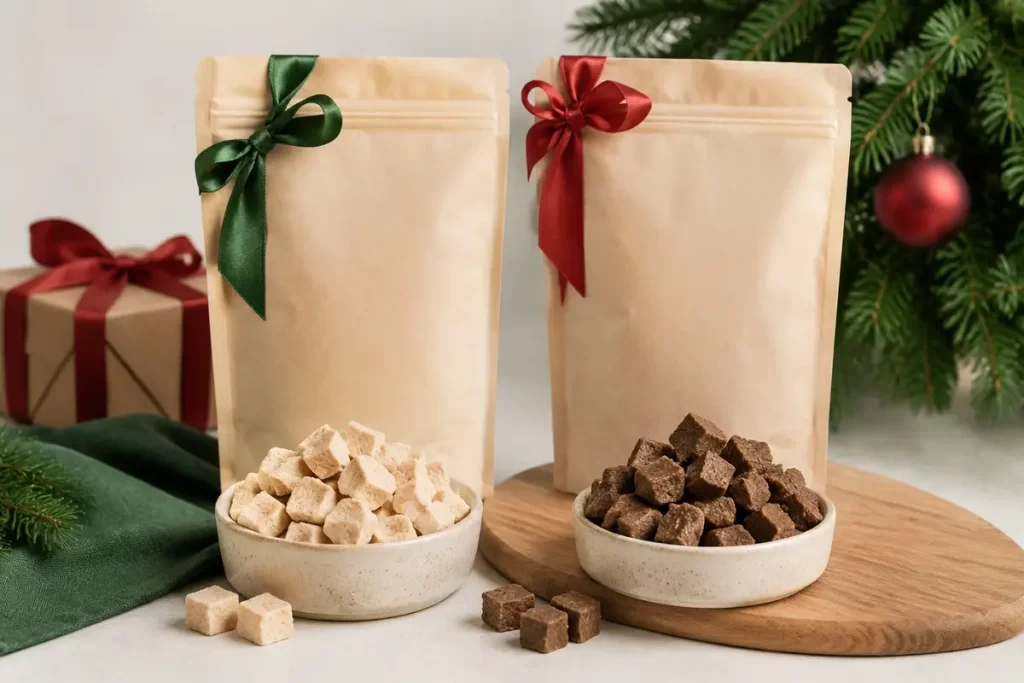
Real-meat treats such as chicken, duck or beef jerky are familiar, visible and easy to merchandise. They can anchor the mid-price part of a Christmas range and are suitable for standalone pouches or mixed gift boxes.
When comparing wholesale jerky, look beyond the protein name. Review thickness, moisture, flexibility, oil migration, odour, breakage and size consistency. These details affect pack appearance, customer expectations and the number of usable pieces in every pouch.
3. Training Bites for Stocking Fillers and Trial Packs
Small training rewards suit lower-priced seasonal purchases. They can be offered in compact resealable pouches, included in an advent-style assortment or paired with a toy in a gift set.
The best training treats are easy to portion and small enough for repeated rewarding. Buyers should compare calorie content, texture, crumbling and suitability for different dog sizes rather than choosing only by pack price.
4. Chews for a Higher-Value Gift
Longer-lasting dog chews create a useful step above everyday bite-sized treats. Individually wrapped sticks, meat-wrapped chews and small mixed chew boxes can increase perceived gift value.
Size guidance matters. Offer clearly differentiated options for small, medium and large dogs, and make sure packaging carries appropriate supervision and drinking-water advice. Buyers should also evaluate diameter tolerance, density, natural colour variation, breakage and microbiological specifications.
5. Mixed Christmas Dog Treat Gift Boxes
A mixed box turns several familiar products into one easy gift. A simple structure could include:
- one premium freeze-dried pouch;
- one jerky pouch;
- one small training-treat pouch;
- one appropriately sized chew;
- a seasonal gift carton or sleeve.
Keep the selection easy to understand. A box with three clearly different products is often more appealing than one filled with many similar SKUs. Every item should have its own ingredient and feeding information, while the outer pack should make the intended dog size and key product features clear.
Match the Christmas Range to the Sales Channel
The best wholesale assortment depends on where it will be sold.
| Sales channel | Best product direction | Key buying consideration |
|---|---|---|
| Independent pet shops | Curated gift boxes, natural jerky and size-specific chews | Shelf impact, staff explanation and manageable case quantities |
| Supermarkets | Recognisable proteins, simple price points and compact gift packs | Fast shopper understanding and dependable volume supply |
| Amazon and ecommerce | Freeze-dried pouches, bundles and letterbox-friendly gifts | Dimensional shipping, breakage, listing images and fulfilment fees |
| Distributors | A focused good-better-best range | Reorder availability, carton efficiency and retailer-ready sales materials |
| Subscription boxes | Trial pouches, training bites and individually packed chews | Pack dimensions, novelty and consistent monthly supply |
Before choosing products, define the intended retail price and work backwards. A beautiful gift carton will not protect profit if packaging, picking, marketplace fees, freight and post-Christmas discounting were not included in the margin calculation.
Private Label Christmas Dog Treats Without Excess Seasonal Stock
Private label gives retailers and distributors more control over packaging, product mix and brand presentation. The main seasonal risk is committing too much stock to a design that cannot be sold after Christmas.
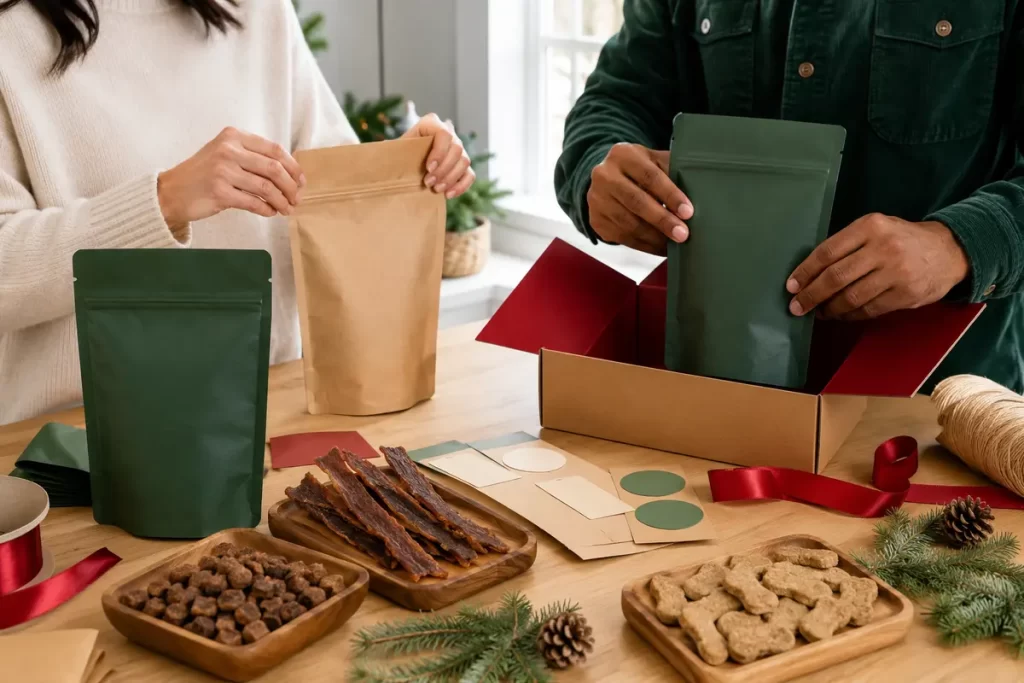
Use these methods to reduce that risk:
- Keep the main pouch evergreen. Add a removable Christmas sleeve, sticker, ribbon or gift carton around a year-round product.
- Limit seasonal formulas. Familiar proteins usually need less customer education and can be carried into the core range.
- Build bundles late where possible. Packing standard products into gift boxes closer to launch allows demand forecasts to improve before final assembly.
- Use a small test run for new concepts. Measure sell-through before expanding the programme across more stores or marketplaces.
- Agree what can be reordered. Fast-moving pouches may be replenished, while printed gift cartons may have longer lead times or higher print minimums.
Custom packaging still needs sufficient space for the product name, ingredients, analytical information, feeding guidance, net quantity, batch and date coding, responsible business details and any market-specific warnings. Final artwork should be reviewed for the destination market before mass printing.
A Practical Christmas Wholesale Ordering Timeline
The correct schedule depends on product complexity, packaging, production capacity, transport route and import procedures. Buyers should plan backwards from the date stock must be available in the warehouse—not from Christmas Day.

| Time before retail launch | Recommended action |
|---|---|
| 5–7 months | Set the target customer, price ladder, product categories and forecast volume |
| 4–5 months | Request samples, compare specifications and choose the initial range |
| 3–4 months | Confirm formula, pack size, case pack, compliance requirements and artwork |
| 2–3 months | Place the production order and approve final packaging proofs |
| 6–10 weeks | Allow for production completion, freight, customs and delivery variance |
| 3–5 weeks | Receive stock, inspect cases, prepare listings and build retail displays |
These ranges are planning guidance rather than guaranteed lead times. Custom-printed packaging, new formulations and ocean freight usually require more protection than stock packaging and established recipes. Ask the supplier for a written critical path and identify which approval dates cannot move without affecting delivery.
Quality and Compliance Checks for Wholesale Buyers
Seasonal presentation should never replace routine product due diligence. Before committing to volume, request the documents and specifications relevant to the product and destination market.
A useful checklist includes:
- full ingredient composition and allergen information;
- guaranteed or analytical constituents, as required locally;
- feeding instructions and suitable dog-size guidance;
- shelf life, storage conditions and opened-pack advice;
- microbiological and chemical limits;
- certificate of analysis or agreed batch testing;
- traceability, batch coding and recall procedures;
- packaging barrier specification and seal testing;
- carton dimensions, gross weight and case configuration;
- current food-safety certificates for the actual production site and product scope;
- compliant product claims and required local-language labelling.
Natural treats can vary in colour, shape and texture, but the acceptable tolerances should still be defined. Compare approved samples with production specifications, not only with marketing photographs.
How Retailers Can Merchandise Christmas Dog Treats
The display should help the shopper answer three questions quickly: Who is it for? What is inside? How much should I spend?
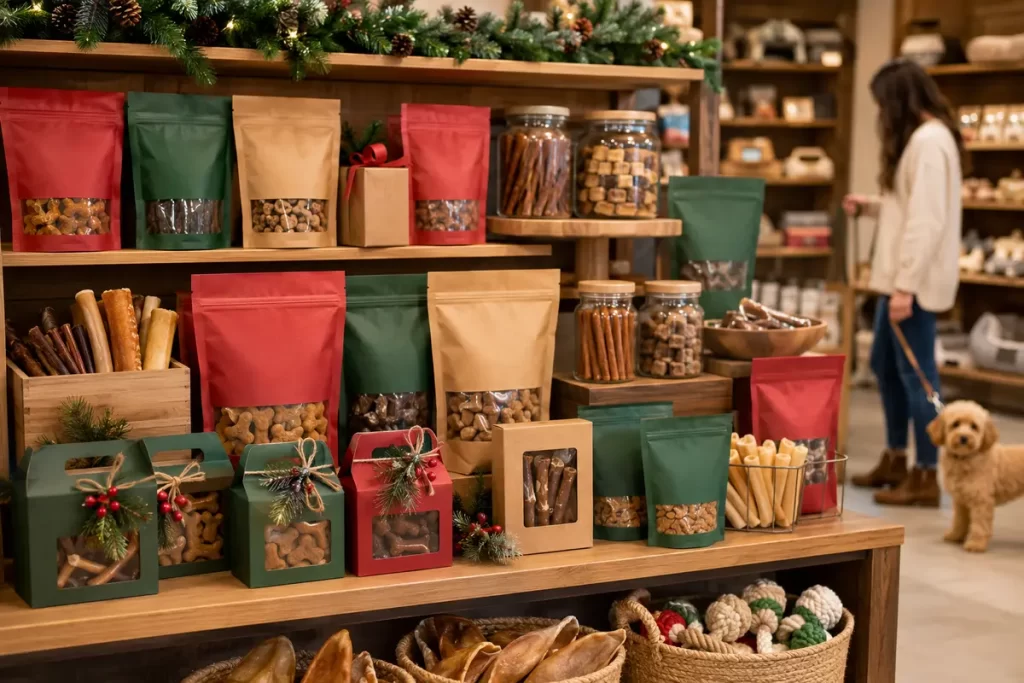
Create a simple price ladder:
- Good: a small training-treat or jerky pouch for a stocking filler;
- Better: a premium freeze-dried pouch or size-specific chew;
- Best: a mixed gift box with several treat formats.
In store, place the range near the till, gifting area or core dog-treat aisle rather than separating it from normal shopping traffic. Online, show the open pack, treat size and complete gift contents. State the dog size, protein, pack weight and key ingredient features clearly in the product title and first images.
Bundles can also connect the seasonal purchase to a use occasion: a puppy’s first Christmas, a gift for a dog walker, a multi-dog household or a premium present for a dog-loving friend.
Why Source Christmas Dog Treats with Pack’n Pride?
Pack’n Pride’s published range covers several formats that can support a focused festive assortment, including freeze-dried treats, real-meat treats, training rewards and chews. The company also supports wholesale and private label product development for retailers, distributors and pet brands selling across different markets.
The most useful first enquiry is specific. Include:
- destination country and sales channel;
- preferred treat categories and proteins;
- target pack sizes and retail price points;
- estimated order volume;
- stock or custom packaging preference;
- required certifications and testing;
- desired warehouse delivery date.
This information helps the supplier recommend a realistic product and packaging route instead of sending an unfocused catalogue.
Ready to plan your festive range? Contact Pack’n Pride to discuss samples, wholesale options and private label Christmas dog treats for your market.
Frequently Asked Questions
When should retailers order Christmas dog treats wholesale?
Begin planning five to seven months before the intended retail launch. Stock products and simple seasonal sleeves may need less time, while custom formulas, printed packaging and international freight need more. Confirm a written schedule with the supplier before approving artwork or placing the final order.
What are the best dog treats for Christmas gift boxes?
A balanced box can combine a premium freeze-dried product, familiar meat jerky, small training bites and one size-appropriate chew. Choose clearly different formats so the gift feels varied without becoming confusing.
Can Christmas dog treats be private labelled?
Yes. Depending on the manufacturer, buyers may customise the product, pack size, pouch, label, carton and mixed gift-box configuration. Packaging and claims must meet the rules of the destination market.
How can buyers reduce leftover Christmas stock?
Use evergreen core pouches with removable festive sleeves or gift cartons, keep seasonal formulas limited, test new bundles in smaller quantities and plan a markdown or unbundling strategy before launch.
What should I send when requesting a wholesale quotation?
Provide the destination market, product type, protein, pack size, expected volume, packaging preference, certification needs, target price and required delivery date. Clear information produces a more useful quotation and timeline.
Build the Range Around Products Customers Will Understand
The most successful Christmas dog treat programme does not need the largest number of SKUs. It needs a clear product ladder, giftable presentation, reliable quality and a delivery plan that protects the selling season.
Use familiar jerky and training treats to create accessible price points, freeze-dried products for premium appeal, and chews or mixed boxes to build basket value. Add Christmas through packaging and merchandising while keeping as much of the underlying range evergreen as possible. That approach gives retailers a festive offer with stronger sell-through potential and less post-season risk.