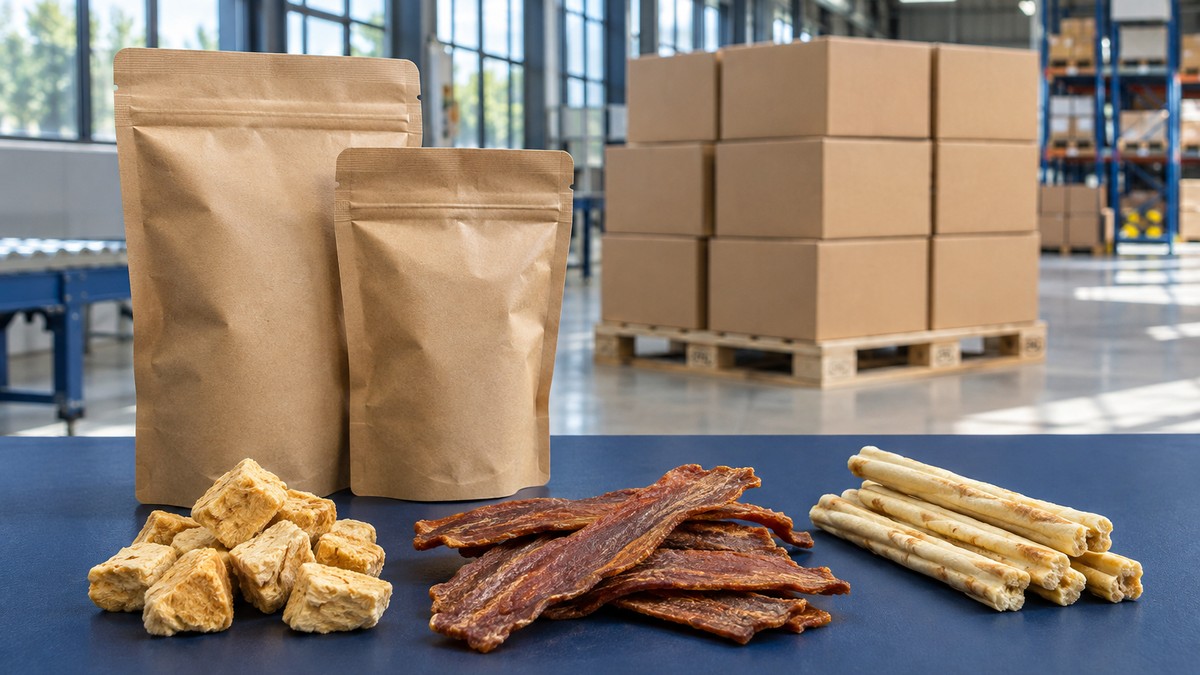
A price list can tell you what a case of dog treats costs at the supplier’s warehouse. To decide whether it belongs in your range, you also need to know whether the product can enter your market, how many saleable packs will reach your warehouse and what it will cost to replenish them.
Distributors source bulk dog treats internationally by selecting a shortlist of retail-ready products, checking each SKU against the destination market’s import rules, approving samples and comparing the landed cost per saleable pack. A trial order then shows which products merit a reorder. If you are building a branded range for pet shops, online retail or regional distribution, start by exploring Pack’n Pride’s wholesale pet treats.
1. Choose the dog treats your retailers can sell
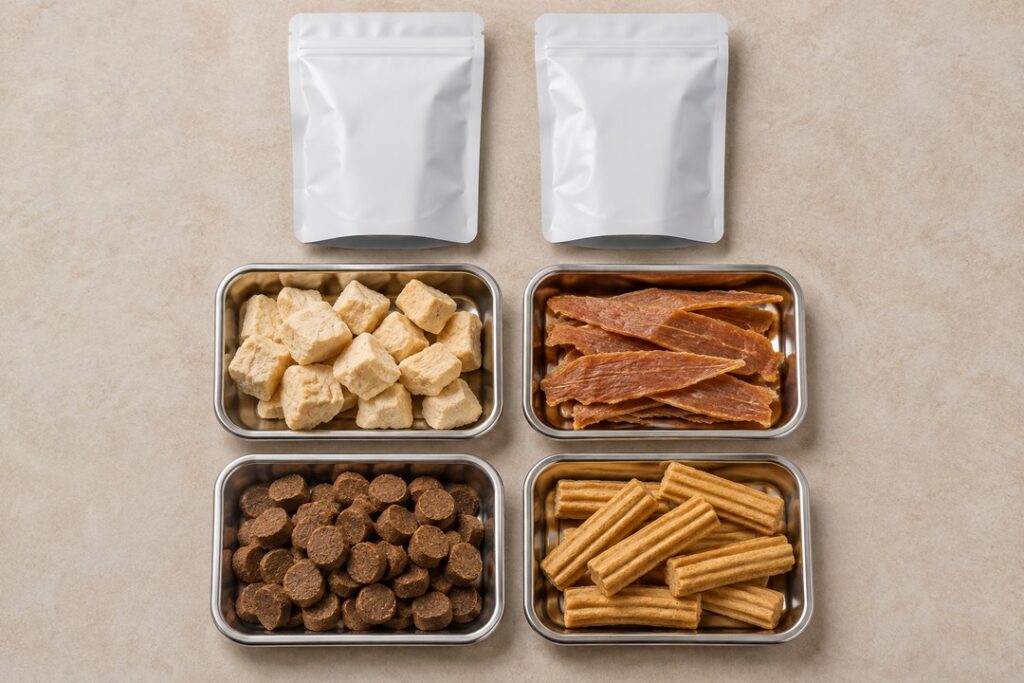
Start with the outlet that will sell the treats. An independent pet shop may want an everyday training bite that staff can recommend at the till. An online retailer may prefer sealed pouches with dependable case counts and packaging that travels well. A retail chain may ask for barcodes, case dimensions and a range that covers several price points.
- Training rewards. Assess piece size, texture and how easily shoppers can handle several pieces during a session. Browse dog training rewards.
- Freeze-dried treats. Compare pack weights, ingredient lists and how well the pieces hold up in transit. Browse freeze-dried dog treats.
- Meat treats and jerky. Check how consistent the strips or bites are and whether the pack fits your everyday treat price point. Browse real meat dog treats.
- Chews. Review the size range, feeding guidance and any proposed label claims for your market. Browse dog chews and dental treats.
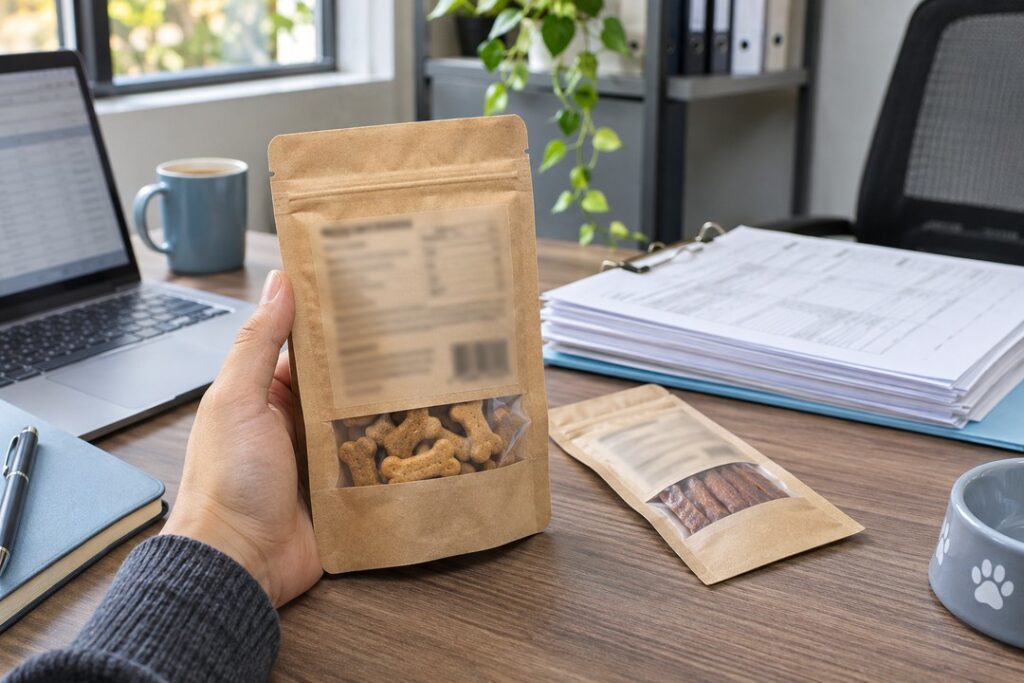
Build a shortlist around a few distinct buying occasions and define a target retail price and preferred pack size for each. Tell the supplier if you want sealed branded retail packs by the case. That detail affects the quote, labelling and case configuration.
2. Check import eligibility before you approve a SKU
Give your customs broker or local regulatory adviser the complete ingredient list, animal species and ingredient origins, finished-product manufacturing country and site, and a description of how the treat is processed. The country a parcel ships from can differ from the country where the treats were made. Ask for a product-specific check, especially when a range includes poultry, fish, rawhide or freeze-dried animal ingredients.
Have the responsible importer confirm the rules for the exact product and route. These are starting points for three common destinations.
| Destination | What the importer should check |
|---|---|
| Great Britain | Identify the applicable commodity category. Processed pet food and dog chews have separate import guidance. Review the government import notes for pet food and dog chews. |
| United States | Review FDA prior notice and applicable Foreign Supplier Verification Program obligations. Check whether the animal-origin ingredients, origin and processing trigger USDA requirements. Consult FDA animal food import guidance and USDA APHIS animal product import guidance. |
| European Union | For animal-origin pet treats entering from outside the EU, verify which origin countries and establishments are eligible and which official certificate applies. Consult the European Commission’s Access2Markets guidance. |
Review the proposed label early. Have the party responsible for local compliance confirm the required language, declarations, net quantity, date marking, business details and any claims on the pack. Put label approval and any outstanding import documents on the purchase order checklist before committing to printed stock.

3. Compare minimum orders and landed cost per saleable pack
Ask suppliers for the minimum order quantity (MOQ) per SKU and per shipment. Confirm whether you can combine flavours and formats, what the reorder minimum is, and whether a market-specific label or pack size raises the minimum. Ask how many retail units fit in a master case, plus the gross weight and dimensions of the case. Those figures let your freight forwarder quote the actual shipment.
Request quotes in the same currency and at the same delivery point, with the Incoterms® 2020 rule and named place stated. Confirm who will handle export clearance, freight, insurance, import clearance and delivery. Your landed cost should account for product, freight, insurance, applicable duties, brokerage, handling and inland delivery, with each charge counted once. Have your finance team confirm how to treat recoverable import tax.
Example. An illustrative order of 2,000 pouches at £1.40 each costs £2,800. Add £600 in freight, duty and handling for a total of £3,400. With 1,950 saleable pouches after setting aside 50 for samples and anticipated damage, the cost is about £1.74 per saleable pouch. Use that number to work back from your target shelf price and the margins your channel needs.
For a worked pricing and margin framework, see how pet treat wholesale pricing and retail margins work.
4. Approve samples and agree what the first order must match
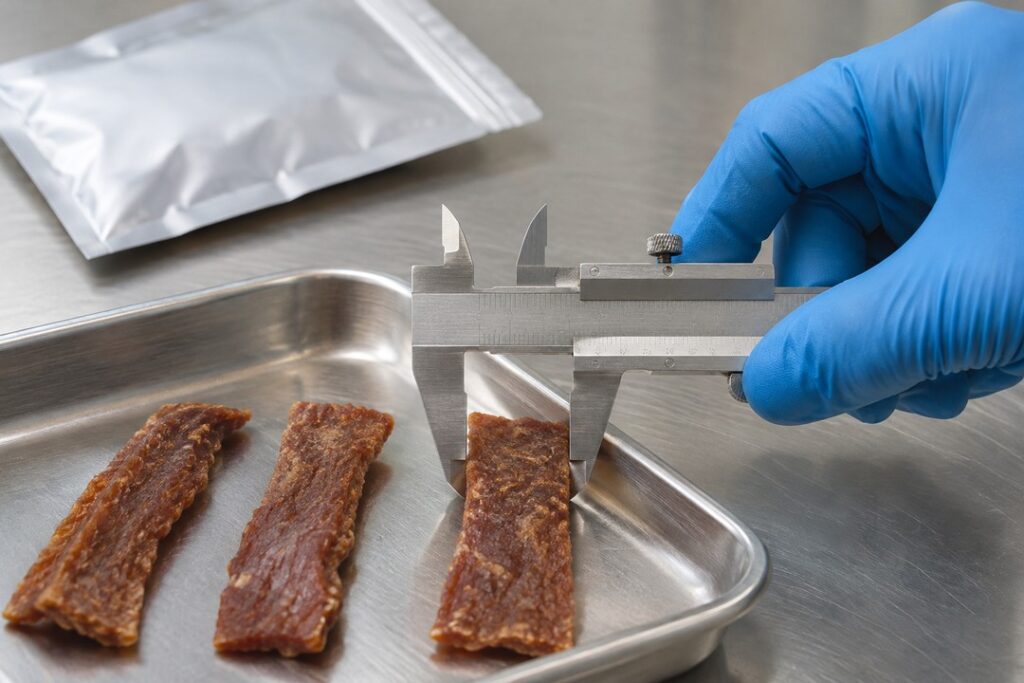
Ask for samples representative of the production specification and packaging you intend to buy. Request the product specification, shelf life and storage instructions, the bag and case specifications, and an example of the traceability information or lot-level test documentation you expect to receive. Agree what is required for each SKU before you place an order.
- Product. Compare size, texture, odour and piece consistency across pouches. Look for excess crumbs or breakage in fragile formats.
- Packaging. Check pouch seals, the barcode, print legibility, lot coding, pack weights and the number of units per case.
- Receiving standard. Set a minimum remaining shelf life at warehouse receipt, an agreed inspection window and a process for handling short shipments, damaged stock or product that falls outside the specification.
Keep an approved sample and a dated copy of the specifications and artwork. Your receiving team can use these to check that the first delivery matches what you agreed to buy.
5. Plan the first shipment with your forwarder and broker
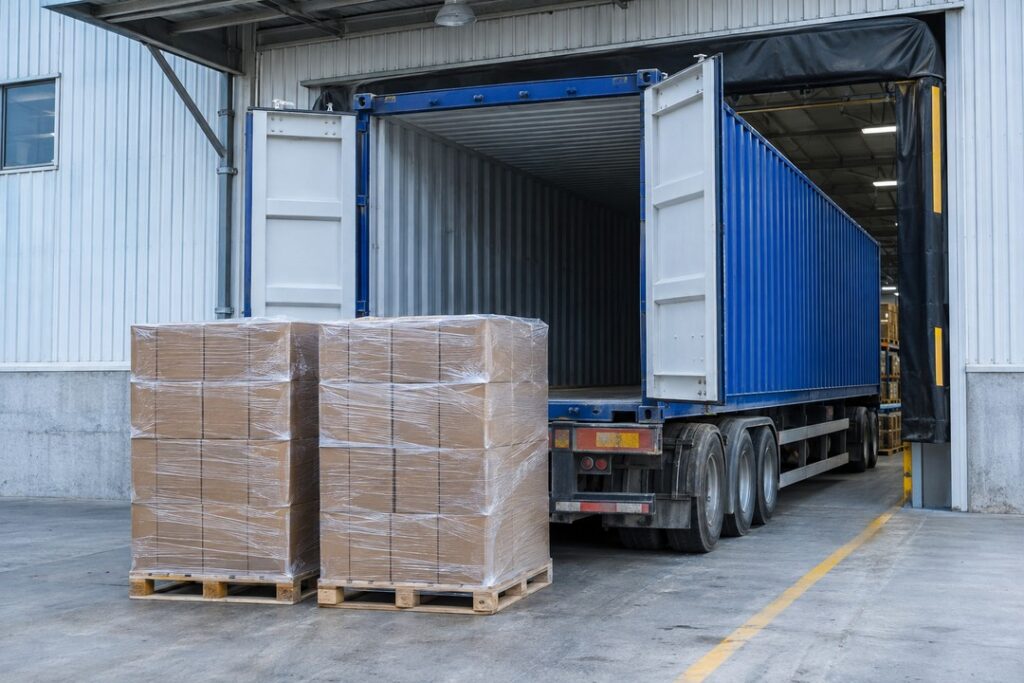
Work back from the expected retail launch. Allow time for production, label approval, documentation, freight, customs clearance, possible inspections and warehouse intake. Ask for separate estimates for the supplier’s production lead time and the transport time. Set a date for reviewing documents before cargo is collected.
Have your supplier, forwarder and broker agree who prepares the commercial invoice, packing list and transport documents, along with any route-specific certificates, permits or filings. Check that the product names, counts and weights are consistent across documents and case markings. Confirm carton strength, pallet dimensions and handling requirements with the receiving warehouse, particularly for fragile freeze-dried formats.
6. Run a trial order that tells you what to reorder
Set first-order volumes using the number of outlets taking the range, opening stock per outlet and a realistic allowance for replenishment. For example, if 12 shops each take two cases of one SKU and you want six cases in reserve, you need 30 cases of that SKU. Compare that plan with the supplier’s case minimum before you order.
Brief retail buyers with pack photos, case counts, suggested price positioning and product information suitable for your market. Ask which sales channels your distribution agreement covers and what approved marketing assets are available. For the details to put in front of a retail buyer, use this guide to building a pet treat line sheet.

Track weekly sell-through by SKU and outlet, repeat orders, damages and stock approaching its best-before date. Agree a review date with your retailers, then use your weekly sales rate and supplier lead time to set a reorder point for each SKU.
Questions distributors ask about sourcing bulk dog treats
Can I mix dog treat varieties in a first wholesale order?
Ask whether a mixed order means full cases of several SKUs on one shipment or a case packed with a mix of varieties. Share your proposed quantities by SKU so the supplier can confirm which case configuration is available.
What should I ask about relabelling branded treats for my market?
Ask who reviews and applies the local label, how it will be positioned on the pack and whether there is an additional fee or minimum run. Provide the proposed artwork to the local compliance reviewer before approving the print version.
How should I compare quotations for different retail pack sizes?
Compare landed cost per saleable pack to judge the proposed shelf price. Compare cost per 100 g as well when two packs serve the same use. That gives your buying team a consistent measure of value alongside the cash price a shopper pays.
Request a Pack’n Pride distributor quote
Planning to add branded bulk dog treats to your range? Send us your destination country, sales channels, shortlisted treats, preferred pack sizes, estimated first-order volume in cases or units, and target purchase date. We can use those details to discuss the range, sample options and what is needed to prepare a quote for your market.