Dog Treats in Bulk: A Practical Buying Guide for UK Pet Retailers
Buying dog treats in bulk can help pet shops, e-commerce sellers and distributors build a dependable, repeat-purchase range. But a lower price per kilogram does not automatically mean a better deal. Pack format, product consistency, shelf life and how quickly stock sells all affect the final return.
Whether you want bulk dog treats for a shop, a growing online business or your own brand, this guide explains how to choose the right products, compare quotes and place a more confident wholesale order.
What Does Buying Dog Treats in Bulk Actually Mean?
Not every supplier means the same thing by “bulk”. Before requesting a price, confirm which of these formats you need:
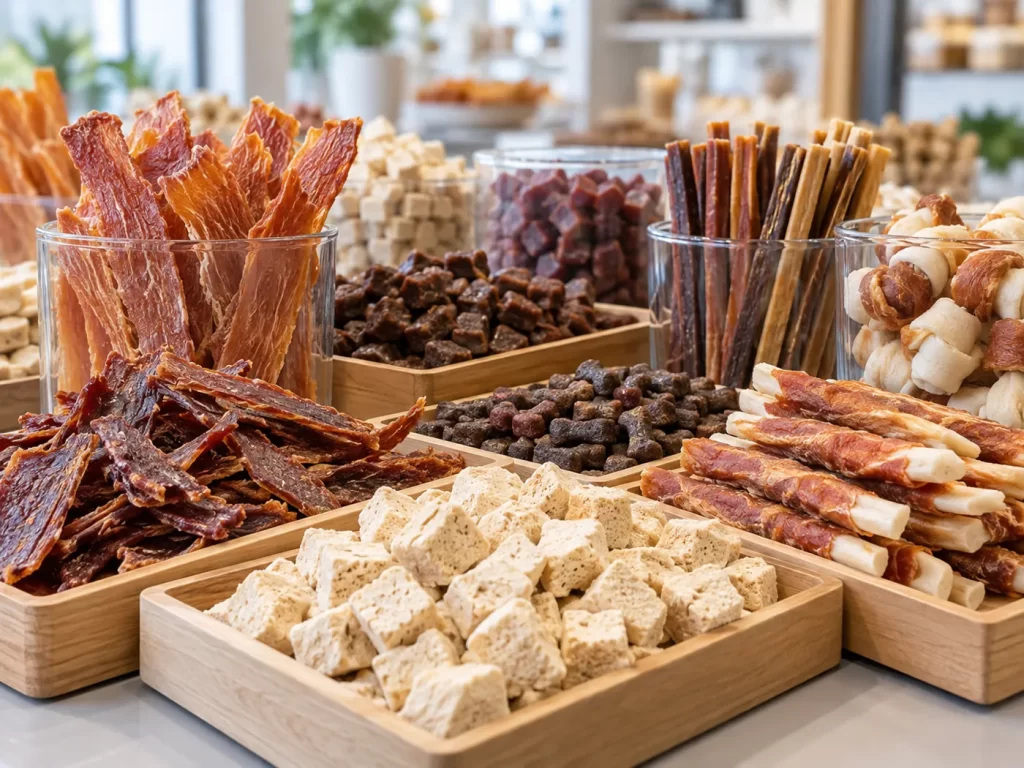
- Bulk-packed treats: larger bags or cartons intended for a business that can store, portion or repack products appropriately.
- Wholesale retail packs: individually sealed, labelled packs supplied in cases, ready for resale.
- Private-label treats: an existing or customised product packed under your business’s branding, subject to the agreed specification and minimum order quantity (MOQ).
For an independent UK pet shop, retail-ready packs may be the simplest starting point. For a distributor or established brand, larger runs or tailored packs may offer more control. The right choice depends on your facilities, customer base and sales forecast—not just the headline price.
Which Dog Treats Are Best to Buy in Bulk?
A good range gives customers distinct reasons to buy. Rather than stocking five near-identical products, consider a mix of everyday rewards, premium options and chewing formats.
1. Real Meat and Jerky Treats
Chicken and duck fillets, meat strips and bite-sized nuggets are easy to explain at the shelf. Shoppers can see the product format, while retailers can offer different pack sizes for everyday rewards or occasional treating.
When comparing jerky, check the ingredient declaration, piece-size tolerance, texture, moisture specification and how well the strips hold up in transit.
Explore Pack’n Pride’s real meat dog treats for product examples.
2. Freeze-Dried Dog Treats
Freeze-dried meat can suit a premium or limited-ingredient range, depending on the exact recipe. Light pieces are convenient to portion, but they may also crush if the pack and shipping case offer insufficient protection.
Ask suppliers for a sample in the proposed retail packaging, not just a loose product sample. Compare crumbs and breakage after normal handling.
See our freeze-dried dog treats collection.
3. Training Rewards
Smaller, easy-to-handle pieces suit puppy training classes, daily walks and reward-based practice.
Buyers should look at piece count, consistency and convenience as well as price per kilogram. A 100g pouch of small rewards may serve a different purpose from a 100g bag of large jerky strips.
4. Chews and Meat-Wrapped Treats
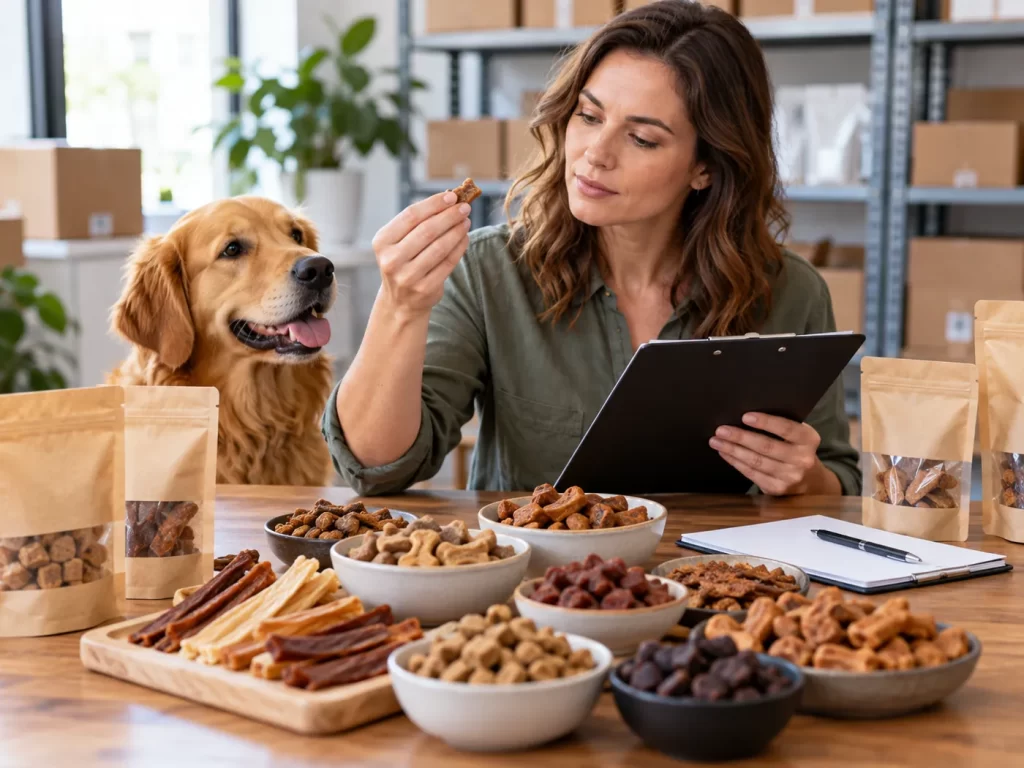
Chew sticks, meat-wrapped rolls and other chewy formats help round out an assortment beyond quick rewards.
Match the product’s dimensions and texture to the intended dog size and follow appropriate supervision advice; no chew is risk-free.
Compare the Born to Chew range with our wrapped meat treats to see different merchandising options.
Bulk Bags or Retail-Ready Packs: Which Works Better?
Bulk bags can be practical when you have suitable storage and a compliant repacking operation. They may reduce the amount of individual packaging purchased, but you take on additional tasks: portioning, labelling, hygiene controls, traceability and sometimes greater product exposure after opening.
Retail-ready pouches may cost more per kilogram, yet they simplify shelf replenishment, online picking and product presentation. Resealable packaging can be useful for consumers, provided the material protects the specific product as intended.
Private-label packs are worth considering once you know which product is selling consistently.
Before commissioning custom packaging, ask whether the food MOQ and the printed-bag MOQ are different. A small test order with a stock pouch and an approved label may be more sensible than printing thousands of bags straight away.
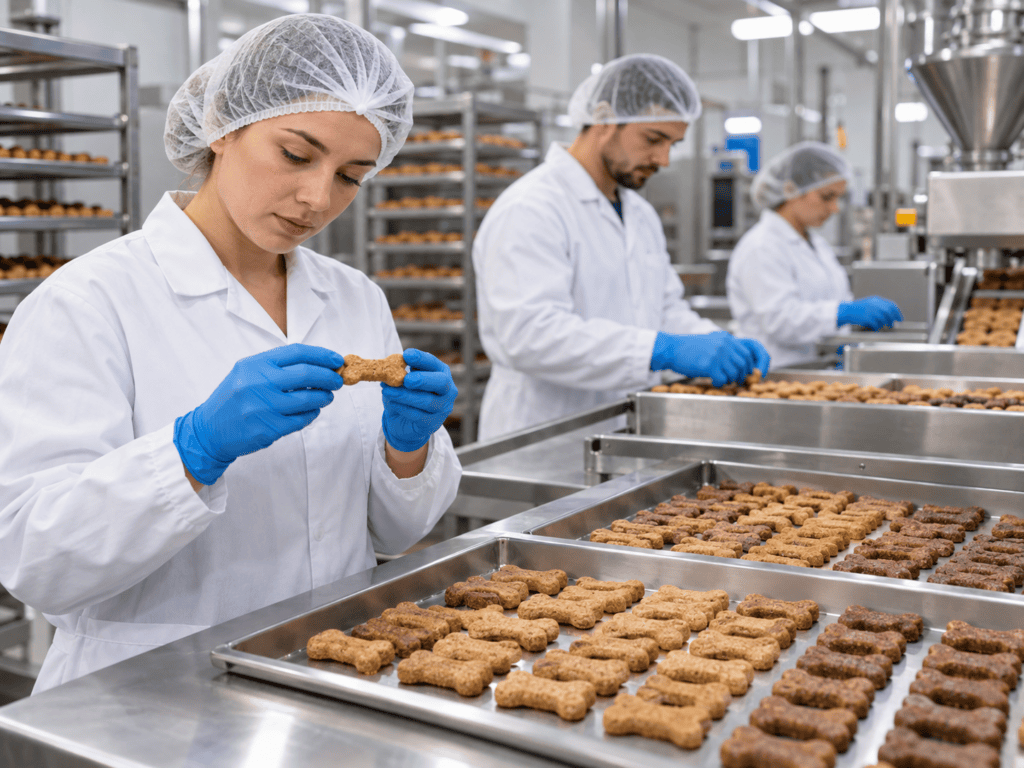
The best pack format is the one that fits your actual operating model and expected sales rate.
How Much Should a Retailer Order?
Start with expected sales, not the supplier’s largest discount tier. Calculate how many weeks of stock you can reasonably sell while maintaining an adequate shelf-life buffer.
For example, 100 kg of treats can produce 1,000 packs of 100g, before allowing for packing losses or rejected units.
If you expect to sell 100 packs a week, that represents roughly ten weeks of stock. If sales reach only 25 packs a week, the same order could occupy shelf or warehouse space for around 40 weeks.
Use this simple planning process:
- Choose one or two proven product formats for an initial trial.
- Forecast weekly sales by product and sales channel.
- Agree an appropriate stock cover and reorder point.
- Confirm the MOQ per recipe and per packaging design, not just the combined order total.
- Allow for lead time, customs clearance where applicable and a sensible safety-stock margin.
If you are considering larger wholesale quantities, ask for a quote at your forecast volume and at the next tier up. Compare the real landed cost rather than assuming the larger order is better value.
Compare the Cost per Saleable Pack, Not Only the Price per Kilo
A quote of £8 per kg may look attractive, but the true cost depends on packing and logistics.
Here is a hypothetical illustration, not a Pack’n Pride price quote:
| Cost item | Example cost |
|---|---|
| 100 kg of dog treats at £8/kg | £800 |
| Freight and inbound handling | £120 |
| 1,000 pouches at £0.15 each | £150 |
| Packing and quality checks | £80 |
| Total for 1,000 saleable 100g packs | £1,150 |
In this example, the cost per 100g pack is £1.15 before other applicable costs such as VAT, marketplace commission, storage, marketing, returns and retail fulfilment.
If you lose packs to breakage or damaged seals, the effective unit cost rises.
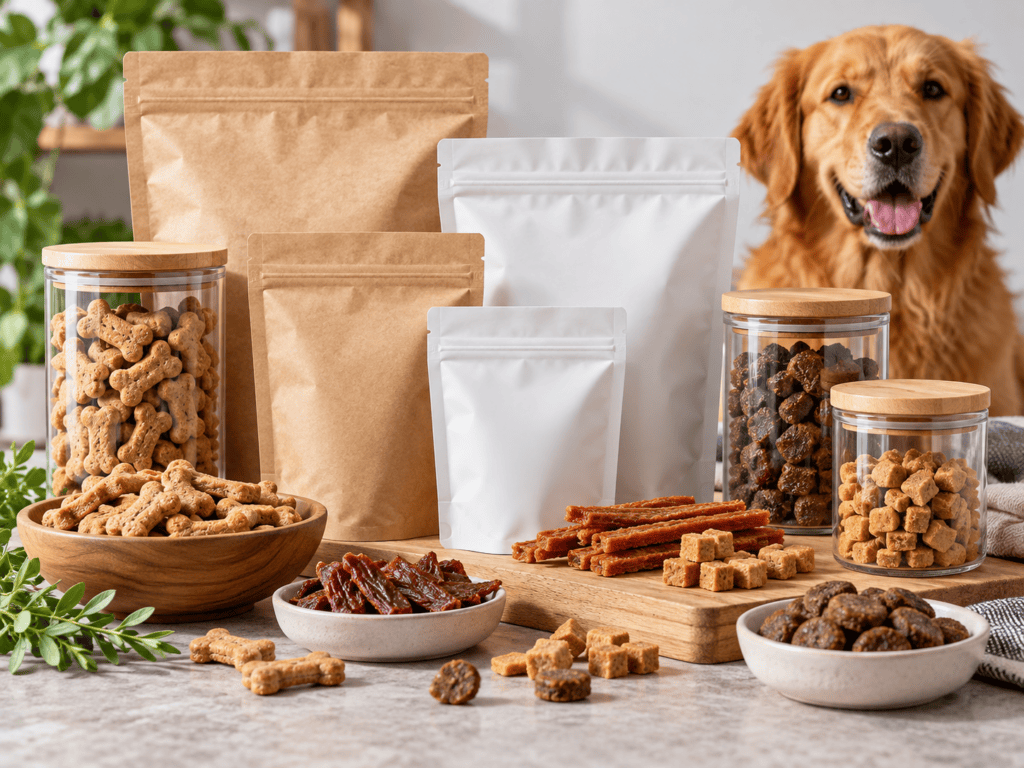
Ask for comparable quotations that specify product weight, packaging, case configuration, Incoterms, lead time and what is included in the price.
For a deeper look at the resale model, read our bulk dog treats for resale buyer’s guide.
What Should You Check Before Approving Samples?
An attractive product photograph cannot tell you how an entire batch will perform.
When samples arrive, check the product as a buyer, stockist and end customer would.
- Recipe and documentation: ingredient composition, analytical information, intended use and feeding guidance.
- Consistency: piece size, colour, aroma, texture and acceptable natural variation.
- Packaging: seal quality, puncture resistance, reseal function where applicable and protection from moisture or crushing.
- Shelf life: stated durability, storage requirements and remaining shelf life upon delivery.
- Traceability: batch coding and the documents available for your market.
- Commercial fit: whether the product’s value is clear at your intended retail price.
For freeze-dried products, check crumbs at the bottom of the pouch. For jerky, assess whether pieces are practical to serve. For chews, compare dimensions and suitability guidance.
Keep an approved reference sample and agree tolerances in writing before scaling up.
UK Labelling and Stock Control: Don’t Leave Them Until Dispatch
If your dog treats are going on sale in the UK, confirm that the finished pack and accompanying documentation meet the applicable animal-feed requirements.
Depending on the product and supply arrangement, labelling considerations include the feed description, composition, intended species, quantity, batch identification, durability and appropriate directions for use.
Avoid unsupported claims such as “cures allergies” or “prevents dental disease”.
The UK government’s pet food guidance explains that additional label claims must be objective, supportable and not misleading. Agree final label responsibilities with the supplier or relevant specialist before printing.
Once stock arrives, record batches, store products as specified and use a first-expiring, first-out (FEFO) rotation system.
This matters particularly for mixed ranges where different treat types have different shelf lives.
Choosing a Supplier for Repeat Wholesale Orders
A strong bulk dog treat supplier should make reordering predictable.
Ask not only “What is your best price?” but also:
- Which recipes and pack sizes are currently available?
- What is the MOQ for each SKU and for custom packaging?
- Can you provide product samples and written specifications?
- Which food-safety controls and factory certifications apply to these products?
- What are the expected production lead time and shipping options?
- Can you support retail-ready cases, bulk packing or private label?
- How are batch traceability, product testing and complaints managed?
Clear answers at the quotation stage help prevent costly changes after packaging has been approved or stock has already been allocated to retailers.

Build a Range Customers Will Reorder
For a UK pet retailer, a simple opening assortment might combine a familiar real-meat reward, a small training treat, a premium freeze-dried product and one suitable chew format.
This gives the range distinct uses and price points without tying up too much money in slow-moving stock.
Use real sales data to decide what to reorder. Track weekly sell-through, gross margin after landed costs, customer feedback and returned or damaged packs.
Add new flavours and larger order volumes only after the first range has earned its place on the shelf.
Buy Dog Treats in Bulk with Pack’n Pride
Pack’n Pride supplies a range of dog treats, including real-meat snacks, freeze-dried products and chewy treats, and presents wholesale, sampling and OEM services for business customers.
Browse the dog treat range to identify products that fit your shop or brand.
Ready to discuss a wholesale order?
Use our wholesale pet treats enquiry page and tell us your country, preferred treat formats, target pack size, approximate order volume and branding requirements.
Our team can then discuss the relevant products, available samples, commercial terms and next steps.
Frequently Asked Questions About Dog Treats in Bulk
Where can I buy dog treats in bulk for my pet shop?
Start with suppliers that offer business enquiries, product specifications and samples. Compare the product format, MOQ, packaging options and landed cost. Pack’n Pride’s wholesale pet treats page is a starting point for discussing your requirements.
Is bulk buying always cheaper than buying ready-packed wholesale treats?
Not necessarily. The product price per kilogram may be lower, but local packing, labour, labels, storage and wastage can offset the saving. Compare both options on a cost-per-saleable-pack basis.
Can I buy bulk dog treats with my own brand packaging?
Private-label options may be available, depending on the recipe, order quantity and packaging specification. Request separate MOQs for the treats and any customised printed packaging before committing to artwork.
What is the minimum order quantity for bulk dog treats?
There is no universal MOQ across all suppliers or product types. It may depend on the recipe, production run and packing format. Ask for the MOQ per SKU and specify whether you want loose bulk bags, wholesale cases or private-label packs.
Which dog treats are suitable for online resale?
Look for products with a clear use, robust packs, manageable shipping weight and predictable shelf life. Samples should be tested for damage after normal handling and parcel transit. A strong product still needs compliant labelling and consistent supply.