
Freeze Dried Dog Treats Wholesale: How to Evaluate Breakage Before You Buy
A wholesale sample can look excellent on a buyer’s desk. The more useful question is how the same product will look after warehouse handling, pallet transport, store replenishment, and the final delivery to a customer.
For freeze dried dog treats, piece condition deserves a place alongside ingredients, pack size, and wholesale price. A bag may contain the stated weight yet disappoint a customer who expected recognizable pieces and finds mostly fragments.
That does not mean every small particle is a defect. It means the buyer and supplier need the same definition of an acceptable product.
This guide explains how distributors, pet retailers, and online sellers can evaluate delivered condition before committing to a larger order.
What Should You Check When Buying Freeze Dried Dog Treats Wholesale?
Compare the product specification, piece format, amount of fines, retail packaging, outer carton, and condition after representative handling. Agree on how breakage will be measured and what counts as acceptable. Evaluate the cost per saleable pack alongside the quoted price per kilogram or case.
The goal is a repeatable purchasing decision. “Looks good” is a useful first impression, but it is difficult to apply consistently across suppliers and deliveries.
1. Define the Product Customers Expect to Receive
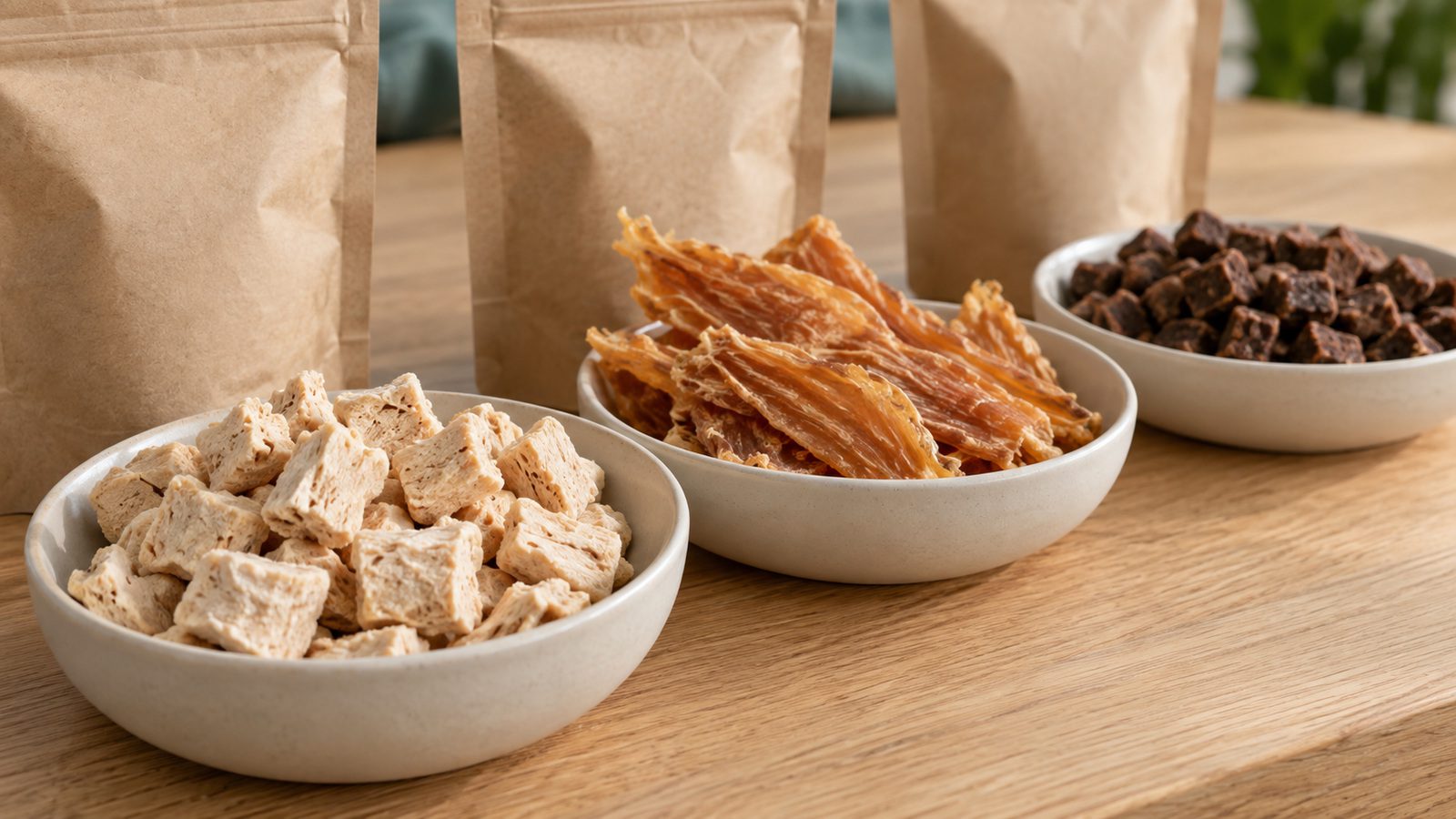
Start with the intended use and product presentation. A nugget, a fillet, and a deliberately crumbled topper create different expectations. They should not share an undefined “whole piece” requirement.
For each SKU, ask what the approved appearance should look like. Request a representative sample and photographs showing the permitted range of shapes and sizes.
Decide how to distinguish intact pieces, usable fragments, and fines. Avoid creating a standard so strict that ordinary variation becomes a dispute, or so vague that any bag passes.
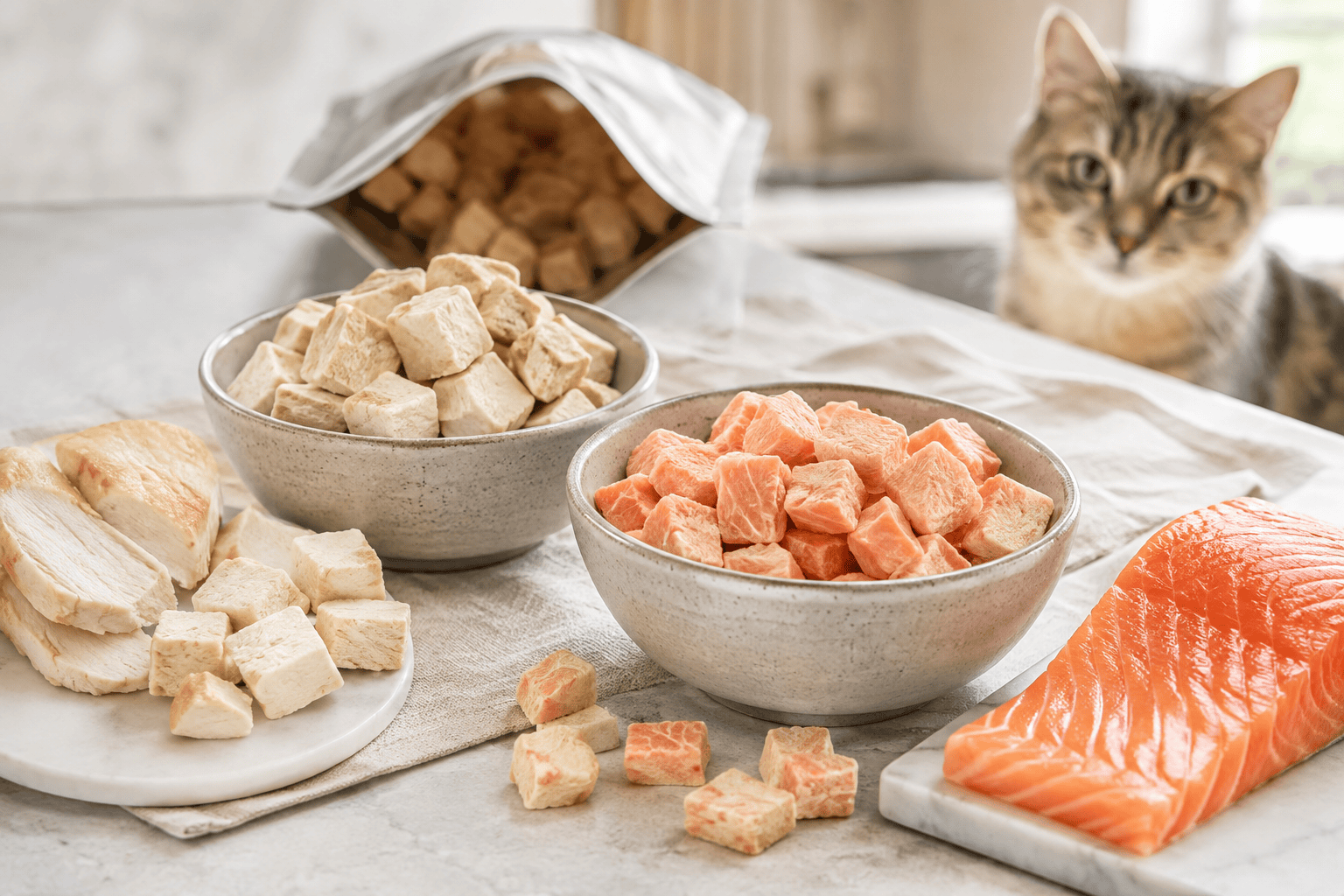
Pack’n Pride’s freeze dried treats range includes nugget and fillet formats. These give buyers different formats to evaluate; actual suitability should be assessed with current samples and specifications.

2. Compare Samples Using the Same Method
Open samples over a clean tray and record the total contents. Separate the categories defined in your specification, weigh them, and photograph the results.
For an internal comparison, fines percentage by weight can be calculated as fines weight divided by total sample weight, multiplied by 100. The definition of fines must stay the same across samples.
If a sieve is used, record its opening size and the handling method. Changing the sieve or shaking one sample more aggressively makes the comparison less useful.
Check several packs where practical. One unusually good or poor pack can distort a buying decision. Record the sample lot and whether it came from normal production or a specially prepared development run.
Do not invent an industry-wide acceptable percentage. Agree on a product-specific limit with the supplier and use a documented method to assess it.
3. Evaluate the Retail Pack and Shipping Pack Together
A sturdy outer carton cannot compensate for every weakness inside the retail pack. Similarly, an attractive pouch does not establish that the complete shipping configuration will protect the product.

Review pouch dimensions, fill level, seal condition, carton fit, and the way packs move inside the case. Ask whether the evaluated sample uses the same packaging intended for commercial supply.
Too much movement may increase handling exposure, while compression can create a different problem. The best arrangement should be established through relevant testing, not by assuming that more empty space or tighter packing is always better.
For moisture and oxygen protection, request packaging specifications and the supplier’s basis for the proposed shelf life. Appearance checks alone cannot establish storage performance.
| Buying question | Evidence to request |
|---|---|
| What condition should the pieces arrive in? | Approved reference sample and appearance specification |
| How are fines assessed? | Written measurement method and reporting basis |
| Is the retail pouch the commercial version? | Final packaging specification |
| How are packs protected during shipment? | Case configuration and relevant transport evaluation |
| What happens if a delivery is outside specification? | Receiving, notification and resolution procedure |
4. Include Your Actual Sales Channel
A distributor shipping full cartons to stores has a different handling pattern from a seller dispatching individual pouches by parcel carrier.
Map the route the product will take. Include warehouse picking, any repacking, and the final shipping container. If your operation adds another packing stage, include it in the evaluation.
A small pilot through your intended route can reveal practical issues that an unopened showroom sample cannot. Record conditions before dispatch and after arrival, using the same assessment method.
Treat informal handling checks as screening exercises. Where a formal transport test is needed, agree on a suitable protocol with qualified packaging or testing support.
5. Compare Cost per Saleable Pack
The lowest case price is not always the lowest cost of a successful sale. Include the effects of damaged packs, returns, repacking, and handling.
Consider a purely illustrative example: 100 packs arrive at a landed cost of $3 each. If five packs cannot be sold, the $300 cost is spread over 95 saleable packs. That is approximately $3.16 per saleable pack before handling or replacement expenses.

The example is not a Pack’n Pride quotation or a predicted loss rate. It shows why delivered condition belongs in a purchasing calculation.
Keep product yield separate from saleability. Fragments may still be usable, but a pack can fail customer expectations if its presentation differs substantially from the agreed specification.
6. Build a Receiving Check Your Team Can Repeat
Inspect outer cartons and retail packs when the shipment arrives. Record visible damage before discarding packaging, and retain the lot information.
Use a sampling plan proportionate to the order and purchasing risk. Compare the selected packs with the agreed reference and document results in the same format used during approval.
If a problem appears, isolate the affected stock while the supplier reviews it. Send clear photographs, affected quantities, lot codes, and the sampling method.
A detailed report is more useful than a general complaint that “the treats were broken.” It helps distinguish an individual damaged carton from a broader product or packaging issue.
7. Keep Product Condition and Food Safety Separate
A bag of intact pieces is not proof of microbiological safety. Review the supplier’s relevant quality documentation and product controls separately from your breakage assessment.
Likewise, do not infer that a dry product needs no handling guidance. Use the product’s instructions for storage and handling, and keep packaging information available to staff and customers.
FDA’s raw pet food advisory explains why pathogen controls matter for raw animal food. It is general safety context, not evidence about Pack’n Pride products.
Frequently Asked Questions
Are nuggets always less fragile than fillets?
Do not assume so from the format name alone. Compare actual products, packaging, and results after representative handling.
Should all powder in a bag be treated as a defect?
Use the agreed product specification. A small amount of fines and a bag containing mostly powder are different situations, but the acceptable limit should be defined.
Can I assess wholesale quality from one sample?
One sample helps with initial selection. Several representative packs and a commercial packaging check provide a better basis for order approval.
What should I include in a wholesale inquiry?
Specify your country, sales channel, preferred format, pack size, estimated order, and expected delivery route. Ask for current product information and sample availability.
Request a Wholesale Product Review
Explore Pack’n Pride freeze dried treats and contact the team with your distribution requirements. Compare the proposed retail packs and case configuration before selecting the assortment for your business.