Choosing between pet snack distributors starts with a practical question: which supplier can help you put the right treats on the shelf, replenish them reliably and leave enough room for your business to earn a margin?
For independent pet shops, online retailers and regional wholesalers, a useful range needs more than attractive packaging. It needs clear product information, order quantities that fit demand and a supply arrangement that works after the first delivery.
This guide explains how to compare wholesale pet treat suppliers, select dog and cat snacks for your sales channels, and prepare an enquiry that gets you a relevant quotation.
Ready to discuss your range? Contact Pack’n Pride for a product catalogue and wholesale enquiry.
What Do Pet Snack Distributors Do?
Pet snack distributors purchase treats from brands or manufacturers and supply them to businesses such as pet retailers, supermarkets, grooming salons and online stores. Depending on the supplier, the service may include holding stock, assembling mixed orders, delivering to individual outlets and providing product information for resale.
The terms “distributor”, “wholesaler” and “manufacturer” are sometimes used interchangeably online, but the buying arrangements can differ. Establish who makes the product, who holds the stock and who handles shortages, complaints and repeat orders.
Your best sourcing route depends on the scale and type of your business:
| Buying route | When it may suit your business | What to establish first |
|---|---|---|
| Regional distributor | You need frequent replenishment or smaller orders across several brands | Available stock, delivery area, minimum spend and case quantities |
| Direct brand or manufacturer supply | You plan recurring volume around a defined product range | Minimum order by SKU, production schedule, shipping origin and product support |
| Private label project | You want to develop a range under your own brand | Product options, packaging minimums, artwork responsibilities and launch timing |
A local business address does not tell you where every product is manufactured or dispatched. Ask both questions when comparing delivery times and costs.
Build Your Range Around How Customers Use Treats
Start with the accounts you serve. A neighbourhood pet shop, an online subscription business and a supermarket buyer may need different pack sizes, price points and case configurations.
Give each product a clear role before adding another flavour. An everyday reward, a training bite and a chew serve different shopping needs; several near-identical pouches may simply divide the same demand.
| Customer occasion | Product direction | Useful buying checks |
|---|---|---|
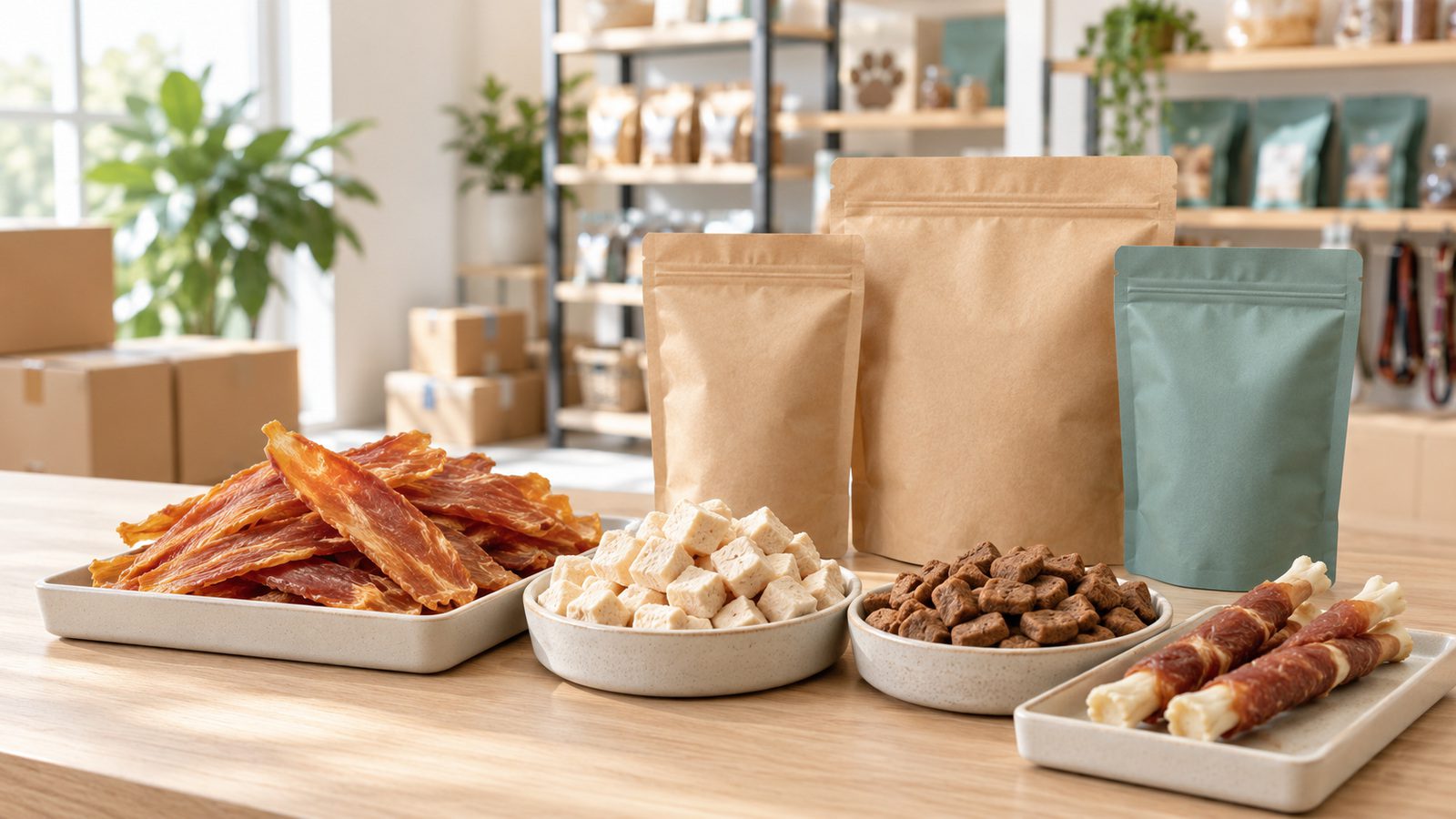
| Everyday dog rewards | Chicken or duck meat treats | Piece consistency, pack size, ingredients and storage instructions |
| Training and walks | Small training bites | Portion size, texture, calorie information and pouch convenience |
| Premium treat discovery | Freeze-dried meat formats | Ingredient specification, breakage, reseal performance and shelf life |
| Supervised chewing | Appropriately sized dog chews | Composition, dimensions, feeding guidance and intended dog size |
| Interactive cat feeding | Lickable cat treats | Sachet size, multipack format and handling after opening |
| Cat reward variety | Cat-specific freeze-dried treats | Piece size, formulation and feeding instructions |
Pack’n Pride’s Training Rewards collection includes chicken and duck formats, while the Real Meat Treats range includes fillets and nuggets. These collections offer a starting point for comparing everyday rewards with products intended for training occasions.
For additional categories, explore Born to Chew, freeze-dried cat treats and Cat Cream. Confirm the latest specification and availability for each shortlisted item.
Compare Samples Against a Written Product Specification
A sample should help you make a buying decision that can be repeated at scale. Record what you approve, including the product reference, ingredients, piece size, texture, colour range and packaging format.
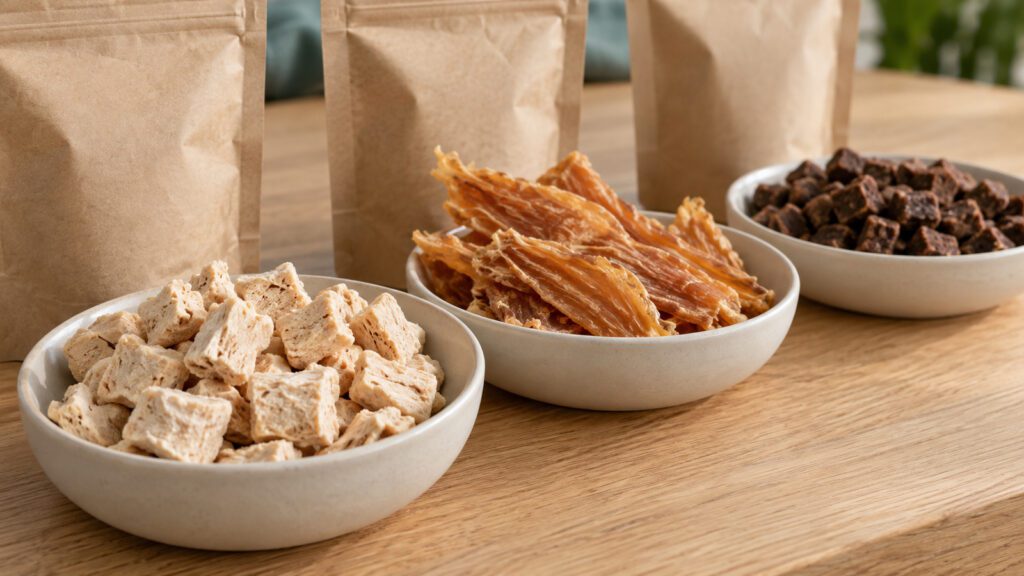
For jerky, check whether the pieces suit your intended customer and whether the pouch reseals easily. For freeze-dried treats, inspect the proportion of intact pieces and loose powder after normal handling. For chews, compare dimensions and weight across several pieces. For lickable treats, examine the sachet opening and seal condition.
Assess the retail presentation too. Can a shopper identify the intended pet, flavour, net weight and feeding instructions without turning the pack repeatedly? Can your sales team explain the product in one clear sentence?
Keep an approved sample and the agreed specification together. Ask how the supplier will communicate any recipe, raw material or packaging change before a repeat order is produced.
Ask for Quality Information That Matches the Product
When evaluating pet snack distributors, request information that relates to the actual product and manufacturing site. A general company brochure cannot answer every product-level question.
Useful documents to request include:
- The current ingredient list and analytical specification.
- Relevant product testing and the supplier’s explanation of batch release checks.
- Batch coding, traceability and complaint-handling procedures.
- Shelf-life information and recommended storage conditions.
- Any certification documents required by your retail accounts, with the site and scope clearly identified.
Ask who will investigate a quality issue, what information they need from you and how affected stock should be handled. Clear responsibilities make it easier to respond consistently across stores and online channels.
Use precise product descriptions in your listings. Before adopting claims such as “single ingredient”, “grain-free” or “no artificial colours”, obtain confirmation for that exact recipe and have the wording checked for your destination market. Do not carry a claim from one SKU across the whole range.

Make Wholesale Prices Comparable
A price per kilogram is useful for bulk product. A price per retail pouch is useful for resale. Neither is sufficient without knowing what is included.
Ask suppliers to quote against the same brief: product specification, net weight, packaging, order volume, delivery destination and agreed delivery terms. Clarify whether the price includes retail packaging, outer cartons and any artwork or set-up charges.
For internal planning, calculate your acquisition cost per saleable pack from the product, packaging, inbound freight, applicable import costs and receiving costs. Then assess the effect of selling fees, outbound fulfilment, promotions and expected losses on what remains.
Look at cash tied up in stock as well as the unit price. A larger order deserves scrutiny if it takes longer to sell or leaves less flexibility to replace a weak product.
Request minimums separately for:
- Each recipe or product reference.
- Each retail pack size.
- Each custom-printed packaging design.
- The total order or shipment.
If you need mixed cartons or several flavours in one shipment, ask whether these are available and how they affect the quotation. Do not assume that a total order minimum also allows unlimited mixing by SKU.
Choose Between Branded Supply and Private Label
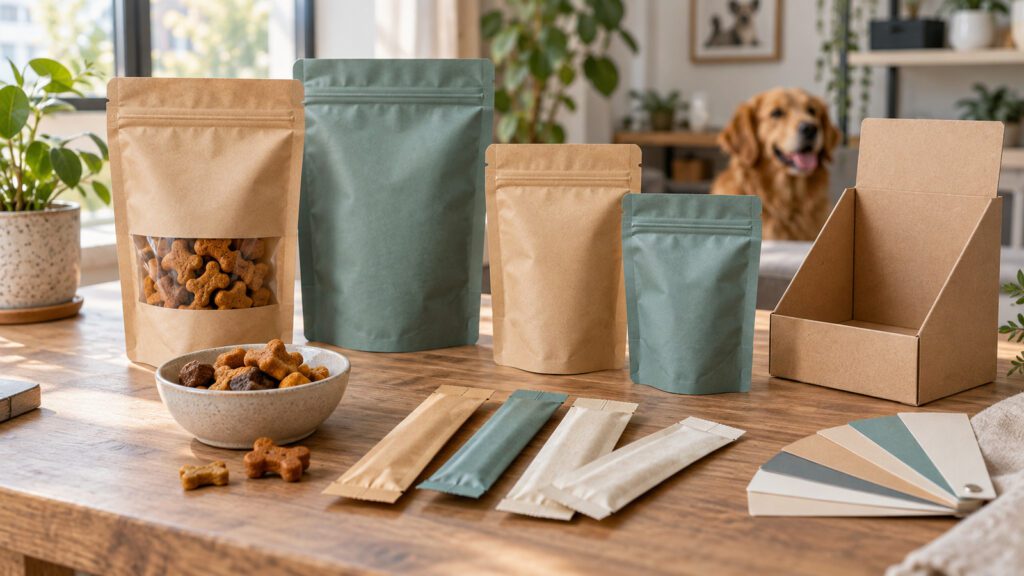
Branded supply can suit buyers who want to select from an existing range and use the brand’s available product information. Before ordering, discuss approved sales channels, product imagery and any retailer support you need.
A private label project begins with your own positioning: the customer, product format, pack size, target price and reason to choose your range. Packaging artwork comes after those decisions.
For a potential private label project, ask which recipes and formats can be considered, whether stock or printed pouches are available, and who signs off each stage. Establish the packaging minimum, sample process, barcode ownership and final artwork approval before setting a launch date.
Pack’n Pride invites trade buyers to discuss their product requirements through its contact page. Include whether you are interested in branded wholesale supply or exploring private label options so that your enquiry starts in the right place.
Plan the Second Order Before Placing the First
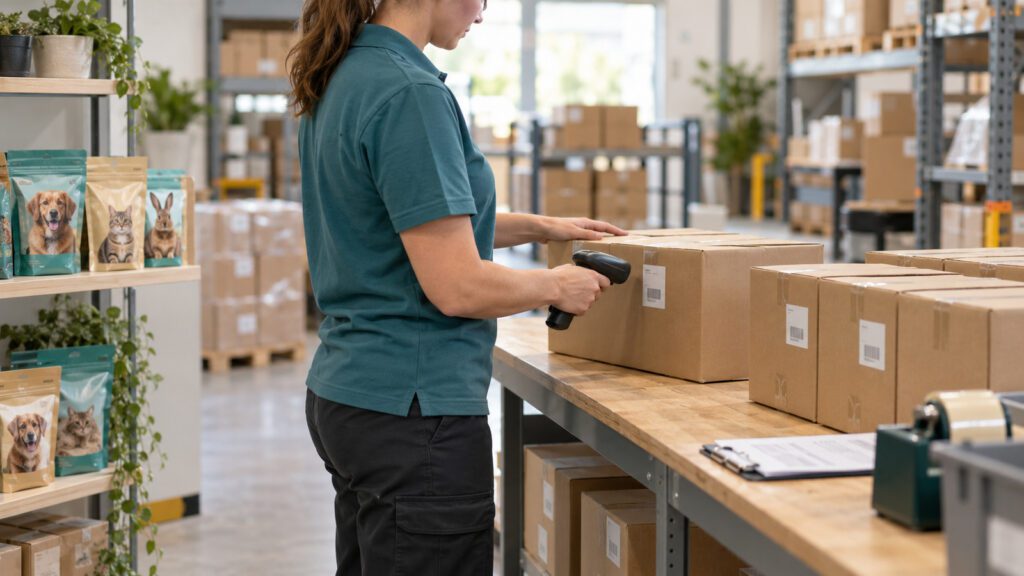
A successful launch needs a realistic replenishment plan. Confirm whether the quoted timing refers to production completion, dispatch or arrival at your warehouse.
Allow for the full sequence: order confirmation, any artwork approval, production, inspection, transport and receiving. Agree the minimum remaining shelf life you expect on arrival and how date codes will be communicated.
For each product, track sales over a consistent period, current stock and confirmed incoming stock. Use that information alongside replenishment time and your chosen safety stock to set a reorder point.
Ask about split deliveries, back orders and substitutions before you need them. Retail accounts should not discover a change of flavour, size or packaging when a delivery reaches their stockroom.
Where territory or channel exclusivity matters, raise it early and request written terms. Discuss the geography, channels, product scope, performance expectations and review period rather than relying on a verbal understanding.
What to Include in a Wholesale Pet Treat Enquiry
A specific enquiry makes it easier for a supplier to recommend relevant products and prepare a comparable quote. You do not need every detail finalised; identify what you know and where you need guidance.
Send the following:
- Company name, website and business type.
- Destination country and delivery location.
- Sales channels, such as independent shops, supermarkets or online retail.
- Preferred categories, proteins and any product references already shortlisted.
- Branded supply or private label interest.
- Preferred pack size and estimated first-order quantity.
- Expected repeat volume, if available.
- Target price position, required documents and intended launch date.
Ask the supplier to respond with available options, specifications, minimum order quantities, sample arrangements, packaging choices and indicative timing. This gives you a practical basis for the next conversation.
FAQs About Pet Snack Distributors
How do I choose a pet snack distributor for my shop?
Start with your customer profile, delivery location and likely order volume. Compare product fit, minimum spend, case quantities, replenishment arrangements and the information available for resale. Review samples before committing to a wider range.
Can I buy wholesale dog treats and cat treats from the same supplier?
Yes, some suppliers offer both categories. Pack’n Pride lists dog and cat treat collections on its website. Confirm which products can be ordered together, their individual minimums and the dispatch arrangements for your destination.
What is the minimum order for wholesale pet snacks?
There is no universal minimum. It can depend on the supplier, recipe, pack size and whether the packaging is standard or custom printed. Request minimums for each selected SKU and for the order as a whole.
Can pet snack distributors offer private label products?
Some do, either directly or through a manufacturing partner. Ask who is responsible for the product specification, packaging approval, quality documentation and ongoing supply. Confirm the available scope for your project before commissioning artwork.
What should I check before importing pet treats?
Confirm the manufacturing and dispatch origin, product composition, delivery terms and the documents needed for the destination. Have your importer or relevant local adviser review market access and labelling requirements before you commit to shipment.

Discuss Your Pet Treat Range with Pack’n Pride
Whether you supply local pet shops, manage an online store or are developing a distribution portfolio, start with a focused selection and a clear buying brief.
Explore our dog and cat treat collections, then tell us where you sell, the categories you need and your estimated volume. Ask about current product availability, trade pricing, minimum orders, sample arrangements and packaging options for your project.
Request a product catalogue and wholesale quote from Pack’n Pride.