Freeze Dried Dog Treats Wholesale: A Practical Buyer’s Guide
Buying freeze dried dog treats wholesale starts with a simple question: will this product earn a place in your customers’ regular shopping basket? An appealing ingredient list helps, but repeat orders also depend on consistent pieces, protective packaging, sensible retail pricing, and a supplier who can deliver the agreed specification.
For pet stores, distributors, and online sellers, the strongest buying decision connects the product to a clear use: everyday rewards, training, or a meal topper where the product’s feeding directions allow it. This guide explains how to compare wholesale options, review samples, and prepare a useful quote request for Pack’n Pride.
Contact Pack’n Pride through our website to discuss your target market, preferred products, and wholesale purchasing requirements.
What Should You Look for in Wholesale Freeze-Dried Dog Treats?
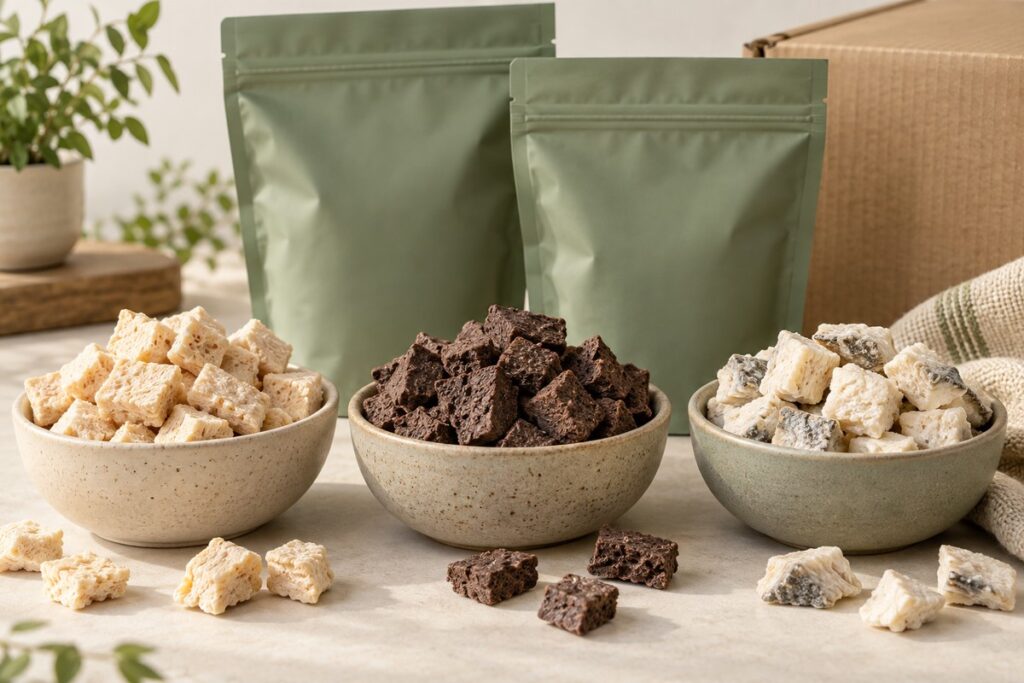
Evaluate the finished product as something your customer will open, handle, and buy again. Look beyond the front-of-pack description: request the complete ingredient list, piece dimensions, nutritional information, storage instructions, and evidence supporting the stated shelf life.
A lightweight piece may look generous in a pouch, yet still need protection from crushing in transit. A product that photographs well may create too many crumbs during shipping. Your sample review should therefore cover both presentation and practical handling.
Ask the supplier to define acceptable variation in writing. Color, piece size, and the amount of loose material should have an agreed reference, so your first order and later deliveries can be assessed consistently.
Build Your Assortment Around a Clear Customer Need
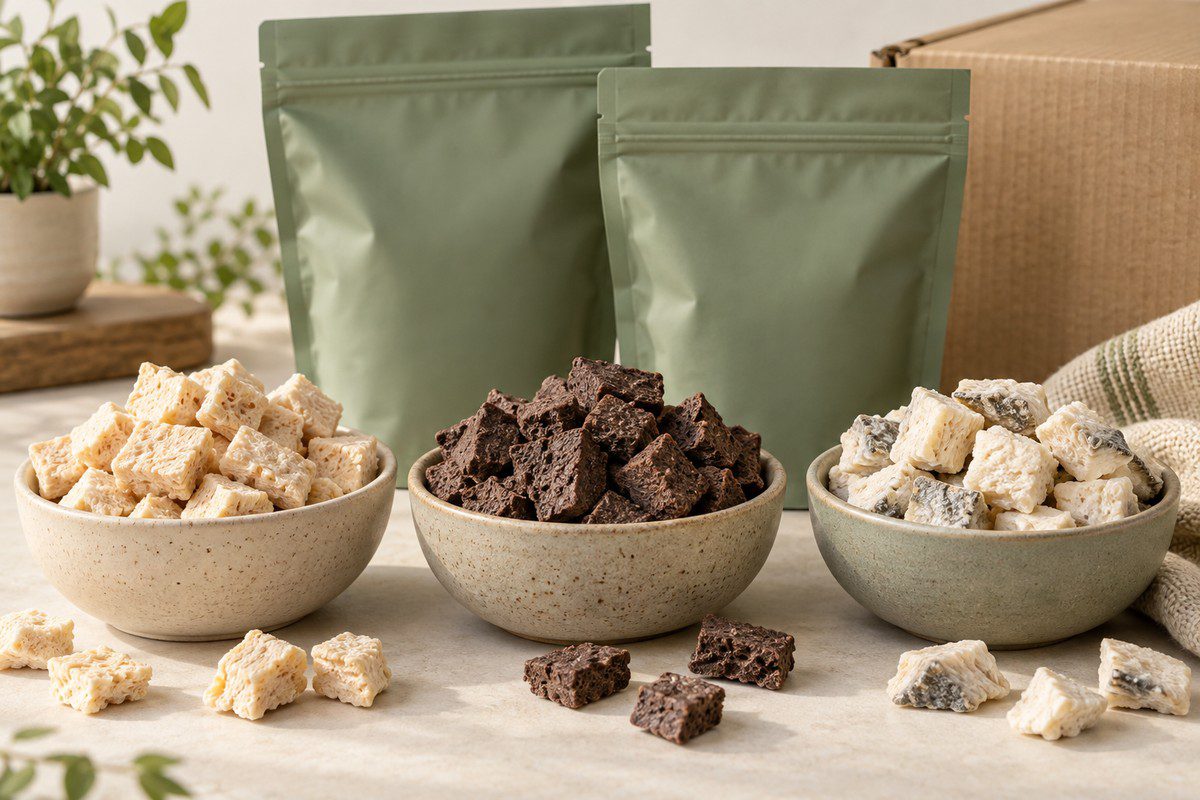
Start with a focused range that your team can explain easily. Rather than launching many similar SKUs, choose a small selection with distinct roles, then expand using actual sell-through and reorder data.
| Product concept | Potential merchandising role | What to verify |
|---|---|---|
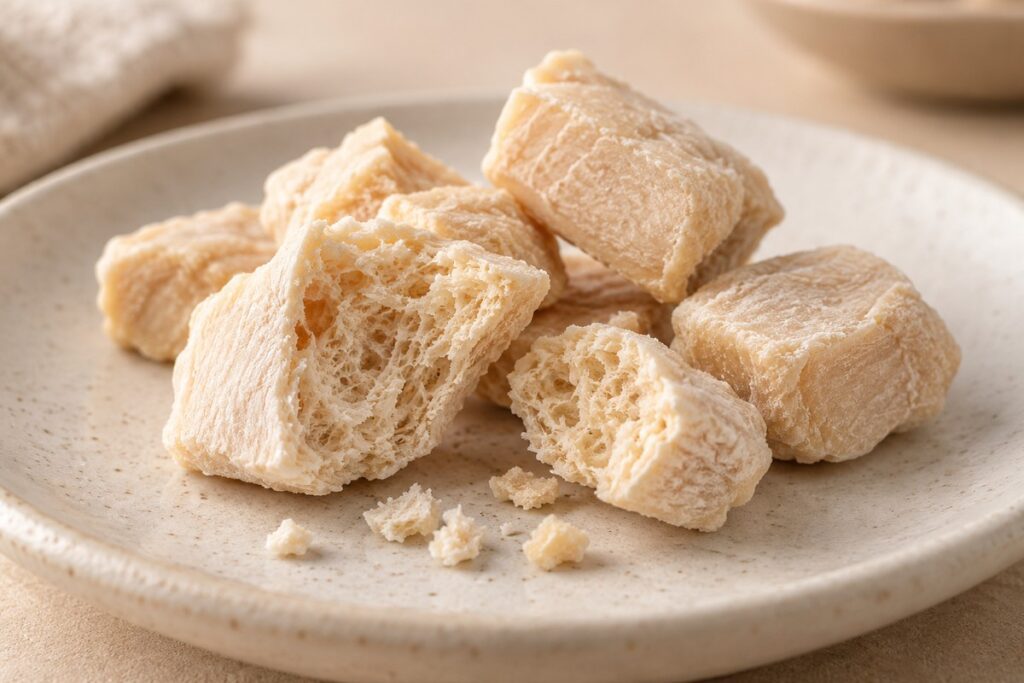
| Chicken pieces | A familiar protein option for everyday rewards | Full recipe, size consistency, and breakage |
| Beef liver pieces | An organ-meat option with a distinct product story | Ingredient identity, nutritional values, and portion guidance |
| Fish bites | A different protein choice within the range | Species, ingredient composition, odor, and packaging suitability |
| Small reward pieces | A training-focused format | Piece dimensions, calories, and ease of handling |
| Topper-style pieces or crumbles | A meal-addition format where labeled for that use | Intended use, serving instructions, and controlled particle size |
These are purchasing concepts, not a statement of current Pack’n Pride inventory. Ask which options are available for your market and order size. Use “single ingredient” only when the complete formulation supports it; do not assume that a named protein means the recipe contains nothing else.
Match the Format to How Customers Use It
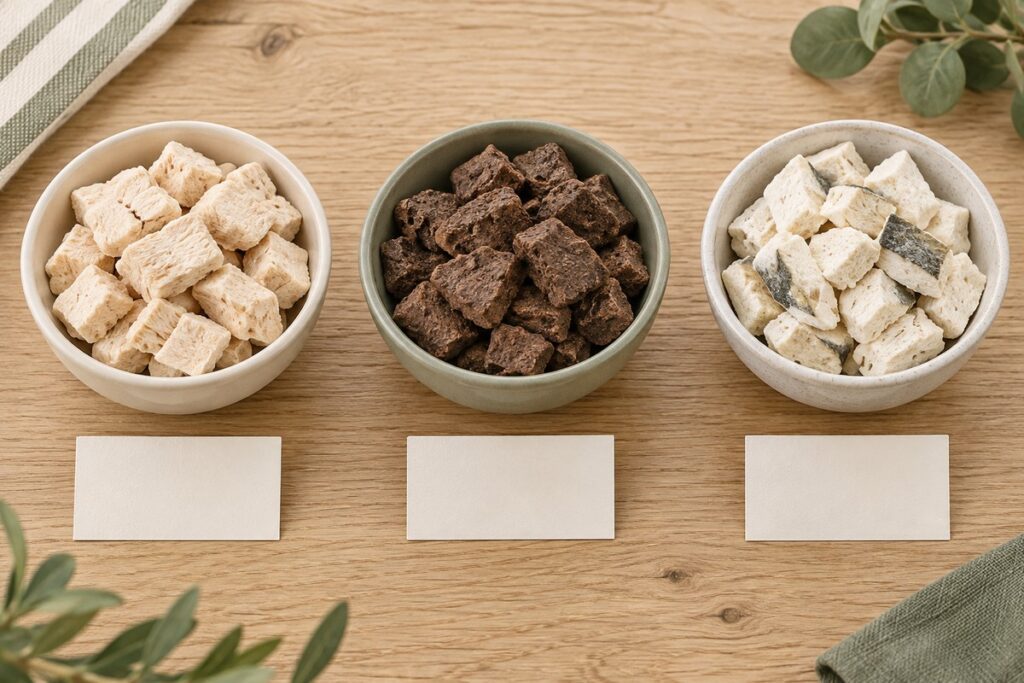
A training product should be easy to pick up and portion during repeated rewards. A larger piece may suit a different shelf position. Review the product’s dimensions, calorie information, and feeding directions before choosing the message for your packaging or product page.
For online listings, show the actual piece beside a useful size reference and photograph the contents of a real retail pack. For physical stores, give staff a short explanation of the ingredients, intended use, and pack size. These details answer practical questions that a generic “premium treat” description leaves open.
Keep claims tied to the specific product. A short ingredient list is a clear feature when verified; claims about allergies, digestion, or disease require a different level of support and should never be inferred from the protein source alone.
Compare Bulk Supply, Retail Packs, and Private Label

The phrase “bulk freeze dried dog treats” can mean unpackaged product for a packing operation or a large order of finished retail bags. Specify which you need before comparing quotes.
- Bulk supply: discuss inner liners, handling, packing responsibility, traceability, and the conditions under which the product will be repacked.
- Finished retail packs: confirm net weight, units per case, barcode requirements, packaging dimensions, and remaining shelf life at delivery.
- Private label: ask whether your proposed recipe, pouch, artwork, and order quantity can be supported. Confirm development and packaging costs separately.
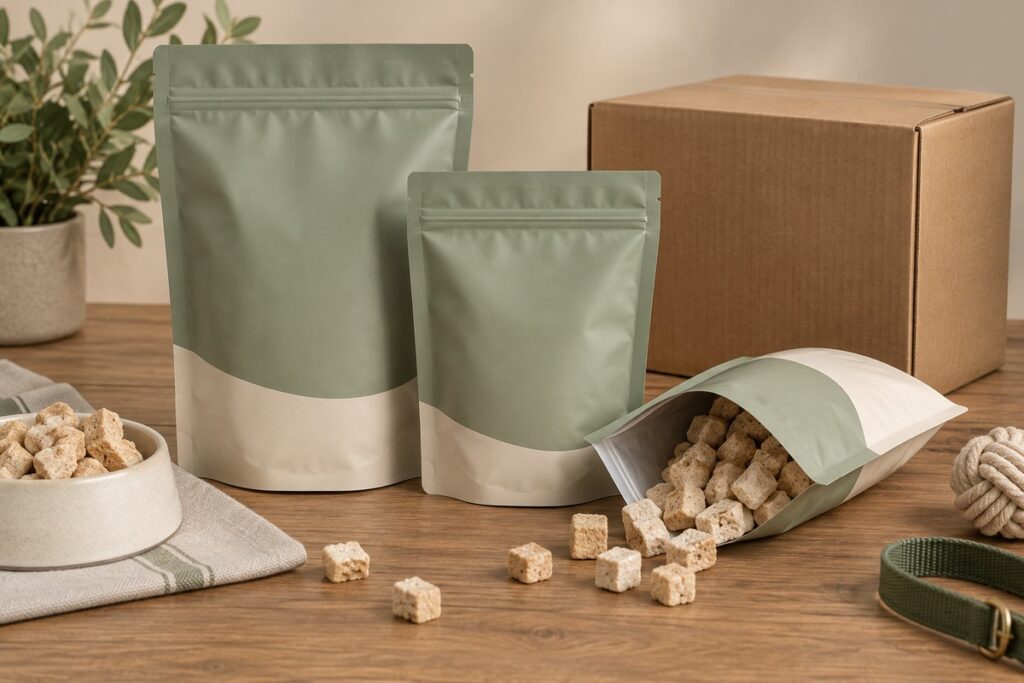
For any route, test the actual pouch and shipping configuration. Review seal quality, reseal performance, moisture protection, and how the product arrives after representative handling. A window or attractive finish should not be selected without checking its suitability for the product.
Ask whether minimum quantities apply per recipe, per pouch size, per printed design, or across the whole order. This distinction can change the cost of launching several SKUs.
How to Evaluate a Freeze-Dried Dog Treat Supplier
A useful supplier discussion produces specific documents and a repeatable approval process. Before moving from samples to a purchase order, request:
- A written product specification: ingredients, dimensions, nutritional data, packaging, storage conditions, and agreed acceptance criteria.
- Food safety information: the controls used for the product, relevant testing, lot identification, and the procedure for handling a nonconforming batch.
- Relevant facility documentation: current certificates where applicable, including their scope and the manufacturing location covered.
- Shelf-life support: the basis for the stated life in the proposed packaging, plus the minimum remaining life at shipment or delivery.
- Commercial terms: MOQ, sample charges, payment schedule, production timing, freight terms, and the process for reporting damage.
Do not treat a drying description as sufficient evidence of food safety. Ask how the specific product is controlled and verified. The FDA notes that pet food and treats can carry harmful bacteria and recommends clean hands, clean utensils, and appropriate storage. Customer-facing instructions should reflect the actual product and its handling needs. See the FDA’s pet food and treat handling guidance.
Calculate Cost per Sellable Pack
A low price per kilogram does not automatically produce a strong retail margin. Compare quotes using the same recipe, net weight, packaging specification, order volume, and delivery basis.
Landed cost per sellable pack = total cost to receive the order ÷ sellable packs received.
Include the product, packaging, freight, applicable import charges, inspection, and inbound handling. Use the actual sellable quantity after damage or agreed allowances, rather than simply the number originally ordered.
For example, if a hypothetical order costs $4,800 to receive and yields 1,920 sellable packs, landed cost is $2.50 per pack. At a $6.99 retail price, product gross margin is about 64.2% before marketplace fees, fulfillment, advertising, returns, and other selling expenses. These figures illustrate the calculation; they are not Pack’n Pride pricing or a sales forecast.
Then test the commercial fit: does the proposed price make sense alongside comparable pack sizes, and can your expected sales pace support the order quantity before the stock ages?
Approve Samples Before Scaling Your Order
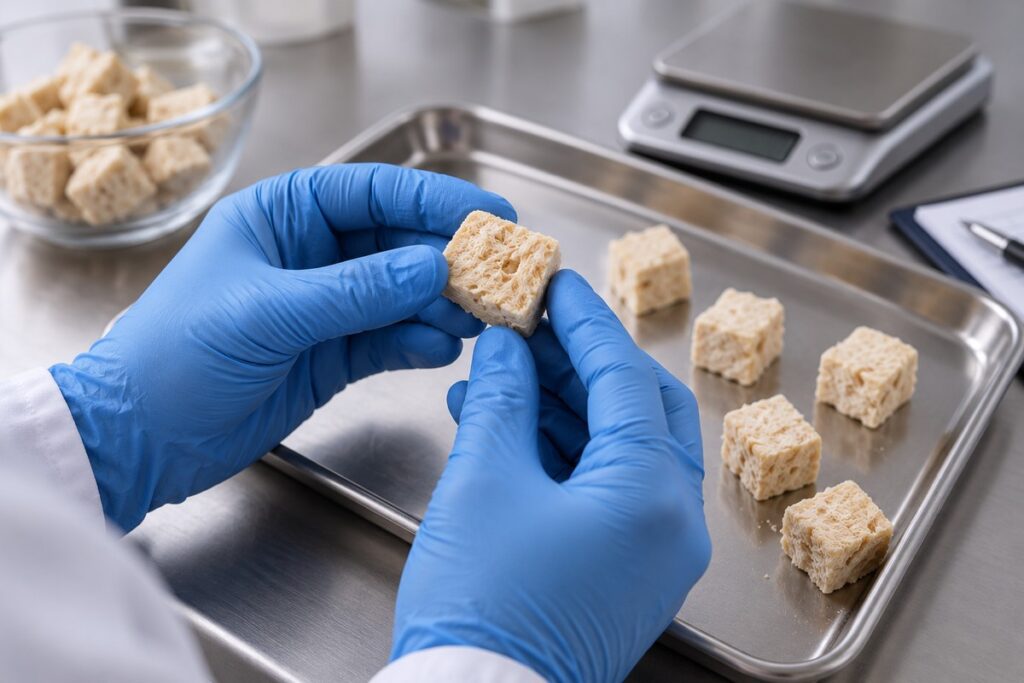
Use the same review sheet for every supplier. Record appearance, dimensions, handling, loose material, pack condition, and label information. Compare samples against the proposed specification rather than relying only on how attractive they look.
Where possible, review a sample in the intended retail packaging after representative shipping. Retain an approved reference sample and record its lot details. Confirm how production goods will be checked against that reference and what happens if a delivery falls outside the agreed criteria.
For a new range, discuss a manageable initial order and a reorder plan. Sample approval, artwork approval, packaging availability, production, and transit are separate milestones; ask for a schedule that shows each one.
Request a Wholesale Quote from Pack’n Pride
At Pack’n Pride, we welcome inquiries from pet treat retailers, distributors, importers, and online sellers. Share the details below so we can discuss your requirements and confirm available options.
- Destination country and sales channel
- Preferred protein or recipe and intended use
- Piece size and retail pack weight
- Bulk supply, finished retail packaging, or private-label interest
- Estimated first order and expected reorder volume
- Target launch date and delivery destination
- Required product documents and sample needs
Ready to compare options? Visit Pack’n Pride and send your wholesale requirements. Ask for current product details, sample availability, MOQ, packaging options, and a quote based on your specification.
Frequently Asked Questions
What is the MOQ for wholesale freeze-dried dog treats?
MOQ depends on the supplier, recipe, packaging, and customization. Ask Pack’n Pride for the current minimum for your exact project, and confirm whether it applies per SKU or per order.
Can I buy freeze-dried dog treats in bulk for resale?
Specify whether you want finished retail packs or product for repacking. Confirm availability, packing responsibilities, traceability, and the requirements for your destination market before ordering.
Can I request private-label freeze-dried dog treats?
Send your desired recipe, pack size, artwork needs, and estimated volume. Ask which customization options are available and whether product and printed-packaging minimums differ.
How long do freeze-dried dog treats last?
Use the shelf life confirmed for the specific recipe and packaging. Request supporting information, storage instructions, and the minimum remaining shelf life at delivery. Do not assume all products have the same expiry period.
What should I check in a sample?
Check the complete specification, piece consistency, loose material, seal quality, label information, and condition after shipping. Keep a reference sample and agree on acceptance criteria before production.
How do I get an accurate wholesale price?
Provide the recipe, pack weight, order quantity, packaging type, and destination. Ask the supplier to state what the quote includes so that freight, packaging, and other costs can be compared fairly.